What Electrical Work Should You Never DIY?
Table of Contents
Quick Answer: What Electrical Work Should Homeowners Avoid Doing Themselves?
Homeowners should avoid DIY electrical work that involves the electrical panel, new circuits, wiring repairs, generator connections, EV charger installation, hot tub wiring, or working near live electrical components. You should also avoid electrical work that affects grounding, breakers, dedicated circuits, outdoor wiring, or code compliance.
A loose outlet, flickering light, or tripping breaker may look like a simple fix, but it can point to a larger electrical issue. When safety is involved, calling a licensed electrician is usually the better choice.
At Starnes Electric LLC, we help homeowners stay safe by handling electrical repairs, upgrades, and installations the right way.
Avoid Costly Electrical Mistakes
DIY electrical work can lead to code violations, property damage, and safety hazards. Speak with a licensed professional before starting any project.
Why DIY Electrical Work Can Be Dangerous
Electrical work is different from many other home projects. A mistake with paint, flooring, or landscaping may be frustrating, but a mistake with wiring can create serious safety risks. Poor electrical work can lead to electric shocks, electrical fires, damaged appliances, failed inspections, and expensive repairs later.
One of the biggest dangers of DIY electrical work is that problems may stay hidden. A connection may seem secure at first, but if it is loose, overloaded, or improperly installed, it can overheat over time. A breaker may reset, but that does not mean the circuit is safe. A new outlet may work, but it may not be grounded or protected correctly.
DIY electrical work can also create issues when selling a home. Unpermitted or improper electrical work may be discovered during inspection, which can lead to repair requests, delays, or questions from buyers.
There is also the risk of not understanding local electrical code requirements. Electrical codes exist to protect homes and families. A licensed electrician knows how to install, repair, and upgrade systems in a way that follows safety standards and supports long-term reliability.
Electrical Panel Work Should Not Be DIY
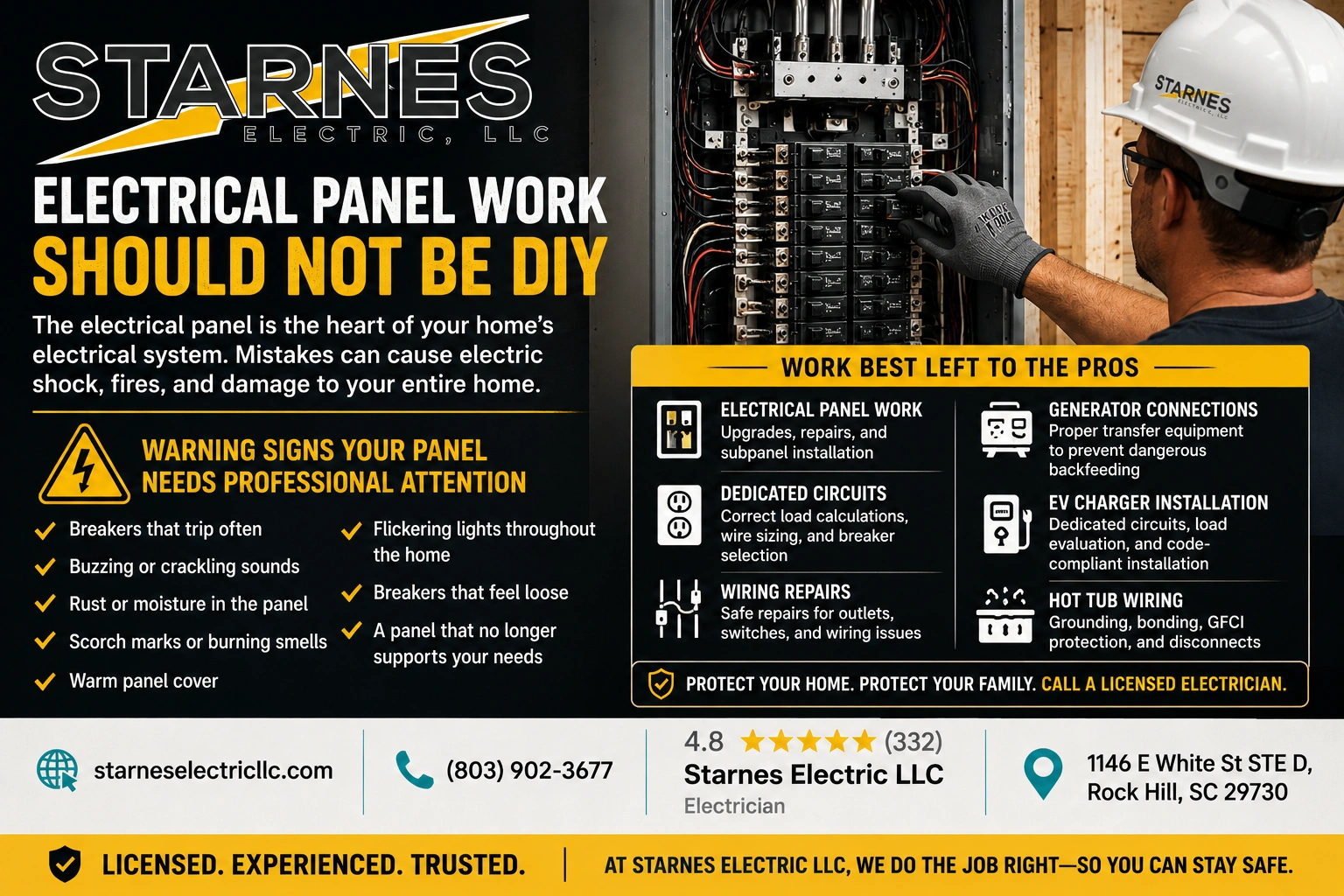
Electrical panel work should not be treated as a DIY project. The electrical panel is the heart of the home’s electrical system. It distributes power to circuits throughout the house and helps protect the system through circuit breakers.
Homeowners should not attempt to replace breakers, add breakers, upgrade panels, install subpanels, repair panel wiring, or troubleshoot serious electrical panel issues on their own. Panel work can involve high voltage, service conductors, overloaded circuits, and components that may remain dangerous even when some breakers are turned off.
Warning Signs That Your Electrical Panel Needs Professional Attention
- Breakers that trip often
- Buzzing or crackling sounds
- Rust or moisture inside the panel
- Scorch marks or burning smells
- Warm panel cover
- Flickering lights throughout the home
- Breakers that feel loose
- A panel that no longer supports your electrical needs
Older panels can also create concerns. If your home has an outdated electrical panel, limited capacity, or previous DIY modifications, a licensed electrician should inspect it. Panel work must be done carefully because mistakes can affect the safety of the entire house.
Dedicated Circuit Installation Requires a Licensed Electrician
Dedicated circuits are used for appliances or equipment that need their own electrical supply. This may include refrigerators, microwaves, dishwashers, dryers, HVAC equipment, sump pumps, workshop tools, EV chargers, and other high-demand devices.
Installing a dedicated circuit is not a simple outlet project. It may require calculating load, choosing the correct wire size, selecting the right breaker, routing wiring safely, and making proper panel connections. If the circuit is installed incorrectly, it may overload, trip breakers, damage equipment, or create fire risks.
Depending on the project and local requirements, a dedicated circuit may also require a permit and inspection. This is another reason homeowners should not attempt it without a licensed electrician.
If you are adding a new appliance, upgrading equipment, finishing a garage, or creating a home workshop, it is best to have the electrical system evaluated first. At Starnes Electric LLC, we can determine whether your panel has enough capacity and install the right circuit for your needs.
Outlet, Switch, and Wiring Repairs Can Involve Hidden Risks
Some homeowners assume outlet and switch repairs are always simple. In reality, these repairs can involve hidden wiring problems, grounding issues, overloaded circuits, or damaged components.
Replacing a cover plate is one thing. Repairing wiring behind an outlet or switch is another. Homeowners should be careful with outlets that spark, feel warm, buzz, stop working, or show signs of discoloration. These can indicate loose wiring, electrical arcing, overheating, or failing devices.
GFCI outlets also require proper installation. These outlets help protect against electric shock in areas where water may be present, such as kitchens, bathrooms, laundry rooms, garages, crawl spaces, and outdoor areas. If a GFCI outlet is wired incorrectly, it may not provide the protection you expect.
Switch problems should also be handled carefully. Flickering lights, warm switches, buzzing sounds, or lights that only work sometimes can point to poor connections or wiring issues.
Wiring repairs should always be taken seriously. Exposed wires, damaged insulation, loose connections, improper splices, and overloaded junction boxes are not safe DIY projects. A licensed electrician can identify the source of the issue and repair it correctly.
Generator, EV Charger, and Hot Tub Wiring Should Be Left to Professionals
Generator wiring, EV charger installation, and hot tub wiring should always be handled by a licensed electrician. These projects involve higher electrical demand, safety requirements, and proper connection methods.
Generator wiring is especially important because incorrect installation can create dangerous backfeeding. Backfeeding can send electricity into utility lines, creating serious risks for utility workers and damaging your home’s electrical system. A generator should be connected through the proper transfer equipment and installed according to code.
EV chargers also require careful planning. A home charging station may need a dedicated circuit, load calculation, electrical panel evaluation, correct breaker sizing, and proper wiring. If the home’s electrical system is not ready for the added demand, an upgrade may be needed.
Hot tub wiring brings electrical work close to water, which increases the need for proper protection. Grounding, bonding, GFCI protection, disconnect placement, and wiring methods all matter. A mistake can create a serious shock hazard.
These projects are not worth guessing through. Professional installation helps protect your home, your equipment, and everyone who uses the system.
Should You Replace Two-Prong Outlets in an Older Home?
Yes, two-prong outlets in older homes should usually be inspected [...]
Learn More
When a Small Electrical Issue Needs a Licensed Electrician
Not every electrical problem looks serious at first. Many warning signs start small and become worse over time. Knowing when to call a licensed electrician can help prevent bigger issues.
You Should Call an Electrician If You Notice:
- Lights flickering often
- Breakers tripping repeatedly
- Outlets or switches feeling warm
- Burning smells near electrical devices
- Buzzing, popping, or crackling sounds
- Sparks from outlets or switches
- Dead outlets in multiple areas
- GFCI outlets that will not reset
- Appliances causing lights to dim
- Extension cords being used as a long-term solution
- Outdoor outlets or lights failing after rain
These issues can point to loose wiring, overloaded circuits, moisture damage, failing breakers, or unsafe connections. Even if the problem seems minor, it is better to have it inspected before it becomes a hazard.
A licensed electrician can troubleshoot the issue safely and explain what needs to be repaired. This helps homeowners avoid guesswork and unnecessary risk.
How Starnes Electric Helps Homeowners Stay Safe
At Starnes Electric LLC, we understand that homeowners want practical, honest help. You may not always know whether an electrical issue is urgent, but you should never have to guess when safety is involved.
We help homeowners with electrical repairs, electrical troubleshooting, electrical panel work, circuit installation, lighting, outlets, switches, generator wiring, EV charger wiring, and other electrical needs. Our goal is to find the source of the problem and provide a safe, reliable solution.
We also help homeowners understand when an upgrade may be needed. If your electrical panel is outdated, your circuits are overloaded, or your home is not prepared for modern electrical demands, we can explain your options clearly.
Electrical work should give you confidence, not concern. When you contact us, we take the time to evaluate the issue, complete the work properly, and help protect your home from avoidable electrical risks.
Protect Your Home From Unsafe DIY Electrical Work
If you are unsure whether an electrical project is safe to handle on your own, it is better to ask before taking a risk. At Starnes Electric LLC, we can inspect the issue, explain what is happening, and complete the work safely.
Whether you need an electrical repair, electrical upgrade, electrical installation, or professional electrical troubleshooting, we are here to help you protect your home and avoid unsafe DIY electrical mistakes.
FAQs About DIY Electrical Work
Can I replace an outlet myself?
Replacing an outlet may seem simple, but it can be unsafe if there are wiring issues, grounding issues, or GFCI problems. If the outlet is warm, loose, sparking, discolored, or not working properly, call a licensed electrician.
Can I add a new circuit myself?
No, adding a new circuit should be handled by a licensed electrician. It involves electrical panel work, load calculations, correct wire sizing, breaker selection, and electrical code requirements.
Is it safe to replace a breaker on my own?
No. Breaker replacement involves working inside the electrical panel, which can be dangerous. A licensed electrician should inspect the panel and replace breakers when needed.
Can DIY electrical work cause a fire?
Yes. Loose connections, overloaded circuits, incorrect wire sizes, improper splices, and faulty installations can create overheating and electrical fire risks.
When should I call an electrician for a tripping breaker?
You should call an electrician if a breaker trips repeatedly, trips when a specific appliance runs, feels warm, or will not reset. This can indicate an overloaded circuit, damaged wiring, or faulty equipment.
Do I need an electrician for EV charger installation?
Yes. EV charger installation usually requires a dedicated circuit, correct breaker sizing, electrical panel evaluation, and safe wiring. A licensed electrician should handle the installation.
Why should hot tub wiring be done by a professional?
Hot tub wiring involves electricity near water, so proper grounding, bonding, GFCI protection, and disconnect placement are critical. A mistake can create serious electrical shock hazards.
Thinking About Doing Electrical Repairs Yourself?
One wrong connection can lead to shocks, fires, or costly damage. Call the licensed electricians at Starnes Electric LLC before a small mistake becomes a major emergency.
About the Author: Starnes Electric