
GFCI Outlet vs. Standard Outlet: What’s the Difference?
Table of Contents
A standard outlet and a GFCI outlet may power the same lamp, phone charger, or coffee maker, but they do not provide the same level of electrical protection. A GFCI, or Ground-Fault Circuit Interrupter, is designed to quickly cut power when it detects electricity flowing where it should not, helping reduce the risk of electric shock.
That extra protection is especially important around water, damp areas, garages, kitchens, bathrooms, and outdoor spaces. Still, that does not mean every ordinary outlet should automatically be replaced with a GFCI. The right choice depends on location, circuit design, existing protection, and local electrical requirements.
Not Sure Which Outlet You Need?
Get the right outlet for safer, more reliable power. Call Starnes Electric LLC for professional electrical service.
Is A GFCI Outlet Better Than A Regular Outlet?
In terms of shock protection, yes, a GFCI outlet has an important advantage over a standard receptacle. But calling it simply “better” misses part of the story.
A standard outlet is perfectly capable of doing its basic job: delivering electricity to whatever you plug into it. It is simple, familiar, and appropriate in many locations. What it does not do on its own is monitor for the tiny electrical imbalance associated with a ground fault.
That is where the GFCI earns its place.
Suppose you are using a hair dryer near a bathroom sink, a power tool in a damp garage, or an outdoor appliance after it rains. If electricity begins traveling through an unintended path, potentially through a person, a properly operating GFCI can interrupt the circuit quickly.
That makes the comparison less like “premium outlet versus cheap outlet” and more like “ordinary electrical connection versus electrical connection with an added safety feature.”
There is another important distinction homeowners sometimes miss. Your circuit breaker and your GFCI are not doing exactly the same job.
A breaker is primarily there to protect electrical wiring and equipment against conditions such as excessive current. A GFCI is specifically intended to provide protection against ground faults that can create an electric-shock hazard.
And no, installing a GFCI does not suddenly turn an outlet into some delicate device that cannot handle everyday appliances. You can still plug in your vacuum, blender, toaster, phone charger, or power tool as appropriate for the circuit.
The Consumer Product Safety Commission notes that a receptacle-type GFCI can be installed in place of a standard duplex receptacle and can also protect other receptacles farther downstream when it is wired for that purpose.
In my view, GFCIs are one of those electrical devices you barely notice until they do exactly what they were designed to do. A little button on the wall is far less exciting than a new light fixture or smart switch, but when electricity and moisture are sharing the same general neighborhood, boring safety technology is a very good thing.
Can I Use A GFCI Outlet As A Regular Outlet?
Yes. A GFCI receptacle can generally be used for ordinary electrical loads just like a standard receptacle when it is properly installed on an appropriate circuit.
Plug something in, and it works. There is no special routine required every time you want to use it.
The noticeable difference is usually the TEST and RESET buttons on the face of the receptacle. Some models also include an indicator light showing whether the device is powered or operating correctly. Leviton, for example, describes status indicators that can show normal operation, a tripped condition, or a situation in which the device may require attention or replacement.
A GFCI may also protect more than the receptacle you can physically see.
When properly connected using its load terminals, one GFCI receptacle can provide ground-fault protection to additional outlets farther along the same circuit. That is why you occasionally find a completely ordinary-looking outlet that suddenly loses power when somebody presses a TEST button on a GFCI across the room.
This is also why appearance alone does not always tell the whole story.
You may have three standard-looking receptacles in a kitchen or garage, but all three could potentially receive GFCI protection from another receptacle or a GFCI circuit breaker at the electrical panel.
There is one small responsibility that comes with having a GFCI: it needs to remain functional.
Manufacturers provide testing instructions for their devices, and Leviton recommends using the TEST and RESET functions to confirm proper operation. If a device will not reset or continues displaying a fault indication, it may need professional evaluation or replacement.
That little TEST button is not decoration. Think of it like the smoke detector button everyone knows they should press occasionally but somehow manages to ignore for six months.
Electrical safety works much better when we actually check the safety devices.
Can I Replace A GFCI Outlet With A Standard Outlet?
Physically? In many electrical boxes, a standard receptacle might fit where a GFCI receptacle was located.
Should you automatically make that replacement? Absolutely not.
If the outlet is located somewhere that requires GFCI protection under the electrical code adopted in your jurisdiction, removing that protection could create both a safety problem and a code-compliance issue.
This is one of those home projects where asking, “Will it work?” is not the same as asking, “Is it correct?”
Imagine a bathroom GFCI that trips occasionally. Replacing it with an ordinary outlet might appear to solve the irritating tripping problem. But you have not necessarily solved the underlying issue. You may simply have removed the device that was telling you something was wrong.
That is not troubleshooting. That is taking the batteries out of the alarm clock because you dislike waking up.
Frequent GFCI tripping can have several possible causes, including an appliance problem, moisture, wiring issues, a damaged GFCI, or an actual ground fault. The correct response depends on what is causing the trip.
There is another possibility worth knowing about. A standard receptacle can sometimes be installed in a location while still receiving GFCI protection from an upstream GFCI device or GFCI circuit breaker. Electrical codes also contain requirements regarding how certain protected receptacles are identified or configured.
So the question should really be:
“Can this receptacle remain properly GFCI-protected if I change the device?”
That is a much better question than simply asking whether the screws line up.
The CPSC also notes that GFCI receptacles can even be used in certain situations involving older two-slot, ungrounded receptacles, subject to proper installation and required labeling. That is another good reminder that receptacle replacement is not always as simple as matching black wire to brass screw and calling it a Saturday afternoon success.
When the wiring configuration, grounding, circuit protection, or reason for repeated tripping is unclear, having a qualified electrician inspect the circuit is usually the smarter move.
How Can You Tell If An Outlet Is GFCI Or Not?
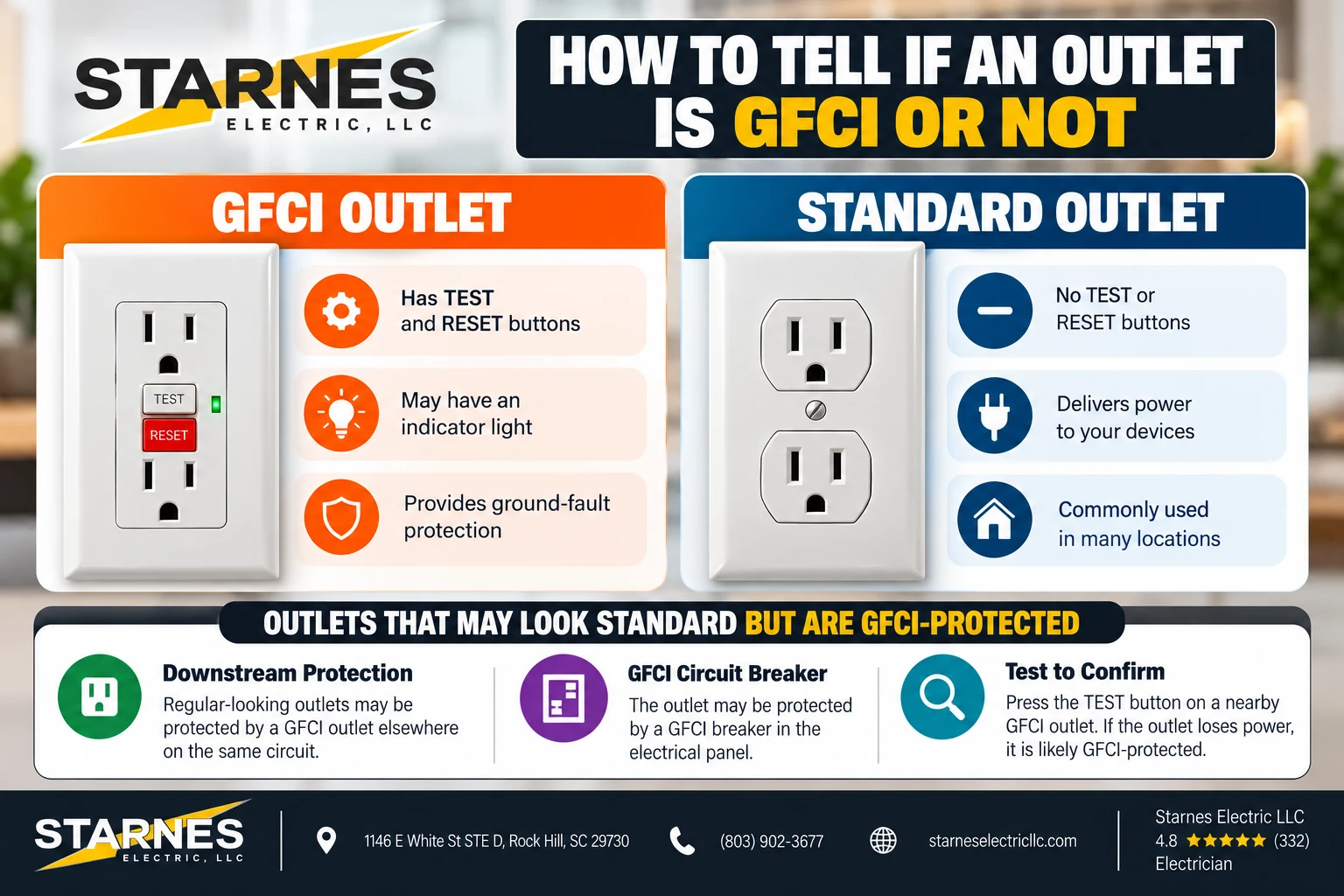
The easiest clue is right on the front.
A typical GFCI receptacle has TEST and RESET buttons between the plug openings. Modern versions may also include a small indicator light.
A conventional duplex receptacle generally does not have those buttons.
Easy enough, right?
Mostly.
The complication is that an ordinary-looking receptacle may still have GFCI protection from somewhere else. It could be downstream from another GFCI receptacle or protected by a GFCI breaker in the electrical panel.
So if you are trying to determine whether a particular outlet is protected, simply looking at its face is not always enough.
One practical approach is to locate nearby GFCI receptacles and use their TEST functions according to the manufacturer’s instructions. When a GFCI is tested, protected downstream receptacles may also lose power. A qualified electrician can also use appropriate testing equipment to determine circuit configuration and verify protection.
This becomes particularly useful in older or renovated homes.
Maybe the GFCI is behind a stack of storage bins in the garage.
Maybe it is hiding behind the coffee machine.
Maybe the mysterious dead bathroom outlet is actually controlled by a GFCI in another bathroom.
Anyone who has spent 20 minutes trying to figure out why one outlet stopped working knows how strange residential circuit layouts can occasionally become.
If a GFCI is tripped, pressing RESET may restore power. But if it immediately trips again, refuses to reset, or has no power at all, resist the temptation to keep hammering the button like an elevator door-close switch.
Something deserves investigation.
Who’s the Trusted Expert for Electrical Panels in Lake Wylie, SC?
When it comes to keeping homes and businesses powered safely [...]
Learn More
Where Are GFCI Outlets Required In A Home?
This is where the conversation shifts from convenience to electrical code.
The National Electrical Code has expanded GFCI protection requirements considerably over the years. NFPA materials show that requirements have been introduced and broadened across several editions of the NEC, including protections involving bathrooms, garages, kitchens, basements, laundry areas, outdoor locations, crawl spaces, sinks, and certain appliances.
Common residential locations where GFCI protection may be required under modern electrical codes include:
- Bathrooms, where electricity and water routinely exist close together.
- Kitchens, including receptacles covered by the applicable adopted code requirements.
- Garages and accessory buildings, where moisture, concrete floors, tools, and outdoor equipment can increase electrical risks.
- Outdoor locations, including receptacles and certain outdoor outlets.
- Basements and crawl spaces, depending on the location and code provisions involved.
- Laundry areas, wet or damp locations, and receptacles near sinks, tubs, or showers, where ground-fault protection may be required based on the particular installation.
The details matter, however.
The NEC is a widely used model electrical code, but electrical requirements become enforceable through state and local adoption. Different jurisdictions may adopt different NEC editions, add amendments, or operate under additional residential and building codes. The CPSC specifically notes that NEC provisions may be adopted into law by states, counties, or local jurisdictions.
That means a homeowner should be cautious about treating a generic internet checklist as a substitute for the electrical code that actually applies to the property.
Requirements have also changed over time.
An older home may contain wiring and receptacle configurations that were accepted when the property was constructed but would not necessarily match today’s requirements for new construction or renovation. Once electrical work is modified, replaced, or expanded, additional requirements may come into play depending on the project and local rules.
This is one reason electrical upgrades can reveal surprises.
You open one receptacle expecting a five-minute replacement and discover old wiring, unusual downstream connections, missing grounding, multiple circuits, or previous DIY work that appears to have been completed by someone whose electrical education came entirely from optimism.
That is the moment to stop improvising.
GFCI protection is inexpensive compared with the potential consequences of electrical shock. But the device still needs to be installed correctly, placed where required, and coordinated with the rest of the electrical system.
Make the Outlet Match the Risk With Starnes Electric LLC
The biggest takeaway from the GFCI outlet vs. standard outlet debate is surprisingly simple: neither receptacle should be chosen just because it happens to be sitting in the toolbox.
Standard outlets have perfectly legitimate uses. GFCIs provide an additional layer of protection where ground-fault hazards are a greater concern or where electrical codes require them. The important part is knowing which type belongs in each location and whether existing outlets are already protected elsewhere on the circuit.
If your GFCI keeps tripping, an outlet refuses to reset, you are renovating a kitchen or bathroom, or you simply are not sure whether your home’s receptacles have the protection they should, Starnes Electric LLC can help evaluate the electrical system and recommend the appropriate solution.
Electrical outlets are easy to overlook because they sit quietly on the wall doing their job every day. But when it comes to safety, the difference between “there’s an outlet there” and “that’s the right outlet, properly protected” is worth getting right.
Is Your Outlet Properly Protected?
Don’t leave electrical safety to chance. Call Starnes Electric LLC for expert outlet inspection and installation.
About the Author: Dalton Starnes