
Should You Replace Old Light Fixtures Before Selling Your Home?
Table of Contents
Replacing old light fixtures before selling your home can be a smart move, especially when the existing fixtures look dated, damaged, dim, or out of place. Updated lighting can make rooms feel brighter, cleaner, and more modern without requiring a major renovation.
That does not mean every fixture in the house needs to be replaced. Some older lights are still attractive, functional, and appropriate for the style of the home. A better approach is to focus on fixtures that are likely to catch a buyer’s attention for the wrong reasons.
A stained ceiling light, rusty outdoor fixture, or bulky brass chandelier can make an otherwise well-maintained room feel tired. Buyers may not consciously decide against a house because of one old light, but outdated fixtures can contribute to the impression that the property needs more work than expected.
The goal is not to transform the home into a lighting showroom. It is to remove visual distractions, improve brightness, and help buyers picture themselves living comfortably in the space.
Old Light Fixtures Hurting Your Home’s Appeal?
Give your home a fresh, modern look with expert lighting upgrades. Call Starnes Electric LLC today!
Do Light Fixtures Really Affect a Home Sale?
Yes, light fixtures can influence how buyers perceive a home.
Lighting affects nearly every part of a showing. It changes how large rooms feel, how paint colors appear, how clean surfaces look, and whether a space feels warm or gloomy.
A bright, well-lit kitchen usually feels more inviting than one with a dim fluorescent fixture. A modern dining room light can make the entire space look more current. Fresh outdoor fixtures can also improve curb appeal before buyers even walk through the front door.
Buyers tend to notice details that suggest how well a home has been maintained. Old fixtures with loose parts, flickering bulbs, exposed wiring, or cracked covers may raise concerns about the electrical system.
Even when the problem is minor, buyers may wonder what else has been delayed or ignored.
Replacing a few noticeable fixtures can make the home feel better cared for and ready to move into.
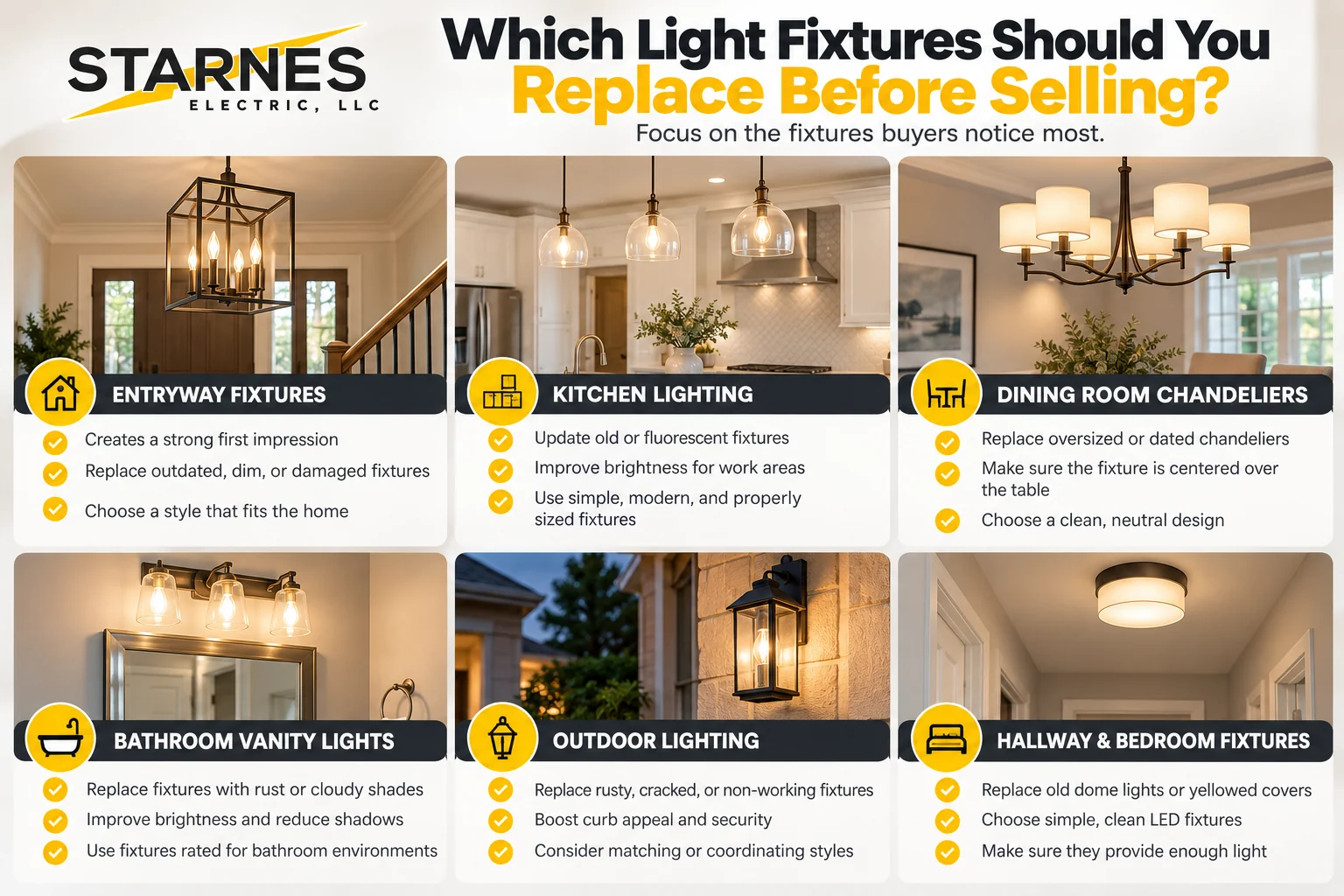
Which Light Fixtures Should You Replace Before Listing?
Not every light fixture deserves the same level of attention. Focus first on the fixtures buyers will see immediately or use to judge the condition of the home.
Entryway Fixtures
The entryway creates one of the first impressions inside the house.
A dated foyer light can make the space feel older, while a simple updated fixture can create a cleaner and more welcoming entrance.
Consider replacing the fixture if it is:
-
Too small for the space
-
Tarnished or rusty
-
Missing glass or decorative parts
-
Visibly crooked
-
Extremely outdated
-
Too dim for the entryway
-
Hanging at an awkward height
The entryway light should suit the ceiling height and architectural style of the home.
Kitchen Lighting
Kitchen lighting matters because buyers often spend more time evaluating the kitchen than almost any other room.
Outdated fixtures can make cabinets, countertops, and appliances look older than they really are.
Common kitchen lights worth updating include:
-
Fluorescent ceiling boxes
-
Old track lighting
-
Mismatched pendant lights
-
Yellowed plastic covers
-
Flickering under-cabinet lights
-
Oversized decorative fixtures
-
Fixtures that leave work surfaces dark
A kitchen does not always need expensive statement lighting. Simple, bright, properly scaled fixtures often work best for resale.
Dining Room Chandeliers
Dining room chandeliers tend to attract attention because they are usually positioned in the center of the space.
An oversized, heavily decorative, or dated chandelier can define the entire room. Buyers may immediately begin calculating the cost and effort required to replace it.
A clean, neutral fixture can make the dining area feel more flexible. It should complement the room without demanding all the attention.
Before replacing the chandelier, make sure the new fixture is centered over the dining table area. A fixture that hangs in the middle of the room but not over the table can look awkward.
Bathroom Vanity Lights
Bathroom lighting affects how bright, clean, and functional the space feels.
Old vanity fixtures may have:
-
Rust
-
Corrosion
-
Cloudy shades
-
Exposed bulbs
-
Peeling finishes
-
Uneven lighting
-
Harsh shadows
-
Missing covers
Replacing a bathroom light can make an older vanity and mirror look more current. Choose a fixture that is rated for the bathroom environment and properly sized for the mirror.
Outdoor Lighting
Exterior lights contribute to both curb appeal and security.
Buyers may notice porch lights, garage fixtures, floodlights, and landscape lighting before entering the home.
Outdoor fixtures should be replaced when they are:
-
Rusted
-
Cracked
-
Hanging loosely
-
Filled with insects or debris
-
Missing covers
-
No longer working
-
Too small for the home
-
Visibly mismatched
Matching or coordinating exterior fixtures can make the front of the home look more polished.
Hallway and Bedroom Fixtures
Basic ceiling lights in bedrooms and hallways do not need to be expensive, but they should look clean and work properly.
Old dome lights, yellowed covers, and mismatched fixtures can make these areas feel neglected.
Simple flush-mount LED fixtures are often a practical option. They provide good brightness and a low-profile appearance without becoming a major design feature.
When Is It Better to Keep an Older Light Fixture?
Older does not always mean bad.
Some fixtures have character, craftsmanship, or historical value that newer products cannot match. A vintage chandelier, original wall sconce, or period-appropriate fixture may strengthen the home’s appeal.
Consider keeping an older fixture when it:
-
Matches the architectural style
-
Is in good condition
-
Operates safely
-
Provides enough light
-
Has a timeless appearance
-
Adds character to the room
-
Is likely to appeal to buyers
For example, an original fixture in a historic home may feel more appropriate than a trendy modern replacement.
The key is whether the fixture looks intentional. A well-preserved vintage light can feel charming. A cracked, dusty, or poorly repaired fixture simply looks old.
Sometimes cleaning, rewiring, replacing the shades, or installing updated bulbs is enough to improve a fixture without removing it.
Will New Light Fixtures Increase Your Home’s Value?
New light fixtures are unlikely to add a large amount to the appraised value by themselves. However, they can improve presentation, buyer interest, and the overall impression of the home.
Lighting updates may help the property:
-
Photograph better
-
Feel more modern
-
Look brighter
-
Show more clearly
-
Create a stronger first impression
-
Compete with similar listings
-
Reduce obvious buyer objections
The value often comes from helping the home feel move-in ready.
Buyers may be willing to pay more for a house that appears well-maintained and updated, even when the individual improvements are relatively small.
Lighting should be viewed as part of the home’s presentation strategy rather than a guaranteed dollar-for-dollar return.
How Much Should You Spend on Light Fixtures Before Selling?
You do not need to spend thousands of dollars updating every light in the house.
For most sellers, a reasonable approach is to set a budget based on the rooms that matter most.
Priority areas often include:
-
Front porch
-
Entryway
-
Kitchen
-
Dining room
-
Primary bathroom
-
Main hallway
Affordable fixtures can still look attractive when they are properly sized and installed.
Basic ceiling fixtures may cost less than decorative pendants or chandeliers. Installation costs will depend on the wiring, ceiling height, fixture weight, and condition of the electrical box.
Avoid choosing fixtures that are so expensive or personal that they will not provide a practical resale benefit.
The goal is to improve the home’s appearance, not design it around one buyer’s exact taste.
Designing Light as Emotion: The Psychology Behind Modern Indoor and Outdoor Lighting Installation
Ever notice how certain rooms make you feel instantly calm, [...]
Learn More
Should You Choose Trendy or Neutral Fixtures?
Neutral fixtures are usually the safer choice for resale.
A highly unusual fixture may appeal to a small group of buyers but distract everyone else. Simple designs in common finishes tend to work with a wider range of furniture and decorating styles.
Popular neutral options include:
-
Matte black
-
Brushed nickel
-
Soft brass
-
Chrome
-
White
-
Clear glass
-
Frosted glass
-
Simple fabric shades
Try to coordinate finishes throughout nearby rooms. They do not need to match perfectly, but the lighting should feel connected.
For example, a modern black kitchen pendant may look out of place beside a decorative antique-brass dining chandelier unless the rest of the design supports that contrast.
Choose fixtures that fit the home itself. A sleek modern pendant may suit a newer open-plan kitchen, while a traditional fixture may look better in a classic brick home.
Can Better Bulbs Improve Old Fixtures?
Yes. Sometimes replacing the bulbs is enough to improve the appearance of an existing fixture.
Old bulbs may produce weak, yellow, blue, or uneven light. Installing consistent LED bulbs can make the room look brighter and more comfortable.
When updating bulbs:
-
Use the same color temperature in connected spaces
-
Choose bulbs with an appropriate brightness level
-
Confirm that the bulbs fit the fixture
-
Use dimmable bulbs with compatible dimmers
-
Replace flickering or mismatched bulbs
-
Check the fixture’s wattage limits
-
Use bulbs rated for enclosed fixtures when required
Warm-white bulbs often work well in living rooms and bedrooms, while kitchens and bathrooms may benefit from slightly brighter, more neutral light.
Avoid mixing several color temperatures in the same room. One warm bulb and two bright-white bulbs in a chandelier can make even a beautiful fixture look strange.
Should You Replace Fixtures That Flicker?
A flickering fixture should be inspected before the home is listed.
The cause may be a loose bulb, incompatible dimmer, failing LED driver, loose wiring connection, damaged socket, or another electrical problem.
Replacing the fixture without checking the wiring may not solve the issue.
Flickering lights can make buyers uncomfortable because they suggest that something is wrong with the electrical system. Even if the repair is simple, the buyer may imagine a much larger expense.
Call an electrician if the fixture:
-
Flickers repeatedly
-
Buzzes
-
Feels unusually warm
-
Produces a burning smell
-
Trips the breaker
-
Turns off unexpectedly
-
Has damaged wiring
-
Changes brightness when appliances run
Electrical problems should be corrected before showings and inspections.
What If the Existing Electrical Box Is Not Suitable?
Replacing a fixture may reveal that the electrical box is loose, damaged, undersized, or not rated for the new fixture.
This is common when installing:
-
Ceiling fans
-
Heavy chandeliers
-
Large pendant lights
-
Multi-light fixtures
-
Fixtures in older homes
A standard electrical box may support a lightweight fixture but not a moving ceiling fan or heavy chandelier.
An electrician may need to install a fan-rated box, reinforced fixture box, support brace, or additional structural reinforcement.
This is another reason sellers should avoid waiting until the day before listing to replace several fixtures. A simple project can become more involved once the old light is removed.
Should You Install Ceiling Fans Before Selling?
Ceiling fans can appeal to buyers in warm climates and in rooms that benefit from better air circulation.
However, installing a fan only makes sense when:
-
The room is large enough
-
The ceiling height is appropriate
-
The electrical box is fan-rated
-
The fan fits the style of the home
-
The installation looks intentional
-
Buyers in the area commonly expect ceiling fans
A cheap, undersized, or wobbling fan may hurt the room more than it helps.
If the room already has a ceiling fan, make sure it is clean, balanced, quiet, and working properly. Replace broken pull chains, missing shades, loud motors, or damaged blades.
A dated fan with dusty wood-grain blades can make a bedroom feel older, even if the rest of the room has been freshly painted.
Should You Replace Light Fixtures Before Taking Listing Photos?
Yes. Complete lighting updates before the listing photos whenever possible.
Photos are often the first time buyers see the home. Dim rooms, mismatched bulbs, burned-out lights, and dated fixtures can make the property less appealing online.
Before the photographer arrives:
-
Replace burned-out bulbs
-
Clean all shades and covers
-
Turn on every working light
-
Make sure the bulbs match
-
Straighten crooked fixtures
-
Remove dust and cobwebs
-
Check outdoor lights
-
Test dimmers
-
Repair flickering fixtures
-
Replace damaged covers
Clean glass can make a surprising difference. A fixture covered in dust may produce less light and look much older in close-up photos.
Good lighting helps cameras capture room size, paint colors, finishes, and architectural details more accurately.
What Fixtures Should You Avoid Installing Before a Sale?
Some lighting choices may create more problems than they solve.
Try to avoid:
-
Extremely oversized chandeliers
-
Very small fixtures in large rooms
-
Bright exposed bulbs at eye level
-
Fixtures that hang too low
-
Complicated smart-lighting systems
-
Highly unusual colors or shapes
-
Low-quality fixtures that look flimsy
-
Fixtures that require hard-to-find bulbs
-
Incompatible LED and dimmer combinations
-
Decorative lights that provide very little usable illumination
Buyers should not need instructions just to turn on the dining room light.
Smart switches and connected fixtures can be useful, but they should work reliably and have clear controls. A complicated system that loses its connection during a showing can create frustration rather than excitement.
Can You Take Expensive Fixtures With You?
Light fixtures that are permanently attached to the home are often treated as part of the property sale unless they are specifically excluded.
If you plan to keep a valuable chandelier or specialty fixture, discuss it with your real estate agent before listing the home.
The exclusion should be clearly documented. It may also be wise to replace the fixture before listing so buyers can see exactly what will remain with the property.
Removing a chandelier after a buyer has fallen in love with it can create disappointment and negotiation problems.
Do not replace a valuable fixture with a cheap temporary light after accepting an offer unless the agreement clearly allows it. Buyers may view that as a downgrade.
Do You Need an Electrician to Replace Fixtures Before Selling?
A basic fixture replacement may appear simple, but an electrician is recommended when the installation involves old wiring, high ceilings, heavy fixtures, new boxes, dimmers, ceiling fans, or unexplained electrical issues.
Professional installation can help confirm that:
-
Wiring connections are secure
-
Fixtures are properly grounded
-
Electrical boxes are appropriate
-
Mounting hardware is safe
-
Switches work correctly
-
Dimmers are compatible
-
Fixtures are properly supported
-
No exposed conductors remain
-
Breakers operate normally
A home inspection may reveal an unsafe fixture installation. Correcting the work before listing can prevent delays and buyer concerns later.
Poor DIY wiring is rarely worth the money saved when the home is about to be inspected.
What Other Small Lighting Updates Help a Home Sell?
Replacing fixtures is only one part of improving a home’s lighting.
Other useful updates include:
-
Adding brighter bulbs in dark rooms
-
Installing dimmers in dining and living areas
-
Replacing broken switches
-
Updating yellowed switch plates
-
Cleaning recessed-light trims
-
Repairing under-cabinet lighting
-
Adding lamps to dark corners
-
Trimming plants that block outdoor lights
-
Testing motion sensors
-
Replacing missing outdoor bulbs
Open curtains and blinds during showings when natural light is available. Buyers generally respond well to homes that feel bright and open.
Make sure every switch works as expected. When buyers flip several switches without finding the correct light, the home can feel confusing or poorly maintained.
How Do You Decide Whether a Fixture Is Worth Replacing?
Walk through the home as though you are seeing it for the first time.
Ask yourself:
-
Does this fixture make the room look dated?
-
Is it clean and fully functional?
-
Does it provide enough light?
-
Is it properly sized?
-
Does it match the room?
-
Would a buyer immediately want to replace it?
-
Does it appear to be safely installed?
-
Will it photograph well?
-
Is it worth repairing instead of replacing?
You can also ask your real estate agent which fixtures are likely to stand out in listing photos or during showings.
Sometimes homeowners stop noticing features they have lived with for years. A fixture that feels normal to the seller may look obviously outdated to a buyer.
Help Buyers See Your Home in the Best Light
Replacing old light fixtures before selling can be worthwhile when the updates improve brightness, remove dated features, and make the home feel better maintained. You do not need to replace every light, but the most visible fixtures should be clean, safe, functional, and appropriate for the room.
At Starnes Electric, we help homeowners prepare their lighting before listing a property. Our team can replace outdated fixtures, install new chandeliers and pendant lights, upgrade ceiling boxes, correct flickering lights, add compatible dimmers, and inspect questionable wiring.
Whether you are updating one entryway fixture or refreshing the lighting throughout your home, Starnes Electric can help you make practical improvements that look polished and work properly.
Contact Starnes Electric to schedule professional light fixture replacement and help your home make a brighter impression, from the first listing photo to the final walkthrough.
Ready to Replace Those Outdated Lights?
Brighten your space and boost buyer appeal with professional fixture upgrades. Call Starnes Electric LLC now!
About the Author: Dalton Starnes