
Electrical Inspection Before Buying a House: What Should Be Checked?
Table of Contents
Quick Answer: What Does an Electrical Inspection Check Before Buying a Home?
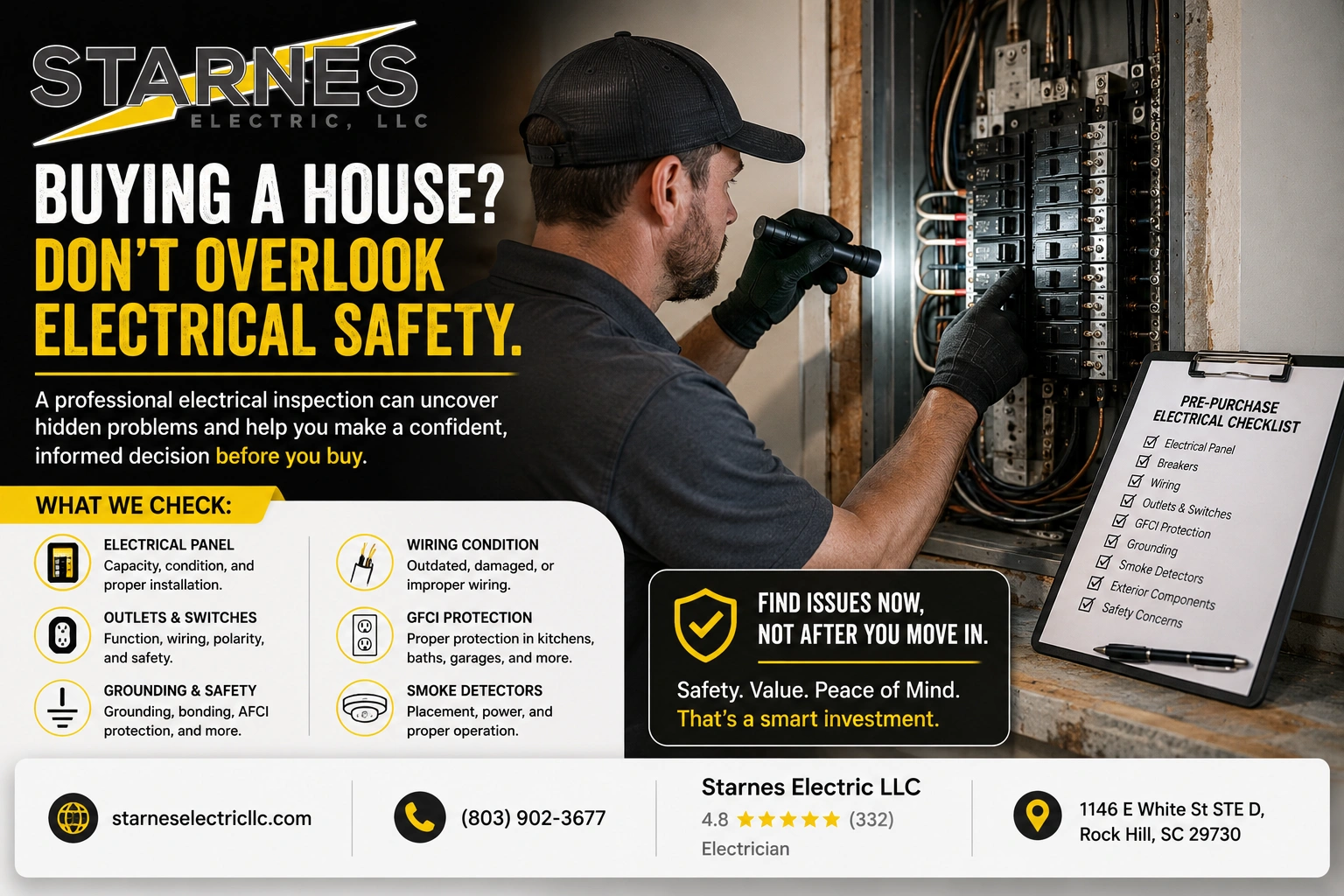
An electrical inspection before buying a home checks the condition, safety, and function of the property’s electrical system. This includes the electrical panel, breakers, wiring, outlets, switches, GFCI protection, grounding, smoke detectors, exterior electrical components, and visible safety concerns.
For homebuyers, this type of inspection can reveal problems that may not be obvious during a regular walkthrough. A light may turn on, but that does not always mean the wiring behind it is safe, properly grounded, or ready for modern electrical demand.
At Starnes Electric LLC, we help buyers understand possible electrical concerns before they move forward with a home purchase. A pre-purchase electrical inspection can be especially helpful for older homes, recently renovated homes, homes with additions, or properties showing signs of outdated electrical work.
Buying a Home? Don’t Skip the Electrical Inspection
Avoid costly surprises after closing. Get a professional electrical inspection and uncover hidden wiring, panel, and safety issues before you buy.
Why Homebuyers Should Schedule an Electrical Inspection
Buying a house is one of the biggest financial decisions most people make. While a general home inspection is helpful, it may not provide the same focused electrical evaluation a licensed electrician can offer. Electrical systems can be complex, and hidden issues can become expensive after you move in.
A dedicated electrical inspection helps identify concerns that may affect safety, insurance, future renovations, and daily comfort. If the home has outdated wiring, an undersized panel, ungrounded outlets, overloaded circuits, or unsafe DIY electrical work, it is better to know before finalizing the purchase.
Electrical problems can also affect negotiation. If the inspection reveals repairs or upgrades are needed, buyers may be able to request repairs, ask for a credit, or adjust their offer. Even if the seller does not make changes, the buyer can plan ahead with realistic expectations.
This inspection is also important because modern homes use more power than many older homes. HVAC systems, appliances, computers, chargers, entertainment systems, security systems, and smart home devices all place demand on the electrical system. A home that was fine years ago may not be properly equipped for today’s needs.
Electrical Panel Issues That Should Be Checked
The electrical panel is one of the most important parts of the inspection. It distributes power throughout the home and protects circuits through breakers. If the panel is outdated, damaged, overloaded, or poorly maintained, it can create safety and reliability concerns.
A licensed electrician may check whether the panel has enough capacity for the home. Older homes may still have panels that are too small for modern electrical demands. If the buyer plans to add appliances, finish a garage, install EV charging, or remodel, panel capacity becomes even more important.
The inspection may also look for signs of rust, overheating, scorch marks, loose breakers, missing labels, double-tapped breakers, improper wiring, or older panel brands with known safety concerns. Breakers that do not fit properly or circuits that are not clearly labeled can also create issues.
Another concern is whether the panel has been modified incorrectly. Some homes have electrical work completed by previous owners or unqualified handymen. These shortcuts may not be obvious at first glance but can create serious problems over time.
If the panel needs repair or replacement, the buyer should know before closing. A panel upgrade can be a worthwhile investment, but it is also a cost that should be understood before purchasing the home.
Outlet, Switch, and GFCI Problems to Look For
Outlets and switches are used every day, so they should be checked carefully. During an electrical inspection, a licensed electrician can look for loose outlets, damaged covers, warm switches, reversed polarity, open grounds, worn components, and outlets that do not work properly.
GFCI protection is another major item. GFCI outlets are designed to help reduce the risk of electrical shock in areas where water may be present. These are commonly needed in kitchens, bathrooms, garages, laundry areas, crawl spaces, basements, and exterior locations.
If a home does not have proper GFCI protection, it may need updates for safety. This is especially common in older homes or homes where previous electrical work was not completed correctly.
Switches should also be checked. Flickering lights, buzzing switches, loose switch plates, or switches that feel warm can point to wiring issues, aging components, or poor connections. These problems should not be ignored because they may indicate a deeper electrical concern.
Exterior outlets should be inspected as well. Outdoor receptacles should be properly protected from weather and connected to appropriate safety devices. Damaged outdoor covers, exposed wiring, or non-working exterior outlets can create hazards and inconvenience for the new homeowner.
Wiring Concerns in Older Homes
Older homes often have character, charm, and strong construction, but they may also have outdated electrical systems. Wiring is one of the biggest concerns when buying an older property.
A pre-purchase electrical inspection may identify wiring types that are no longer preferred or may require updates. This can include knob-and-tube wiring, aluminum wiring, cloth-insulated wiring, or wiring that has deteriorated over time. Some older wiring may still function, but it may not be well suited for modern electrical demands.
Another concern is ungrounded wiring. Some older homes have two-prong outlets or three-prong outlets that are not actually grounded. This can create safety concerns and limit how safely modern electronics and appliances can be used.
The inspection may also uncover improper splices, exposed wires, overloaded junction boxes, loose connections, or wiring that was added during renovations without proper workmanship. Homes with additions, finished basements, converted garages, or remodeled kitchens often deserve extra attention.
Wiring concerns should always be taken seriously. Even if the home appears move-in ready, hidden wiring problems can lead to flickering lights, tripped breakers, damaged electronics, or fire risks. Having a licensed electrician evaluate the visible electrical system helps buyers make a more informed decision.
Is It Better To Hire Experienced Electricians Or Hire Inexperienced And Train Properly?
When it comes to hiring electricians for a project, the [...]
Learn More
Smoke Detectors, Grounding, and Other Safety Devices
Electrical safety is not just about lights and outlets. A proper inspection should also consider smoke detectors, grounding, bonding, and other safety-related devices.
Smoke detectors should be installed in appropriate locations and should function properly. Depending on the home, there may also be carbon monoxide detectors that need to be checked. Buyers should pay attention to whether detectors are missing, outdated, disconnected, or improperly placed.
Grounding is another important part of electrical safety. A grounded electrical system helps reduce shock risk and supports the safe operation of appliances and electronics. If grounding is missing or incomplete, repairs may be needed.
The electrician may also check for AFCI protection where applicable. AFCI devices are designed to help reduce the risk of certain electrical faults that can lead to fires. Depending on the age of the home and previous updates, these protections may or may not be present.
Other safety concerns may include exposed wiring, uncovered junction boxes, damaged electrical fixtures, missing outlet covers, loose connections, improper extension cord use, or overloaded power strips. While some of these may seem small, they can reveal how well the electrical system has been maintained.
What Happens If the Inspection Finds Electrical Problems?
Finding electrical problems does not always mean you should walk away from the home. Many issues can be repaired. The key is understanding the seriousness of the problem, the estimated cost, and whether repairs should happen before or after closing.
Minor issues may include replacing damaged outlets, adding GFCI protection, correcting loose connections, repairing switches, labeling breakers, or replacing worn fixtures. These repairs are often manageable and may not affect the purchase decision.
More serious concerns may include outdated wiring, unsafe panels, overloaded circuits, improper renovations, damaged service equipment, or widespread grounding problems. These issues may require a larger conversation with the seller, real estate agent, and electrician.
Once the inspection findings are clear, buyers can decide how to move forward. They may request repairs, ask for a seller credit, renegotiate the purchase price, or plan for upgrades after moving in. Having clear information helps buyers make a more confident decision during the buying process.
At Starnes Electric LLC, we believe buyers deserve practical answers. We can explain what is urgent, what can be planned for later, and what may affect safety, reliability, or everyday use of the home.
Pre-Purchase Electrical Inspections by Starnes Electric
A home can look beautiful on the outside while still having electrical concerns behind the walls, inside the panel, or throughout the property. That is why a pre-purchase electrical inspection can be a smart step before buying.
At Starnes Electric LLC, we provide electrical inspections that help homebuyers understand the condition of the electrical system. We look for visible safety concerns, outdated components, signs of improper work, and issues that may require repair or upgrade.
Our goal is to give you helpful information before you make a major investment. Whether you are buying an older home, a recently remodeled property, or a house that simply raises questions during the inspection process, we can help you better understand what needs attention.
Feel More Confident Before You Close
Before you buy, it helps to know what is happening with the home’s electrical system. At Starnes Electric LLC, we can inspect visible electrical components, explain our findings clearly, and help you understand what may need attention before or after closing.
If something needs repair, we can identify the concern and recommend a practical solution. If the system appears safe and functional, you gain added peace of mind before moving forward with the purchase.
FAQs About Electrical Inspections Before Buying a Home
Do I need an electrical inspection if I already had a home inspection?
Yes, it can still be helpful. A general home inspection may identify visible concerns, but a licensed electrician can provide a more focused review of the electrical system.
What electrical problems are common in older homes?
Common issues include outdated wiring, ungrounded outlets, small electrical panels, overloaded circuits, missing GFCI protection, and previous DIY electrical work.
Can an electrical inspection help with price negotiation?
Yes. If the inspection finds repairs or upgrades are needed, buyers may use that information to request repairs, ask for a credit, or renegotiate with the seller.
How long does a pre-purchase electrical inspection take?
The time depends on the size, age, and condition of the home. Larger or older homes may take longer because there may be more electrical components to review.
Should the electrical panel be inspected before buying a house?
Yes. The electrical panel is one of the most important parts of the home’s electrical system. It should be checked for capacity, condition, wiring issues, breaker problems, and visible safety concerns.
Are two-prong outlets a problem?
Two-prong outlets often mean the home may not have grounded wiring in those areas. This should be evaluated by a licensed electrician, especially if you plan to use modern electronics and appliances.
What if the inspection finds unsafe wiring?
Unsafe wiring should be reviewed carefully before closing. Depending on the issue, repairs may be needed right away, or the buyer may need to plan for a larger electrical upgrade.
Hidden Electrical Problems Can Cost Thousands
From faulty wiring to overloaded panels, our thorough inspection helps you make an informed home-buying decision.
About the Author: Starnes Electric