
Are Ungrounded Outlets Dangerous?
Table of Contents
Yes, ungrounded outlets can be dangerous because they do not provide a safe path for fault current if a device, cord, or circuit fails. They may still power lamps, chargers, appliances, and electronics, but they offer less shock protection and less equipment protection than properly grounded outlets.
Many older homes have ungrounded outlets because the wiring was installed before grounding became standard. The outlet may look harmless, especially if it still works, but the concern is what happens during a fault, surge, loose connection, or appliance problem.
The risk is higher if you rely on three-prong adapters, power strips, surge protectors, tools, appliances, or sensitive electronics. The safest next step is to have the outlet and circuit tested so you know whether you need GFCI protection, grounded wiring, outlet replacement, or another repair.
Still using ungrounded outlets?
Avoid shock hazards and hidden electrical problems. Call today for professional outlet upgrades and safety inspections.
Quick Answer: Are Ungrounded Outlets Unsafe?
Ungrounded outlets are less safe than properly grounded outlets. The main concern is not whether the outlet supplies power. The concern is what happens when something goes wrong.
A grounded outlet gives fault current a safer route back to the electrical system. An ungrounded outlet does not provide that same safety path.
That missing protection can increase the risk of electrical shock, equipment damage, and unsafe use of adapters. The risk is greater in kitchens, bathrooms, garages, laundry rooms, workshops, home offices, and anywhere moisture or high-demand equipment is present.
What Is an Ungrounded Outlet?
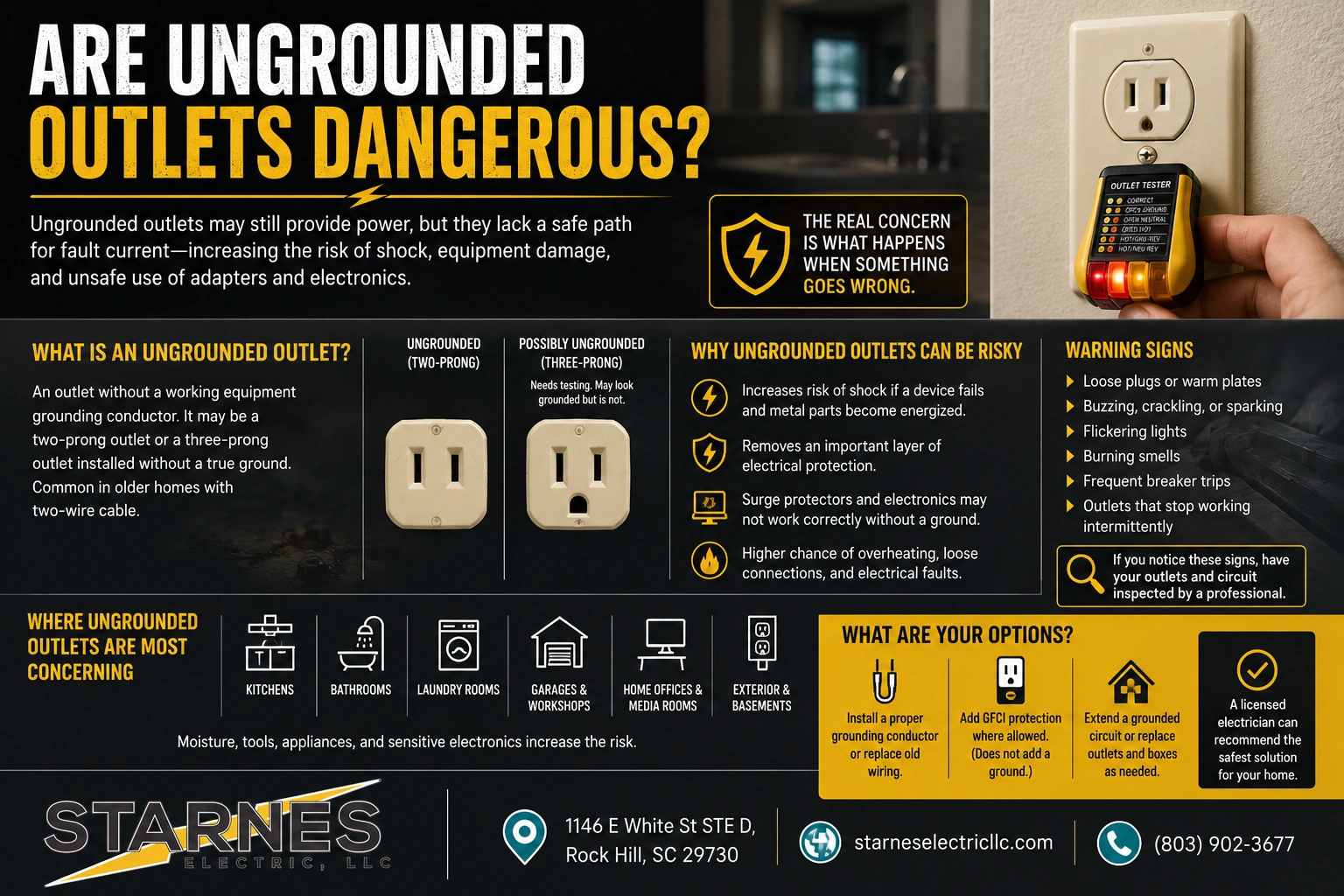
An ungrounded outlet is an outlet that does not have a working equipment grounding conductor. It may be a two-prong outlet, or it may be a three-prong outlet that was installed without a true ground.
This is common in older homes with two-wire cable. Those circuits usually include a hot wire and a neutral wire, but not a separate ground wire.
A grounded outlet has hot, neutral, and ground connections. The ground is a safety path. It is not meant to carry normal operating current.
The problem is that an outlet can look modern and still be ungrounded. A three-prong outlet face does not prove the wiring behind it is grounded, safe, or properly installed.
How to Tell If an Outlet Is Ungrounded
The easiest visual clue is a two-prong outlet. If the outlet has only two vertical slots and no round grounding opening, it is likely ungrounded.
A three-prong outlet needs testing. Some older homes have three-prong outlets installed on circuits that never had a ground wire. This can make the outlet look safer than it really is.
A plug-in outlet tester can reveal some common issues, but it does not replace a full electrical inspection. Some wiring problems can fool basic testers or require panel-side verification.
You should also watch for warning signs such as:
- Loose plugs
- Warm outlet plates
- Buzzing or crackling sounds
- Sparks when plugging in a device
- Flickering lights
- Burning smells
- Frequent breaker trips
- Outlets that stop working intermittently
If you recently bought an older home, schedule an electrical inspection before relying on older outlets for computers, appliances, power tools, or medical equipment.
Why Ungrounded Outlets Can Be Risky
Ungrounded outlets increase risk because they remove an important layer of electrical protection. If a device fails internally, metal parts may become energized.
With proper grounding, fault current can move through the ground path and help trip the breaker. Without grounding, a person touching the device may become part of the path.
Ungrounded outlets can also reduce protection for electronics. Surge protectors usually need a real ground to work correctly. Without one, expensive devices may still be vulnerable during surges or electrical faults.
Another issue is how people use older outlets. Homeowners often force modern electrical needs onto older wiring by using adapters, extension cords, and overloaded power strips. That can create overheating, loose connections, nuisance tripping, and additional safety concerns.
The danger depends on the circuit condition, outlet location, and connected devices. But ignoring ungrounded outlets is rarely a good idea.
Powering Up Your Business: Hiring a Commercial Electrician
In the fast-paced business world, ensuring that your electrical systems [...]
Learn More
Where Ungrounded Outlets Are Most Concerning
Some ungrounded outlets are more urgent than others. The highest-risk areas are usually rooms where moisture, appliances, tools, or sensitive electronics are involved.
Kitchens, bathrooms, laundry rooms, garages, workshops, crawl spaces, exterior areas, and unfinished basements deserve extra attention because moisture and electrical faults can create serious shock risks.
Home offices, media rooms, and bedrooms with computers, chargers, gaming systems, or medical equipment should also be checked. These devices may rely on grounded outlets or surge protection to operate safely.
Garages and workshops are another priority because power tools, extension cords, battery chargers, and equipment can place heavier demand on older circuits.
A room-by-room inspection can help you decide which outlets should be upgraded first.
Can You Use a Three-Prong Adapter Safely?
A three-prong adapter is not a safe long-term solution for most ungrounded outlets. It can make a plug fit, but it usually does not create a real ground.
Some adapters have a small tab or wire intended to connect to a grounded metal box. That only works if the box itself is properly grounded. In many older homes, it is not.
Using adapters can also hide the real issue. A grounded appliance may appear connected correctly while still lacking the protection it was designed to use.
For occasional, low-risk use, an adapter may seem convenient. For daily use, appliances, electronics, tools, or damp areas, it is not the right fix.
A licensed electrician can determine whether the box is grounded and recommend a safer solution.
What Are Your Options for Fixing Ungrounded Outlets?
The most complete option is installing a proper grounding conductor or replacing old wiring with grounded cable. This gives the outlet a true equipment ground and brings the circuit closer to modern electrical needs.
Another option is installing GFCI protection where allowed. A GFCI outlet can reduce shock risk by shutting off power when it senses current leakage. However, it does not add a ground. If no ground exists, the outlet must be labeled correctly.
In some cases, a grounded circuit can be extended from another approved source. This depends on the home’s wiring layout, the circuit condition, and applicable code requirements.
Outlet replacement may also involve new boxes, tighter connections, updated covers, corrected polarity, or panel-related repairs.
The right repair should match the room. A bedroom lamp outlet may not need the same solution as a kitchen counter, garage workbench, laundry area, or home office.
When to Schedule an Electrical Inspection
Schedule an electrical inspection if your home has two-prong outlets, unknown wiring, frequent breaker trips, or outlets that feel loose or warm.
You should also schedule one before remodeling, adding appliances, finishing a basement, setting up a home office, or buying an older property.
Inspections are especially important in moisture-prone and high-use areas. Bathrooms, kitchens, garages, crawl spaces, laundry rooms, exterior outlets, and workshops need stronger protection because they are more likely to involve moisture, tools, appliances, or heavier loads.
An electrician can test grounding, polarity, GFCI protection, breaker performance, wire condition, outlet box condition, and panel capacity.
The inspection helps you avoid guesswork. It also prevents the common mistake of replacing an old outlet with a three-prong outlet without adding a real ground or approved protection.
FAQs About Ungrounded Outlets
Are all two-prong outlets ungrounded?
Most two-prong outlets are ungrounded, but testing is still important. Some older systems may have metal conduit or another grounding method. An electrician can confirm whether a proper ground exists.
Is a three-prong outlet always grounded?
No. A three-prong outlet may be ungrounded if someone replaced the outlet without updating the wiring. The appearance alone is not reliable.
Can an ungrounded outlet damage electronics?
Yes, an ungrounded outlet can increase the risk of damage during surges or faults. Surge protectors may not perform correctly without a proper ground, which can leave computers, televisions, chargers, and other electronics more vulnerable.
Is GFCI protection enough?
GFCI protection can improve shock safety in some allowed situations, but it does not create an equipment ground. It can be a practical safety upgrade for certain ungrounded circuits, but grounded wiring is better for sensitive electronics and heavy-use areas.
Should I replace all ungrounded outlets at once?
Not always. Start with high-risk areas and heavily used rooms, such as kitchens, bathrooms, garages, laundry rooms, workshops, home offices, and exterior areas. A professional inspection can help rank outlets by urgency.
How Starnes Electric Helps Upgrade Ungrounded Outlets
At Starnes Electric LLC, we help homeowners understand what their outlets are actually connected to before making changes. We inspect the circuit, test for grounding, review the panel, and explain practical repair options clearly.
We do not treat every outlet the same. Some rooms may need GFCI protection. Others may need grounded wiring, outlet replacement, or panel-related corrections.
Our goal is to make your electrical system safer, easier to use, and better suited for modern electrical needs. We also look for loose connections, aging boxes, overloaded circuits, and past repairs that may affect long-term performance.
If your home has ungrounded outlets, questionable three-prong outlets, or frequent electrical issues, Starnes Electric LLC can help you prioritize upgrades based on safety, room use, and budget.
Ungrounded outlets putting your home at risk?
Protect your family and devices with expert outlet inspection and repair. Call now for fast electrical service you can trust.
About the Author: Starnes Electric