
Should You Replace Two-Prong Outlets in an Older Home?
Table of Contents
Yes, two-prong outlets in older homes should usually be inspected and upgraded if they are ungrounded, worn, damaged, loose, or being used for modern appliances and electronics. They are not automatically unsafe, but they can limit protection against shock, appliance damage, and hidden wiring problems.
Many older homes still have two-prong outlets because the original wiring was installed before grounded outlets became common. The right fix depends on the wiring behind the outlet, the condition of the electrical panel, and how the room is used today.
Some outlets may only need proper GFCI protection and labeling. Others may need new grounded wiring or additional electrical updates before a three-prong outlet can be safely installed.
Upgrade Unsafe Old Outlets Today
Older two-prong outlets may not safely support modern appliances. Get trusted electrical solutions before problems get worse.
Quick Answer: Should Two-Prong Outlets Be Replaced?
In most older homes, replacing or upgrading two-prong outlets is a smart safety and usability improvement. The goal is not just to install a newer-looking outlet. The goal is to confirm whether the circuit has a proper ground and choose the safest replacement method for that wiring.
A licensed electrician may recommend a grounded outlet, a labeled GFCI-protected outlet, or a wiring update. The best option depends on the circuit, the panel, the outlet location, and the devices you plan to use.
Priority areas usually include kitchens, bathrooms, laundry rooms, garages, exterior outlets, home offices, workshops, and rooms where extension cords or power strips are used often.
Why Older Homes Have Two-Prong Outlets
Older homes often have two-prong outlets because many original electrical systems were built with two-wire cable. That cable includes a hot wire and a neutral wire, but it does not include a separate equipment grounding conductor.
At the time, most homes used fewer appliances, chargers, computers, and sensitive electronics. A few lamps, radios, and small appliances did not create the same demand as today’s home offices, entertainment systems, smart devices, HVAC equipment, and kitchen appliances.
A two-prong outlet usually means the branch circuit may not be grounded. It can also point to older wiring methods that should be checked before new outlets or heavier electrical loads are added.
That does not mean the whole home is unsafe. It means the system should be inspected before someone installs three-prong outlets or relies on adapters.
Are Two-Prong Outlets Dangerous?
Two-prong outlets are not always immediately dangerous, but they offer less protection than properly grounded outlets. The main concern is the missing ground path.
A ground wire gives fault current a safer route back to the electrical system if something goes wrong. Without it, a damaged appliance, loose connection, or metal device housing can increase shock risk.
Two-prong outlets can also lead to unsafe workarounds. Homeowners may use three-prong adapters, overloaded power strips, or extension cords to make modern devices fit older outlets.
Watch for warning signs such as:
- Warm outlet covers
- Sparks when plugging in a device
- Buzzing or crackling sounds
- Loose plugs
- Discoloration around the outlet
- Burning smells
- Frequent breaker trips
- Outlets that stop working intermittently
If you notice any of these issues, the outlet should be inspected before it is used again.
Two-Prong vs. Three-Prong Outlets
A two-prong outlet has two slots: one for the hot conductor and one for the neutral conductor. It does not have the round grounding slot found on a three-prong outlet.
A three-prong outlet has hot, neutral, and ground connections. When properly wired, that third opening connects to an equipment grounding conductor.
The key phrase is properly wired. A three-prong outlet is not automatically grounded just because it has three openings. Some older homes have three-prong outlets installed on ungrounded circuits, which can create a false sense of safety.
That is why testing matters. An electrician can determine whether a true ground is present and whether the outlet was installed correctly.
Pool and Spa Electrical Wiring Requirements & Safety
Pools and spas are supposed to be where you relax, [...]
Learn More
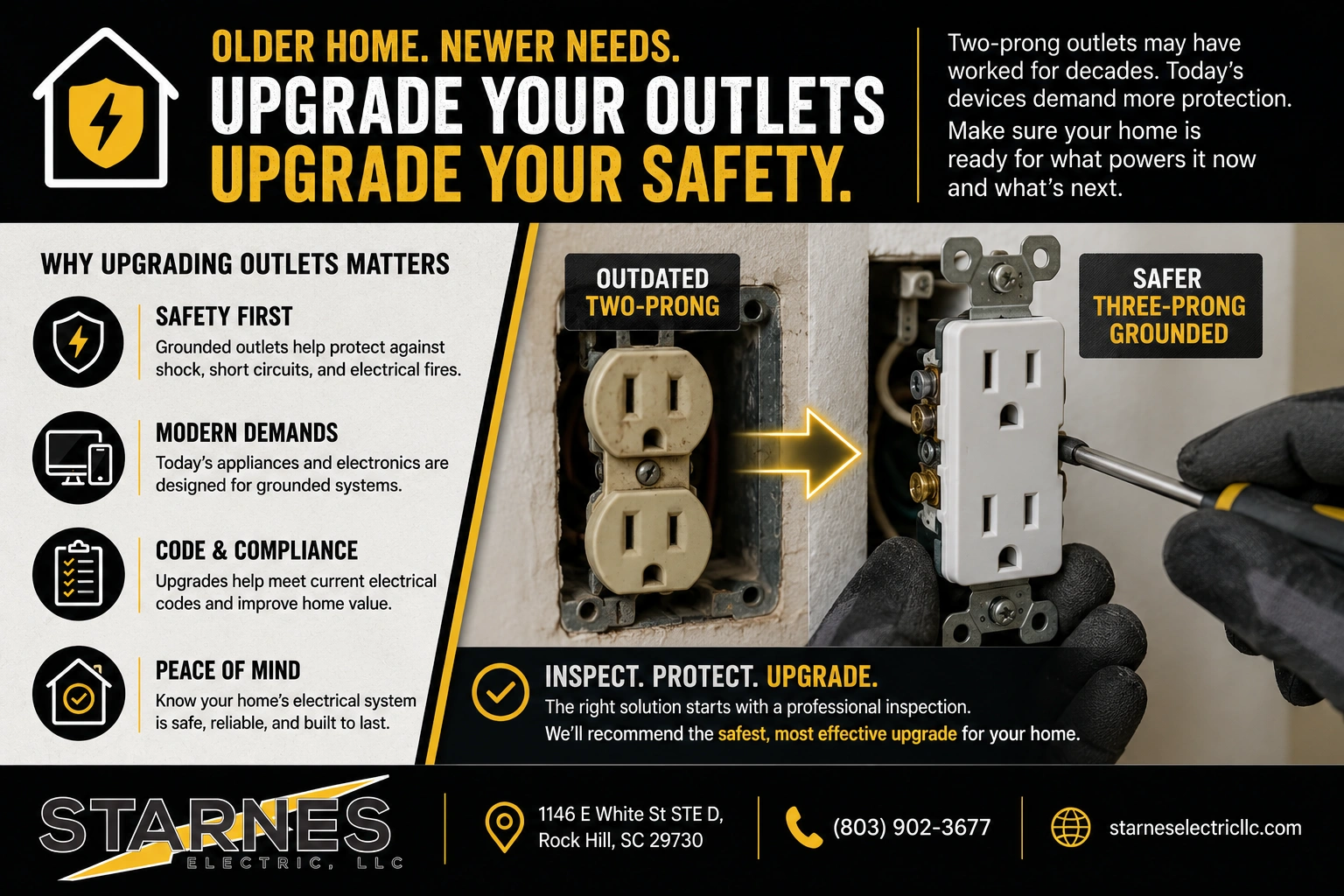
Can You Replace a Two-Prong Outlet With a Three-Prong Outlet?
You should not simply swap a two-prong outlet for a standard three-prong outlet unless the circuit has a proper equipment ground or another approved protection method is used. Installing a three-prong outlet on an ungrounded circuit can make the outlet look safer than it really is.
There are safe upgrade options, but they need to be done correctly. One option is installing new grounded wiring from the panel or another approved grounding point.
Another option may be installing GFCI protection on an ungrounded circuit. A GFCI can reduce shock risk by shutting off power when it detects current leakage. However, it does not create a ground. When used this way, the outlet or cover plate must be properly labeled.
The right choice depends on the wiring type, outlet location, code requirements, and how the outlet will be used.
Why Grounding Matters for Modern Appliances and Electronics
Grounding matters because many modern appliances and devices are designed to work with a grounded electrical system. Computers, surge protectors, refrigerators, microwaves, power tools, and office equipment often use three-prong plugs for safety and performance reasons.
A grounded circuit helps redirect fault current away from the person using the device and back toward the electrical system. It can also help surge protectors work as intended.
Grounding becomes especially important in home offices, media rooms, garages, workshops, kitchens, and other spaces where sensitive electronics or higher-demand equipment are used.
Replacing outlets is really about matching the electrical system to how the home is used today.
When Outlet Replacement May Require Wiring Updates
Sometimes outlet replacement is simple. Other times, the outlet is only one sign of a larger wiring issue.
Wiring updates may be needed if the circuit has no ground, brittle insulation, damaged conductors, aluminum wiring concerns, crowded boxes, outdated panels, or repeated breaker problems.
Older homes may also have mixed wiring from previous repairs or renovations. Some outlets may be grounded, while others are not. Some may have been replaced without the circuit being properly updated.
A wiring update may also be recommended when adding appliances, finishing a room, remodeling a kitchen, upgrading a home office, or preparing to sell the home.
The safest approach is to inspect before replacing. A professional can test polarity, grounding, GFCI protection, box condition, wire size, and panel capacity.
Outlet Replacement for Older Homes in Rock Hill, Fort Mill, and Tega Cay
Homes in Rock Hill, Fort Mill, and Tega Cay can have very different electrical needs. Some older properties may still have original wiring, while remodeled homes may have a mix of older and newer circuits.
Lake homes, garages, workshops, home offices, kitchens, bathrooms, laundry rooms, and exterior areas often deserve extra attention. These spaces may involve moisture, power tools, appliances, chargers, smart devices, or sensitive electronics.
Before replacing outlets, it is important to identify the highest-priority areas first. Kitchens, bathrooms, laundry rooms, garages, exterior areas, and workspaces are often the best places to start because they have greater safety and usability needs.
A room-by-room inspection can help determine where GFCI protection, grounded wiring, outlet replacement, or panel updates may be needed.
FAQs About Replacing Two-Prong Outlets
Is it illegal to have two-prong outlets?
Two-prong outlets are not automatically illegal in older homes. Existing wiring may be allowed to remain if it was properly installed and maintained. Problems usually arise when outlets are damaged, unsafe, improperly replaced, or no longer suitable for how the room is used.
Can I use a three-prong adapter?
A three-prong adapter is not a good long-term fix. It may only provide grounding if it is connected to a properly grounded metal box. Many older outlets do not have that, so the adapter can create a false sense of protection.
Does a GFCI outlet fix an ungrounded outlet?
A GFCI outlet can improve shock protection on an ungrounded circuit, but it does not add a ground wire. That means it may be an acceptable safety upgrade in some situations, but electronics and surge protectors that need a true ground may still require rewiring.
Should every two-prong outlet be replaced?
Not always at the same time. Start with rooms where safety, moisture, and equipment use matter most, such as kitchens, bathrooms, garages, laundry rooms, exterior areas, workshops, and home offices. An inspection can help prioritize GFCI protection, grounding, rewiring, or replacement.
Can I replace two-prong outlets myself?
Outlet replacement can look simple, but older wiring can be unpredictable. A DIY swap can leave reversed polarity, loose connections, crowded boxes, or ungrounded three-prong outlets. For older homes, it is safer to have the wiring tested before replacing the outlet.
Safer Outlets Start With the Right Electrical Check
At Starnes Electric LLC, we help homeowners understand what is behind their two-prong outlets before recommending a fix. We check grounding, wiring condition, GFCI needs, outlet safety, and how each room is used.
If your older home still has two-prong outlets, we can inspect the circuits and explain practical upgrade options. The right solution may be a grounded outlet, GFCI protection, rewiring, or a larger electrical update.
A proper inspection helps you avoid shortcuts, reduce shock risks, support modern devices, and plan outlet upgrades in the right order.
Still Using Two-Prong Outlets?
Protect your home from electrical shock, fire risks, and outdated wiring. Call now for a professional outlet inspection and safe upgrade options.
About the Author: Starnes Electric