
Aluminum Wiring in Older Homes: Should You Be Concerned?
Table of Contents
Aluminum wiring in older homes can be a concern because some connections may loosen, overheat, or fail if they were not installed or maintained correctly. It is not always an emergency, but it should be inspected by a qualified electrician before you ignore it.
Many homes built or remodeled between the mid-1960s and late 1970s used aluminum branch wiring. The risk usually comes from connection points at outlets, switches, fixtures, junction boxes, and panels.
If those points deteriorate, small electrical problems can create heat, damage insulation, or become serious safety issues before homeowners notice visible warning signs.
Worried About Aluminum Wiring?
Protect your home from hidden fire hazards. Call now for a professional electrical safety inspection.
Quick Answer: Is Aluminum Wiring Dangerous?
Aluminum wiring can be dangerous when connections are loose, damaged, oxidized, overloaded, or joined with devices not rated for aluminum conductors. The wiring itself is not always the only issue. The connection points are usually where heat develops.
Older solid aluminum branch circuits behave differently from copper. Aluminum expands and contracts more with temperature changes. Over time, that movement can loosen terminals and weaken connections.
Loose electrical connections create resistance. Resistance creates heat. Heat can damage insulation, discolor outlets, melt devices, or increase fire risk.
If your home has aluminum wiring, do not panic. Do schedule a professional inspection so you know what type of wiring you have, how it was installed, and whether repairs are needed.
Why Some Older Homes Have Aluminum Wiring
Aluminum wiring became common when copper prices rose and builders needed a lower-cost alternative. Many homes from that period used aluminum for branch circuits feeding outlets, switches, and lighting.
Large aluminum conductors are still used safely today. The concern is mainly older solid aluminum branch wiring, especially where it connects to older devices.
Electrical codes, devices, and repair methods have changed over time. Some original installations may no longer meet today’s expectations for safety, especially if previous repairs were done incorrectly.
A home can also have a mix of copper and aluminum wiring. Additions, remodels, repairs, and panel upgrades may have changed some circuits but not others.
Common Problems With Aluminum Wiring
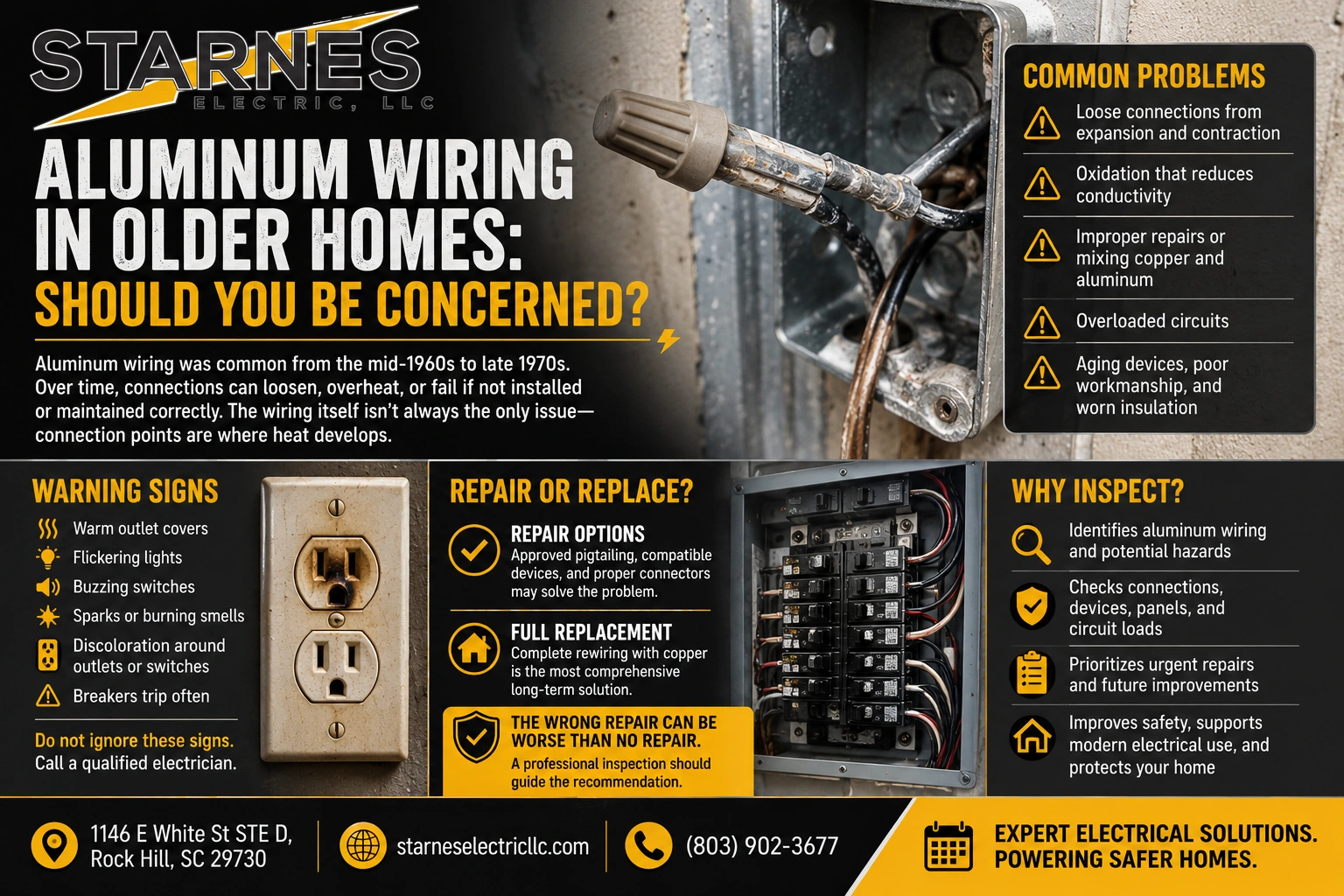
The most common issue with older aluminum branch wiring is loose connections. Aluminum expands when heated and contracts when cooled. This repeated movement can weaken contact at screws, splices, outlets, switches, and fixtures.
Oxidation is another concern. Aluminum forms an oxide layer that can interfere with conductivity if connections are not prepared correctly.
Improper repairs can also create hazards. Copper and aluminum should not be joined casually. The connection must use approved connectors and methods designed for that purpose.
Overloaded circuits make problems worse. Older homes were not designed for today’s number of appliances, chargers, office equipment, entertainment systems, and high-demand devices.
Poor workmanship, worn outlets, aging panels, damaged insulation, and past shortcut repairs can add even more risk.
Signs Your Home May Have Aluminum Wiring Issues
Some warning signs are visible. Others are hidden until an electrician opens a box, fixture, or panel.
Look for warning signs such as:
- Warm outlet covers
- Flickering lights
- Buzzing switches
- Sparks when using outlets or switches
- Burning smells
- Outlets that stop working and then work again
- Discoloration around plugs or switches
- Breakers that trip often
Do not keep resetting a breaker without finding the cause. A repeatedly tripping breaker may point to an overloaded circuit, damaged wiring, loose connection, or another issue that needs attention.
You may also see “AL” or “ALUMINUM” markings on cable jackets in accessible areas. However, do not remove covers, open electrical boxes, or open panels unless you are trained.
If the home was built or remodeled between the mid-1960s and late 1970s, an electrical inspection is wise.
Should Aluminum Wiring Be Replaced?
Full replacement is one option, but it is not the only option. The right solution depends on the condition of the wiring, the number of aluminum branch circuits, the age of the electrical system, and how the home is used.
Complete rewiring removes the older aluminum branch wiring and replaces it with copper. This is often the most complete long-term fix, but it can be invasive and costly.
Targeted repair methods may also be available. These can include approved pigtailing, compatible devices, and proper connectors designed for aluminum-to-copper transitions.
The wrong repair can be worse than no repair. Standard wire nuts, ordinary outlets, and unapproved splices should not be used as shortcuts.
A professional inspection should guide the recommendation. Some homes may need full rewiring, while others may only need targeted repairs at specific connection points.
How Much Clearance is Required Around Electrical Panels? (NEC Code Explained)
When it comes to electrical panels, proper clearance isn’t just [...]
Learn More
Can Aluminum Wiring Affect Insurance or Home Sales?
Yes, aluminum wiring can affect insurance, financing, inspections, and buyer confidence. Some insurers may ask for documentation, repairs, or professional verification before writing or renewing a policy.
During a home sale, aluminum wiring can appear in an inspection report. Buyers may request repairs, credits, documentation, or further electrical evaluation.
This does not mean a sale must fail. It means the condition needs to be understood and addressed properly.
Documentation matters. If repairs were completed by a licensed electrician using approved methods, keep records, photos, invoices, and inspection notes.
Good documentation helps homeowners, buyers, agents, and insurers understand what was found and corrected.
Why You Should Have Aluminum Wiring Inspected
An inspection identifies whether the home actually has aluminum branch wiring and whether the connections show signs of overheating, poor repairs, or incompatible devices.
An electrician can check outlets, switches, fixtures, junction boxes, and the main panel. They can also look for mixed copper-aluminum connections, damaged insulation, loose terminals, overloaded circuits, and signs of previous unsafe repairs.
This is not a simple visual walk-through. Many concerns are behind cover plates or inside electrical boxes.
A proper inspection can help prioritize repairs. High-use rooms, kitchens, laundry areas, home offices, HVAC-related circuits, and frequently used outlets may need attention first.
The goal is to reduce risk without guessing.
Electrical Wiring Inspections for Older Homes
Older homes often have more than one electrical issue. Aluminum wiring may be only part of the picture.
An inspection may also find ungrounded outlets, outdated panels, double-tapped breakers, worn receptacles, undersized circuits, missing GFCI protection, or old splices hidden in boxes.
These issues matter because they can interact. A loose aluminum connection on an overloaded circuit is more concerning than aluminum wiring in good condition on a properly protected circuit.
A wiring inspection gives you a clearer upgrade path. It can separate urgent repairs from future improvements.
For older homes, this is especially useful before remodeling, adding appliances, installing high-demand equipment, or setting up a home office.
FAQs About Aluminum Wiring
Is aluminum wiring always unsafe?
No. Aluminum wiring is not automatically unsafe, but older solid aluminum branch circuits need professional evaluation. The main risk is usually poor connections, incompatible devices, overloaded circuits, or previous improper repairs.
What years are most associated with aluminum wiring?
Many homes built or remodeled from the mid-1960s through the late 1970s may have aluminum branch wiring. The exact risk depends on the home, the wiring type, and the circuit history.
Can I check for aluminum wiring myself?
You may notice clues such as older panels or cable markings in accessible areas. However, confirming aluminum wiring safely should be done by an electrician. Do not remove covers, open boxes, or inspect panels unless you are trained.
Can aluminum wiring be repaired instead of replaced?
Yes, some aluminum wiring can be repaired using approved methods, compatible materials, and proper connectors. The repair must match the wiring condition, the devices involved, and applicable electrical standards.
Should I buy a house with aluminum wiring?
You can, but you should understand the condition first. Request an electrical evaluation, repair history, and cost estimates before making final decisions. Proper documentation can help you understand the risk, repair options, and possible insurance or resale concerns.
Safer Wiring Decisions Start With a Careful Evaluation
At Starnes Electric LLC, we inspect aluminum wiring before recommending repairs. We look at the wiring type, connection points, outlet condition, panel condition, and how each circuit is being used.
We do not assume every home needs the same fix. Some homes may need targeted repairs. Others may need larger wiring updates.
Our goal is to help you make practical decisions that improve safety, support modern electrical use, and protect your home.
If you are unsure about aluminum wiring in your older home, Starnes Electric LLC can help identify the risk, explain your options, and recommend the safest next steps.
Older Home With Aluminum Wiring?
Don’t ignore the warning signs. Get trusted electrical solutions and peace of mind today.
About the Author: Starnes Electric