
Do Older Homes in Rock Hill Need Electrical Rewiring?
Table of Contents
Older homes in Rock Hill may need electrical rewiring when the existing wiring is damaged, overloaded, ungrounded, outdated, or unable to support modern electrical use. Age alone does not always mean full rewiring is required, but older wiring should be inspected before problems are ignored.
Many Rock Hill homes were built before today’s appliances, home offices, chargers, HVAC systems, and safety standards became common. If lights flicker, breakers trip, outlets feel warm, or renovations are planned, the wiring may need repair, partial replacement, or complete rewiring.
The safest next step is a professional electrical inspection. Some homes only need targeted circuit upgrades, while others need a larger rewiring plan because the electrical system has reached its limit.
Worried about outdated wiring in your older home?
Protect your Rock Hill home with expert electrical inspections and rewiring solutions. Call now for safe, reliable service you can trust.
Quick Answer: When Does an Older Home Need Rewiring?
An older home needs rewiring when the wiring can no longer carry power safely, consistently, or code-compliantly. This may involve the entire house, specific circuits, or only certain high-use areas.
Common reasons include damaged insulation, ungrounded outlets, aluminum wiring concerns, overloaded circuits, outdated panels, unsafe splices, and repeated electrical failures.
A professional inspection is the only reliable way to know the scope. Some homes need targeted circuit upgrades. Others need a larger rewiring plan because the wiring, panel, or circuits can no longer support the way the home is used.
Why Older Rock Hill Homes May Have Outdated Wiring
Rock Hill has many established neighborhoods with homes built before modern electrical demand became normal. Older homes were not designed for large refrigerators, microwaves, HVAC upgrades, computers, entertainment systems, security equipment, and multiple charging stations.
Some homes still have wiring from earlier construction periods. Others have been remodeled in stages, leaving a mix of old and new electrical work.
That mix can create confusion. One room may have grounded outlets while another still has older two-wire circuits. An addition may have newer wiring while the original part of the home still has outdated outlets or limited circuit capacity.
Previous repairs may also be a concern. Unapproved splices, oversized breakers, loose boxes, or poorly installed outlets can hide behind finished walls.
Signs Your Home May Need Electrical Rewiring
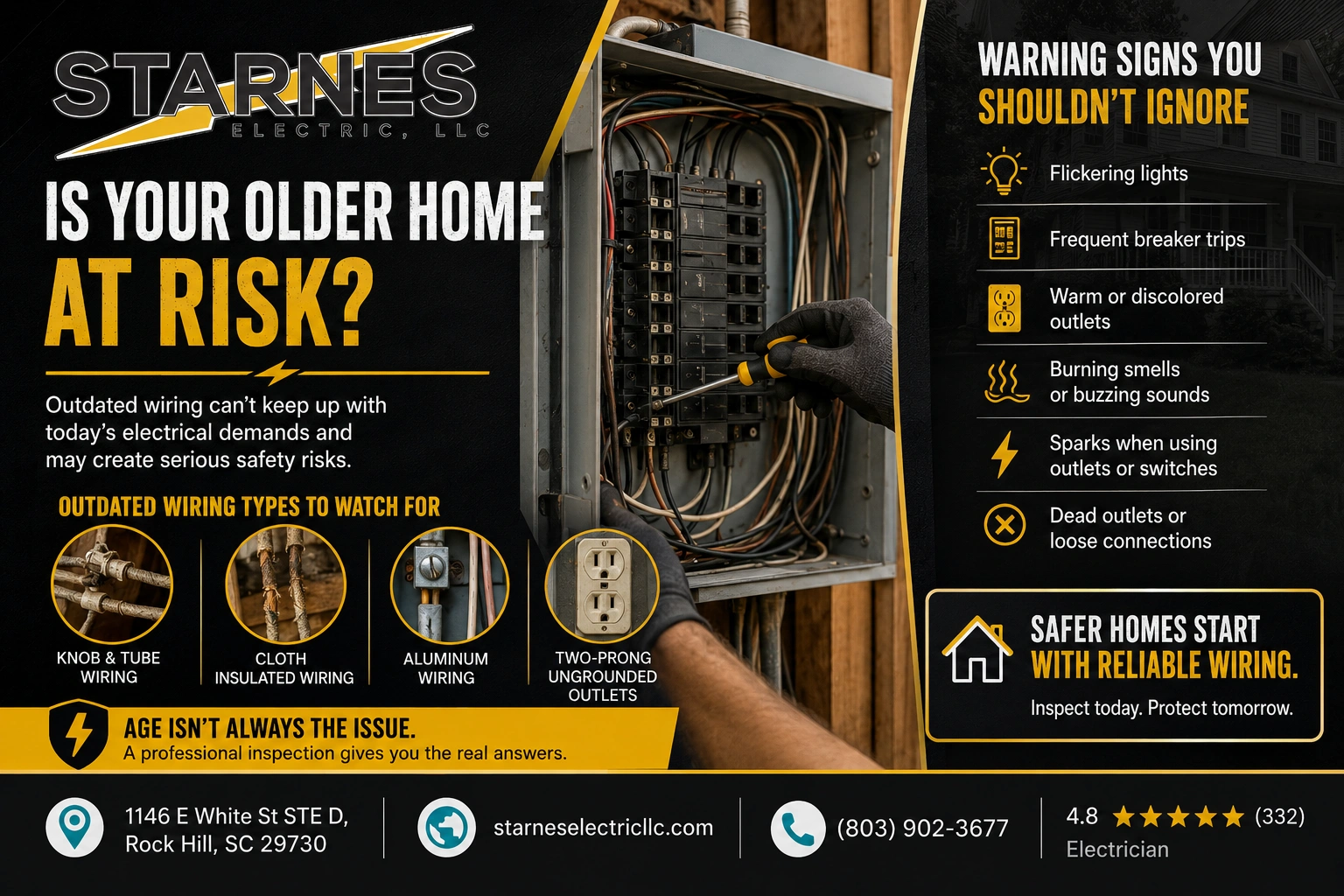
Warning signs should never be dismissed. Flickering lights, frequent breaker trips, buzzing switches, and outlets that stop working can point to wiring trouble.
More serious warning signs include:
- Warm outlet covers
- Burning smells
- Sparks when using outlets or switches
- Discoloration around outlets or switches
- Breakers that trip repeatedly
- Outlets that feel loose
- Lights that dim when appliances turn on
- Dead outlets that stop working without a clear reason
These signs may indicate overheating, loose connections, damaged conductors, overloaded circuits, or worn devices.
You may also notice practical limitations. Too few outlets, heavy extension cord use, and rooms that cannot support normal appliances often mean the electrical system is outdated.
If breakers trip when common devices run together, the circuit may be overloaded. Rewiring or adding dedicated circuits may be needed.
Outdated Wiring Types Homeowners Should Know About
Older homes may contain wiring types that require special attention. Two-wire ungrounded cable is common in homes with two-prong outlets or ungrounded three-prong replacements.
Aluminum branch wiring may appear in some homes built or remodeled during the 1960s and 1970s. The concern is often at connection points, where loosening and overheating can occur.
Knob-and-tube wiring is less common but important to identify. It may lack grounding and can be unsafe when altered, damaged, or covered with insulation.
Cloth-insulated wiring can become brittle over time. When insulation cracks, conductors may be exposed or unsafe to disturb.
Each wiring type requires proper evaluation. The age of the wiring, condition of the insulation, circuit load, grounding, and past repairs all matter.

Can Old Wiring Cause Breaker Trips, Flickering Lights, or Dead Outlets?
Yes, old wiring can contribute to breaker trips, flickering lights, and dead outlets. These symptoms often mean the circuit is overloaded, connections are loose, devices are worn, or wiring insulation has deteriorated.
Breaker trips are especially important. A breaker is designed to protect the circuit. If it trips repeatedly, something is wrong.
Flickering lights may come from a loose neutral, failing switch, overloaded circuit, or panel issue. Dead outlets may result from loose connections, damaged wiring, tripped GFCIs, or failed devices.
These problems may seem small at first. Over time, heat and poor connections can worsen. A wiring check can help determine whether the issue is isolated or part of a larger electrical problem.
Do You Need Rewiring Before Remodeling or Adding Appliances?
You may need rewiring before remodeling, especially if the project includes kitchens, bathrooms, laundry rooms, garages, additions, or finished basements. These areas often need dedicated circuits, GFCI protection, proper grounding, and updated outlet placement.
New appliances can also change the electrical load. Ovens, dryers, HVAC equipment, sump pumps, water heaters, workshop tools, and EV chargers may require new circuits.
A remodel is the right time to inspect wiring because walls, ceilings, and cabinets may already be open. It is easier to upgrade wiring during construction than after finishes are complete.
Planning ahead can also prevent repeated service calls, damaged finishes, or last-minute electrical changes after the project is already underway.
What Happens During an Electrical Wiring Inspection?
An electrical wiring inspection starts with the visible system. The electrician checks the panel, breakers, grounding, outlet condition, switch condition, and signs of overheating.
Outlet testing may identify open grounds, reversed polarity, failed GFCI protection, or loose connections. The electrician may also inspect accessible wiring in attics, crawl spaces, basements, garages, or junction boxes.
The goal is to identify risk, not guess. A good inspection separates urgent safety concerns from future upgrades.
You should receive clear recommendations. These may include outlet replacement, new circuits, panel repairs, grounding upgrades, aluminum wiring corrections, or full rewiring.
How an Electrician Prioritizes Rewiring Work
A practical rewiring plan usually starts with safety, then capacity, then convenience. Bedrooms with older outlets may be less urgent than kitchens, bathrooms, laundry rooms, garages, and exterior areas where moisture, appliances, and heavier loads increase risk.
Permits and code requirements may also shape the work. Rewiring is not only about replacing cable. It may involve proper box fill, circuit labeling, GFCI protection, AFCI protection, grounding, smoke detector wiring, and dedicated circuits where required.
A licensed electrician can explain which updates are required now and which improvements can be planned later. That helps homeowners avoid rushed decisions, incomplete repairs, and repeated service calls after the same symptoms return.
It also helps protect finished surfaces by planning access points before walls, ceilings, cabinets, or flooring are opened during future projects or repairs.
FAQs About Rewiring Older Homes
Does every older home need rewiring?
No. Some older homes have already been updated or only need limited repairs. The need depends on wiring condition, grounding, panel capacity, circuit load, and past electrical work.
How do I know if my wiring is outdated?
Common clues include two-prong outlets, ungrounded three-prong outlets, frequent breaker trips, flickering lights, old panels, warm outlets, and limited outlet availability. An inspection confirms the details.
Can a home be partially rewired?
Yes. Partial rewiring is common when only certain circuits are unsafe, overloaded, or outdated. Kitchens, bathrooms, laundry areas, garages, and home offices are often prioritized first.
Is rewiring messy?
Rewiring can require access through walls, ceilings, crawl spaces, attics, or basements. The amount of disruption depends on the home layout and project scope.
Should I rewire before selling my home?
You may not need full rewiring before selling, but known electrical issues can affect inspections, negotiations, and buyer confidence. Documentation from a licensed electrician helps.
Electrical Rewiring Services in Rock Hill, SC
At Starnes Electric LLC, we help Rock Hill homeowners understand whether rewiring is truly needed. We inspect older electrical systems, explain what we find, and recommend practical solutions based on safety, code requirements, and actual home use.
We do not assume every older home needs complete rewiring. Some homes only need targeted upgrades. Others need more extensive work because wiring, outlets, circuits, or panels are outdated.
Our goal is to make your home safer and more reliable while helping you plan improvements in the right order.
If your older Rock Hill home has electrical warning signs, Starnes Electric LLC can help evaluate the system before small issues turn into larger repairs.
Thinking your older home may need rewiring?
Don’t ignore buzzing outlets or outdated panels. Call now for expert troubleshooting and safe electrical upgrades in Rock Hill.
About the Author: Starnes Electric