
The SC Storm Season Checklist: Protecting Your Home From Lightning Surges
Table of Contents
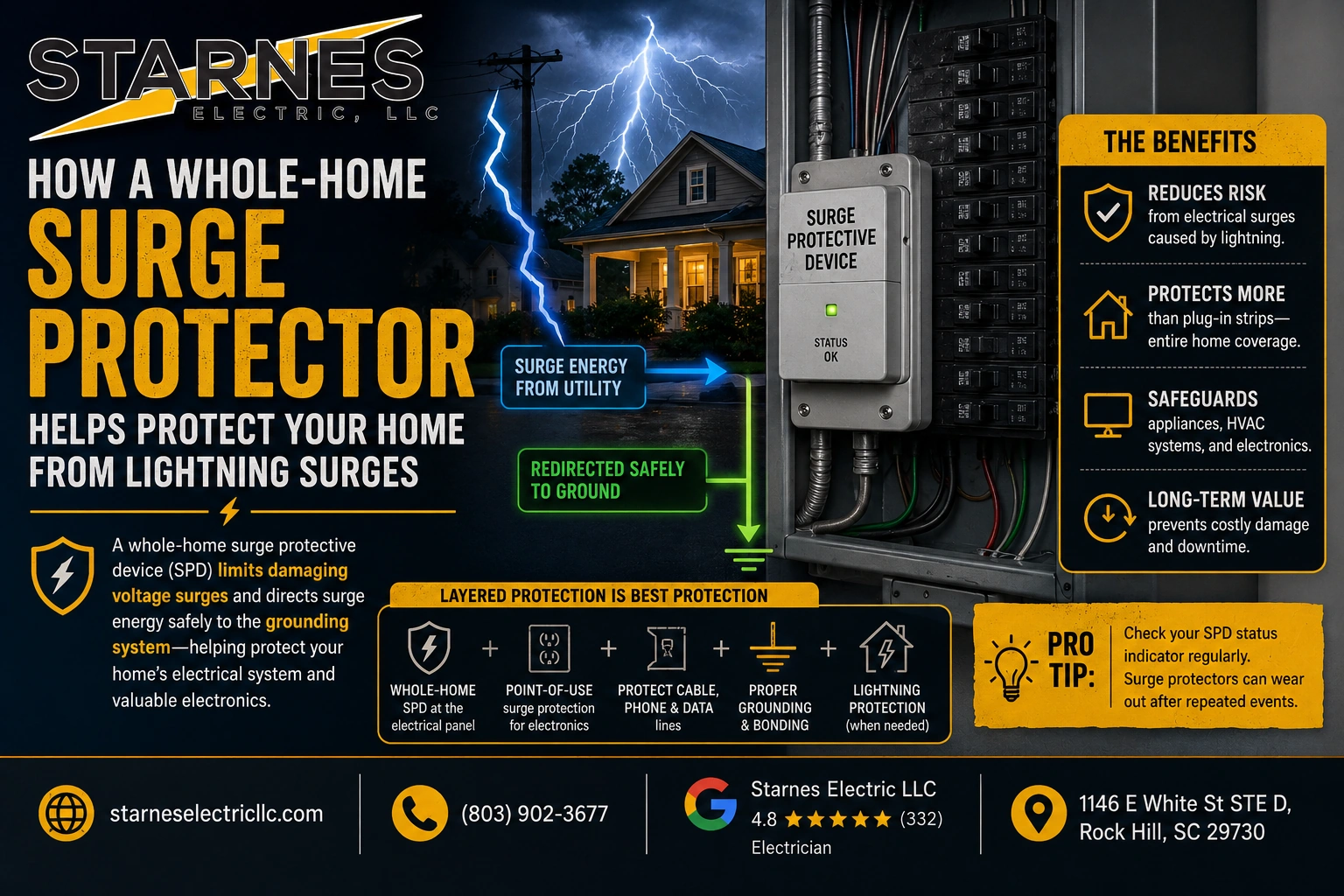
South Carolina homeowners should prepare for storm season by checking their electrical panel, grounding system, outdoor equipment, backup power supplies, and surge protection before the first severe thunderstorm arrives. A professionally installed whole-home surge protective device (SPD) is one of the most practical upgrades, but it should be part of a larger electrical safety plan rather than treated as a magical shield against lightning.
That last point matters. Some surge protection advertisements make it sound as though one small device can stare down a direct lightning strike and win. It cannot. No ordinary residential surge protector guarantees protection from a direct strike. What it can do is limit many damaging voltage surges that enter through utility lines or develop elsewhere in the electrical system.
South Carolina’s storm season can deliver lightning, high winds, heavy rain, fallen limbs, flooding, and utility interruptions in one noisy package. Lightning can also strike outside the heaviest rainfall, which means waiting until the storm is directly overhead is not a sensible preparation strategy. The National Weather Service warns that people are at risk whenever thunder is audible and recommends reaching safe shelter early.
In our opinion at Starnes Electric, storm preparation should begin on a calm day. Nobody should be searching for a flashlight, unplugging a television, or wondering whether the panel smells burned while thunder shakes the windows.
Concerned about lightning surge damage?
Protect your home's electrical system before the next storm. Call Starnes Electric LLC for fast inspections and reliable surge protection.
What should South Carolina homeowners check before storm season starts?
Homeowners should inspect the systems that protect the house, support essential equipment, and may be exposed to water or wind. The inspection does not need to become a full home-improvement festival. It simply needs to identify obvious weaknesses before severe weather turns them into expensive failures.
Start with this practical checklist:
- Check whether the main electrical panel has whole-home surge protection.
- Look for the SPD’s status light and confirm that it shows normal operation.
- Inspect outdoor receptacle covers for cracks, missing gaskets, or loose hinges.
- Test accessible GFCI receptacles using their TEST and RESET buttons.
- Check extension cords and outdoor power cords for cuts or exposed insulation.
- Confirm that trees and branches are not resting on service cables.
- Review the condition of the electrical meter and service mast from a safe distance.
- Replace worn point-of-use surge protectors.
- Charge phones, power banks, flashlights, and battery lanterns.
- Review the safe operating procedure for any standby generator or portable generator.
- Confirm that sump pumps, well pumps, medical devices, and security systems have a backup plan.
- Make sure the electrical panel directory is readable and accurate.
Homeowners should not open the main electrical panel, remove breakers, climb near overhead power lines, or attempt to repair service equipment. Those parts of the checklist belong to a licensed electrician and, where applicable, the utility company.
A whole-home surge protector also deserves a visual check. Many devices have an indicator light showing whether the protective components remain active. Surge protectors can wear out after repeated events, so an installed device should not be assumed to last forever.
Point-of-use protection matters too. A basic power strip is not automatically a surge protector. ESFI notes that only equipment specifically designed as a surge protective device (SPD) provides surge protection. Typical power strips, ordinary breakers, GFCIs, and fuses do not perform the same function.
Before storm season, homeowners should also sign up for local alerts and maintain a method of receiving warnings if power or internet service fails. Ready.gov recommends community warning systems, NOAA Weather Radio, and emergency alerts as part of thunderstorm preparation.
How can a whole-home surge protector help protect a house from lightning surges?
A whole-home surge protector helps by limiting sudden overvoltage and directing surge current away from electrical equipment. It is normally installed at the main electrical service, inside or beside the electrical panel, or at another approved service location.
When surge energy arrives through the utility system, the SPD responds by creating a lower-resistance path that redirects part of that energy toward the grounding system. The goal is to reduce the voltage that reaches branch circuits, appliances, HVAC controls, lighting, and electronics.
This broad coverage is its main advantage. Plug-in surge protectors only protect the devices connected to them. They do not protect hardwired equipment such as:
- Central air-conditioning systems
- Heat pumps
- Electric ranges
- Water heaters
- Garage door openers
- Built-in ovens
- Smoke and carbon monoxide alarms
- Ceiling fans
- Smart switches
- Hardwired security equipment
NFPA has explained that service-level surge protection addresses equipment throughout the home that cannot be connected to a plug-in protector.
Whole-home protection is especially valuable in modern homes because electronics are no longer limited to computers and televisions. HVAC systems, refrigerators, washing machines, ranges, and even lighting controls may contain sensitive circuit boards.
Still, the best approach is layered protection.
A strong residential plan may include:
- A properly installed Type 1 or Type 2 SPD at the electrical service or main panel.
- Quality point-of-use surge protection for valuable electronics.
- Protection for cable, telephone, and data lines.
- Proper grounding and bonding.
- Dedicated HVAC surge protection when appropriate.
- A professionally designed lightning protection system for homes with elevated exposure concerns.
ESFI identifies whole-home SPDs as the first line of defense against harmful electrical surges at the service entrance, while point-of-use devices provide an additional layer for connected equipment.
The important word is “layered.” One device should not be expected to do every job.
What is the best way to protect your house from lightning during severe storms?
The best way to protect a house is to combine surge protection, grounding, structural lightning protection when warranted, safe household behavior, and regular electrical maintenance.
A whole-home surge protector reduces the risk from many electrical surges, but a lightning protection system serves a different purpose. A properly designed system uses air terminals, conductors, bonding components, and grounding electrodes to intercept a strike and provide a controlled route toward the earth.
NFPA 780 establishes installation requirements for lightning protection systems intended to reduce fire and related property risks from lightning exposure.
Not every house has a complete lightning protection system. Homeowners may consider one when the property has factors such as:
- An exposed hilltop location
- A tall or unusually shaped roof
- Frequent lightning activity
- Large trees close to the house
- Valuable electronics or home-office equipment
- A history of lightning strikes in the immediate area
- Outbuildings, barns, antennas, or towers
- High replacement costs for connected equipment
A lightning protection contractor should design and install that system. Randomly placing a metal rod on the roof is not a DIY version of professional lightning protection. It is simply a metal rod on the roof.
Grounding and bonding must also be evaluated. The electrical grounding system helps manage fault current and surge energy, while bonding keeps metal systems at a similar electrical potential. Loose grounding connections, damaged electrodes, and improperly bonded metal piping can undermine the home’s protective systems.
The safest overall strategy is:
- Reduce the chance of lightning-related fire with a properly designed lightning protection system where appropriate.
- Reduce incoming electrical surges with a whole-home SPD.
- Protect sensitive devices with point-of-use SPDs.
- Keep electrical grounding and bonding in sound condition.
- Follow indoor lightning safety rules while the storm is active.
No single measure guarantees that a direct lightning strike will cause zero damage. The goal is to control risk through several coordinated protections.
What are 10 safety tips for lightning at home?
The following ten tips cover both personal safety and electrical protection during South Carolina thunderstorms.
1. Go indoors as soon as thunder is heard
Do not wait for rain to begin. Lightning can strike several miles away from the storm’s main rain area. The National Weather Service’s advice is simple: when thunder roars, go indoors.
2. Stay indoors for at least 30 minutes after the last thunder
A storm can appear to have passed while lightning remains close enough to strike. The National Weather Service recommends remaining in safe shelter for at least 30 minutes after the final sound of thunder.
3. Avoid corded telephones
Cellular phones and cordless phones are generally safer during a storm, but corded phones can connect a person directly to electrical wiring that may carry lightning energy into the building.
4. Do not handle plugged-in electronics
Avoid computers, televisions, game consoles, corded appliances, and connected cables during active lightning. Lightning may enter through electrical wiring and travel through connected equipment.
5. Stay away from plumbing
Do not shower, wash dishes, or use sinks during the storm. Lightning can travel through metal plumbing and water systems. This may be disappointing news to anyone hoping thunder was the perfect excuse for a dramatic shower scene, but safety wins.
6. Stay away from windows, doors, and porches
Wind-driven debris can break windows, and porches do not provide safe lightning shelter. Move into an interior room where practical.
7. Avoid contact with concrete floors and walls
Concrete may contain metal reinforcing material capable of conducting lightning current. Do not lie on concrete floors or lean against concrete walls during an active storm.
8. Do not operate a generator in a garage or enclosed area
Generators produce carbon monoxide. They must be operated outdoors, away from doors, windows, and vents, and connected through approved equipment. A portable generator should never be backfed into a household receptacle.
9. Keep away from fallen utility lines
After a storm, treat every fallen utility line as energized. Keep family members and pets away, and report it to the utility company or emergency services.
10. Inspect surge protection after a major event
Check the whole-home SPD’s status indicator and any plug-in surge protectors with warning lights. Replace devices showing lost protection. A surge protector can look perfectly normal while its protective components are no longer functional.
Energy Efficiency: How a Commercial Electrician Can Help Reduce Your Utility Costs
In today’s business world, energy efficiency is no longer just [...]
Learn More
What safety measures should be taken during a lightning storm?
During an active lightning storm, personal safety comes before protecting appliances. Do not run across the house touching plugs after lightning has already reached the area.
Remain inside a substantial building or a fully enclosed, hard-topped vehicle. Small sheds, picnic shelters, open garages, covered patios, and golf carts do not offer the same protection.
Inside the home:
- Avoid electrical cords and connected equipment.
- Stay away from sinks, tubs, and plumbing fixtures.
- Keep clear of windows and exterior doors.
- Do not stand on a porch to film the storm.
- Avoid concrete walls and floors.
- Use battery-powered lighting if power fails.
- Monitor reliable weather alerts.
- Keep pets indoors.
- Wait at least 30 minutes after the last thunder before going outside.
It may be tempting to stand at the window and admire the lightning. From a safety perspective, however, the storm does not need an audience.
If power goes out, switch off or disconnect selected equipment only when it is safe to do so. When service returns, voltage can fluctuate and equipment may restart simultaneously. A whole-home SPD can help manage certain surges, but sensitive electronics may still benefit from remaining disconnected until power is stable.
What should you unplug before a lightning storm?
Sensitive electronics should be unplugged well before lightning reaches the area. Do not wait until the storm is directly overhead, because touching cords during active lightning can create an unnecessary risk.
Items worth unplugging may include:
- Desktop computers
- Televisions
- Gaming systems
- Modems and routers
- Home-theater equipment
- Printers
- Chargers
- Smart-home hubs
- Small countertop appliances
- Expensive audio equipment
- Office equipment
- Nonessential outdoor electronics
Unplug both the power connection and any cable, telephone, or antenna lines when practical. Surge energy can enter through more than the electrical receptacle.
Large appliances, HVAC systems, and hardwired equipment cannot simply be unplugged. That is one reason whole-home surge protection is valuable.
ESFI recommends unplugging sensitive electronics in advance when a surge-producing storm is expected. It also emphasizes that ordinary surge devices cannot guarantee protection against a direct lightning strike.
Do not unplug equipment while thunder is already close. At that point, leave the cords alone and follow indoor lightning safety rules.
Homeowners who travel frequently or cannot disconnect electronics before every storm should rely on layered protection rather than hoping someone is always home at the right moment.
What are the three measures to protect ourselves from lightning outside the home?
The three most important measures are to seek safe shelter immediately, avoid isolated and conductive objects, and reduce exposure if no shelter is available.
1. Enter a substantial building or hard-topped vehicle
A fully enclosed building is the preferred shelter. A fully enclosed metal vehicle with the windows up is another safer option. The vehicle protects occupants through its metal structure, not because of the rubber tires.
Small shelters, open-sided buildings, tents, dugouts, sheds, convertibles, motorcycles, and golf carts are not safe choices.
2. Move away from high, open, or conductive locations
Avoid:
- Hilltops and ridgelines
- Open fields
- Beaches and open water
- Isolated trees
- Fences
- Utility poles
- Metal bleachers
- Golf clubs
- Bicycles
- Boats
- Construction equipment
Do not shelter beneath a lone tree. Lightning may strike the tree, travel through it, jump to a nearby person, or spread through the ground.
3. Separate from others and minimize ground contact if trapped outside
No location outdoors is safe during a thunderstorm. If safe shelter is genuinely unavailable, spread out from other people to reduce the chance of multiple injuries from one strike. Move toward lower ground while avoiding flood-prone areas, isolated trees, and metal objects.
Do not lie flat on the ground. Ground current is a major cause of lightning injury because electricity can spread outward from the strike point.
These emergency steps are not substitutes for shelter. The best protection is planning ahead and going indoors before lightning becomes close.
When should you call an electrician to inspect your home’s storm surge protection?
Call a licensed electrician before storm season if the home has no whole-home surge protector, if the electrical service is old, or if you do not know whether the grounding and bonding systems are in good condition.
You should also schedule an inspection when:
- The surge protector’s indicator light is off or shows failure.
- The electrical panel has rust, water stains, heat damage, or buzzing.
- Breakers trip after storms.
- Lights flicker when utility power returns.
- Electronics have failed after previous thunderstorms.
- The home has an older or obsolete electrical panel.
- A generator or transfer switch was installed without professional evaluation.
- Outdoor outlets lack GFCI or weather-resistant protection.
- The grounding electrode or grounding conductor appears damaged.
- The service mast or meter has been affected by trees or wind.
- You are adding expensive HVAC, entertainment, or smart-home equipment.
- A nearby lightning strike caused unusual electrical behavior.
A qualified electrician can evaluate the electrical panel, grounding and bonding, service conductors, outdoor circuits, surge device, generator connections, and signs of previous surge damage.
Whole-home SPDs connect directly to electrical service equipment and should be installed by a qualified professional. ESFI specifically recommends professional installation for service-level surge protection.
An electrician can also determine whether a Type 1 or Type 2 device is appropriate, confirm panel compatibility, keep conductor lengths short, and make sure the SPD is connected according to its listing and manufacturer instructions.
Installation quality matters. Surge energy moves extremely quickly, and long or poorly routed conductors can reduce protective performance.
Make Your Home Less Interesting to the Next Thunderstorm
South Carolina storm season should not begin with a frantic search for extension cords, flashlights, or the warranty paperwork for a fried air conditioner.
At Starnes Electric, we help homeowners build practical layers of electrical protection before severe weather arrives. We install whole-home surge protective devices, inspect electrical panels, evaluate grounding and bonding, repair damaged outdoor circuits, add dedicated HVAC surge protection, and check generator transfer equipment.
We also explain what surge protection can and cannot do. No device makes a home immune to a direct lightning strike, but a correctly designed electrical protection plan can reduce damage from many common surge events and provide valuable protection for appliances, electronics, and hardwired systems.
Contact Starnes Electric to schedule a storm-season electrical inspection. We will help you find the weak points, strengthen your surge protection, and prepare your home before South Carolina’s next thunderstorm lights up the sky.
Storm season is here. Is your home ready?
Don't wait until lightning causes expensive repairs. Schedule your electrical inspection with Starnes Electric LLC today.
About the Author: Starnes Electric