
When Do You Need a Smoke Detector Electrician for Hardwired Alarms?
Table of Contents
You need a smoke detector electrician when your home requires hardwired alarms, interconnected protection, wiring repairs, replacement of expired units, or code-compliant placement. A hardwired smoke alarm is especially important during remodeling, new additions, older-home upgrades, or replacement of outdated existing alarms.
Battery alarms can provide protection, but hardwired smoke detectors add consistent power and stronger whole-home warning when installed correctly. If one interconnected alarm senses smoke, the other alarms can sound too.
That matters at night, in larger homes, and in homes where bedrooms are separated from kitchens, garages, basements, or living areas.
Hardwired Smoke Alarm Problems?
Protect your home with safe, code-compliant smoke detector installation and repairs. Call now for fast electrical service you can trust.
Quick Answer: When Do You Need an Electrician for Smoke Detectors?
You need an electrician when smoke alarms must be connected to household wiring, interconnected with other alarms, moved to better locations, or replaced because the existing wiring is questionable.
A licensed electrician is also needed when alarms are part of a remodel, addition, panel upgrade, bedroom conversion, rental requirement, or older-home safety update.
Hardwired smoke alarms are not just plug-in devices. They connect to electrical wiring and usually include backup batteries. The wiring must be safe, properly supported, and compatible with the alarm system.
A professional installation also helps confirm that alarms are not connected to unsafe wiring, loose boxes, outdated circuits, or older electrical work that should be corrected.
Battery Smoke Alarms vs. Hardwired Smoke Alarms
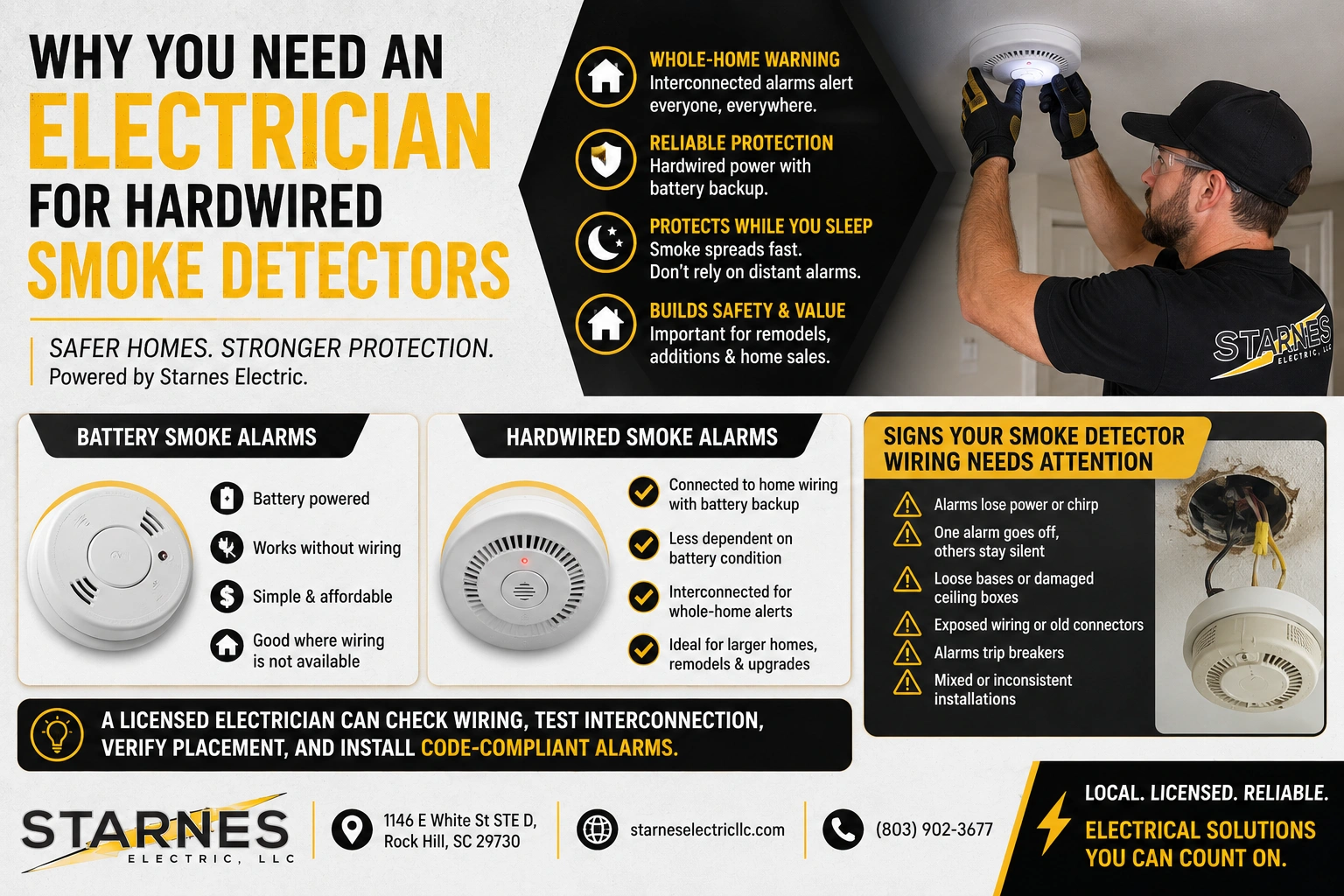
Battery smoke alarms are standalone units powered by replaceable or sealed batteries. They are simple, affordable, and useful where permanent wiring is not available.
Hardwired smoke alarms connect to the home’s electrical system. Most include a backup battery so the alarm can continue working during a power outage.
The major difference is reliability and interconnection. Hardwired alarms are less dependent on battery condition alone. Interconnected alarms can alert the whole home when one unit detects smoke.
Battery alarms may still be appropriate in some areas. Hardwired alarms are often better for primary protection, especially in larger homes, remodeled homes, and older homes being upgraded.
Why Hardwired Smoke Detectors Are Important
Hardwired smoke detectors provide a stronger safety system because they rely on building power with battery backup. That reduces the chance of a dead battery leaving an area unprotected.
Interconnection is another major benefit. If smoke starts in a basement, hallway, laundry area, or distant bedroom, alarms in sleeping areas can sound quickly.
This matters because smoke spreads fast and sleeping occupants may not hear a distant standalone alarm.
Hardwired alarms can also help during renovations, additions, or home sales. Many projects require updated smoke alarm placement before final approval.
A properly installed system gives homeowners a clearer, more dependable safety baseline.
Why Older and Larger Homes Often Need Smoke Alarm Updates
Older homes may have missing alarms, expired units, mixed wiring, or alarms placed before current bedroom layouts. Newer homes may still need replacement once alarms age out.
Larger homes also need special attention because sound may not travel clearly from one side of the home to another. Bedrooms, basements, garages, laundry rooms, and living areas may be separated by walls, doors, or distance.
A local electrician can review safety, layout, device age, wiring condition, and code-related needs. That helps determine whether your home needs replacement alarms, hardwired units, interconnection, or better placement.
How a Commercial Generator Can Safeguard Data Centers During Power Disruptions
Power disruptions can strike unexpectedly, posing serious risks to data [...]
Learn More
When Should Smoke Detectors Be Replaced or Upgraded?
Smoke alarms should be replaced when they are expired, damaged, unreliable, missing, improperly located, or not interconnected where interconnection is needed.
Many smoke alarms should be replaced after 10 years from the manufacture date. Check the back of the unit for the date stamp. If you cannot find the manufacture date, the alarm is damaged, or testing is unreliable, replacement is usually the safer choice.
Upgrade alarms if you remodel, add bedrooms, finish a basement, convert a space into a sleeping area, or discover missing alarms near bedrooms.
You should also replace alarms that chirp after new batteries, fail testing, show discoloration, or have been painted over.
Old alarms should not be trusted just because they still have power.
Can an Electrician Install Interconnected Smoke Detectors?
Yes, an electrician can install interconnected smoke detectors. Interconnection allows one alarm to trigger the others, giving the entire home an earlier warning.
This can be done with hardwired interconnect wiring or approved compatible wireless interconnection systems, depending on the home and product.
Hardwired interconnection is common during construction, rewiring, additions, or major remodels. Wireless interconnection may help in finished homes where running new cable is difficult.
An electrician can determine what works best based on attic access, crawl space access, existing wiring, device compatibility, and local requirements.
Do not mix incompatible alarms. Interconnected systems need devices that communicate properly.
Where Should Smoke Detectors Be Installed in a Home?
Placement requirements can vary based on local code, home layout, and project type, but many homes need smoke detectors inside each bedroom, outside each sleeping area, and on every level of the home, including the basement.
Homes without bedrooms on a level still need protection near living areas or stairways.
Placement also matters. Alarms should be mounted according to manufacturer instructions, usually on ceilings or high walls.
Avoid poor locations. Do not place smoke alarms too close to cooking appliances, bathrooms, supply vents, ceiling fans, or dusty areas unless the alarm type and instructions allow it.
Bedrooms with closed doors need special attention. A closed door can slow smoke movement and reduce sound from distant alarms.
Signs Your Smoke Detector Wiring Needs Attention
Smoke detector wiring may need attention if alarms lose power, chirp repeatedly, fail testing, trip breakers, or only work intermittently.
You should also call an electrician if one alarm activates but the others do not, especially if they are supposed to be interconnected.
Other warning signs include:
- Loose alarm bases
- Damaged ceiling boxes
- Exposed wiring
- Missing backup batteries
- Old connectors
- Alarms connected to questionable circuits
- Smoke alarms installed during different remodels
- A mix of hardwired and standalone battery units
If alarms were installed during different projects, they may not be wired consistently. Some may be hardwired while others are standalone battery units.
An electrician can test power, interconnection, backup batteries, placement, and wiring condition.
FAQs About Hardwired Smoke Detectors
Do hardwired smoke alarms still need batteries?
Most hardwired smoke alarms include backup batteries. The battery keeps the alarm working during a power outage. Some models use replaceable batteries, while others use sealed long-life batteries.
Can I replace a hardwired smoke alarm myself?
Replacing a hardwired smoke alarm involves electrical connections. If you are not trained or the wiring looks old, damaged, loose, or confusing, call an electrician.
How often should hardwired smoke alarms be tested?
Test smoke alarms monthly. Follow the manufacturer’s instructions for testing, cleaning, battery replacement, and full unit replacement.
Are interconnected smoke alarms required?
Requirements vary by location, home type, and project. Interconnected alarms are strongly recommended because they alert the whole home when one alarm detects smoke.
Should smoke alarms also include carbon monoxide detection?
Homes with fuel-burning appliances, fireplaces, attached garages, or gas systems may need carbon monoxide alarms too. Placement should follow manufacturer instructions and local requirements.
Smoke Detector Installation by Starnes Electric
At Starnes Electric LLC, we install and replace hardwired smoke detectors for homeowners who want safer, clearer protection. We review the layout, check existing wiring, inspect alarm locations, and recommend options that fit the home.
We can help with expired alarms, missing alarms, interconnected systems, remodel requirements, and older homes that need electrical updates.
Our goal is simple. We want your smoke alarms to be powered correctly, placed properly, and easy to maintain.
If you are searching for a smoke detector electrician near me, Starnes Electric LLC can help evaluate your current setup and install dependable hardwired smoke alarms.
Smoke Detectors Not Working Properly?
Don’t risk delayed warnings during an emergency. Get professional hardwired alarm troubleshooting and replacement today.
About the Author: Starnes Electric