
Hot Tub Wiring in Tega Cay, SC: Dedicated Circuits, GFCI Protection, and Safety
Table of Contents
Need hot tub wiring in Tega Cay, SC? Learn why hot tubs require dedicated circuits, GFCI protection, proper grounding, and licensed electrical installation.
Proper hot tub wiring is essential for safety and reliable operation. Hot tubs need a dedicated circuit, GFCI protection, and proper grounding to prevent serious risks like electrical shock or fire.
Homeowners in Tega Cay, SC, must follow local and national electrical codes. Understanding circuit requirements, GFCI protection, and correct wiring methods ensures your spa functions safely for years.
What Electrical Work Does a Hot Tub Need?
Hot tubs require a dedicated 220-volt circuit with a properly sized breaker. Key electrical considerations include:
- GFCI protection for user safety
- Proper grounding according to the National Electrical Code (NEC)
- Weatherproof connections for outdoor units
- Correct load balancing and clearance for indoor units
- Wiring from the breaker panel, installation of a disconnect switch, and connection to the hot tub control box
Professional electricians ensure code compliance, prevent overloads, and avoid safety hazards, which is critical for both residential and commercial installations.
Why Hot Tubs Need a Dedicated Circuit
A dedicated circuit isolates your hot tub from other devices, preventing power fluctuations and tripped breakers. Most hot tubs draw between 30 and 60 amps depending on the model. Sharing a circuit with lighting or appliances risks:
- Overheating wires
- Tripped breakers
- Damage to pumps, heaters, and jets
Dedicated circuits maintain stable voltage and reliable operation. In Tega Cay, SC, local electrical codes require proper sizing and isolation to reduce hazards.
GFCI Protection Requirements for Hot Tub Wiring
Ground Fault Circuit Interrupters (GFCIs) protect users by shutting off power when a fault is detected. NEC mandates that all hot tubs, spas, and pools use GFCI protection. Options include:
- Breaker-integrated GFCIs
- Separate GFCI devices installed near the hot tub
Regular testing ensures proper function. Missing or faulty GFCI protection significantly increases the risk of severe injury or fatal accidents.
What Size Circuit Does a Hot Tub Need?
Circuit sizing depends on voltage, amperage, and total load. Most residential hot tubs require:
- 240 volts for standard units
- 30–60 amps depending on heater and pump specifications
The NEC requires a 125% safety margin for continuous loads. Using undersized wiring or breakers can lead to overheating and tripping. Always consult the manufacturer’s specifications for correct wire gauge, breaker size, and conduit requirements.

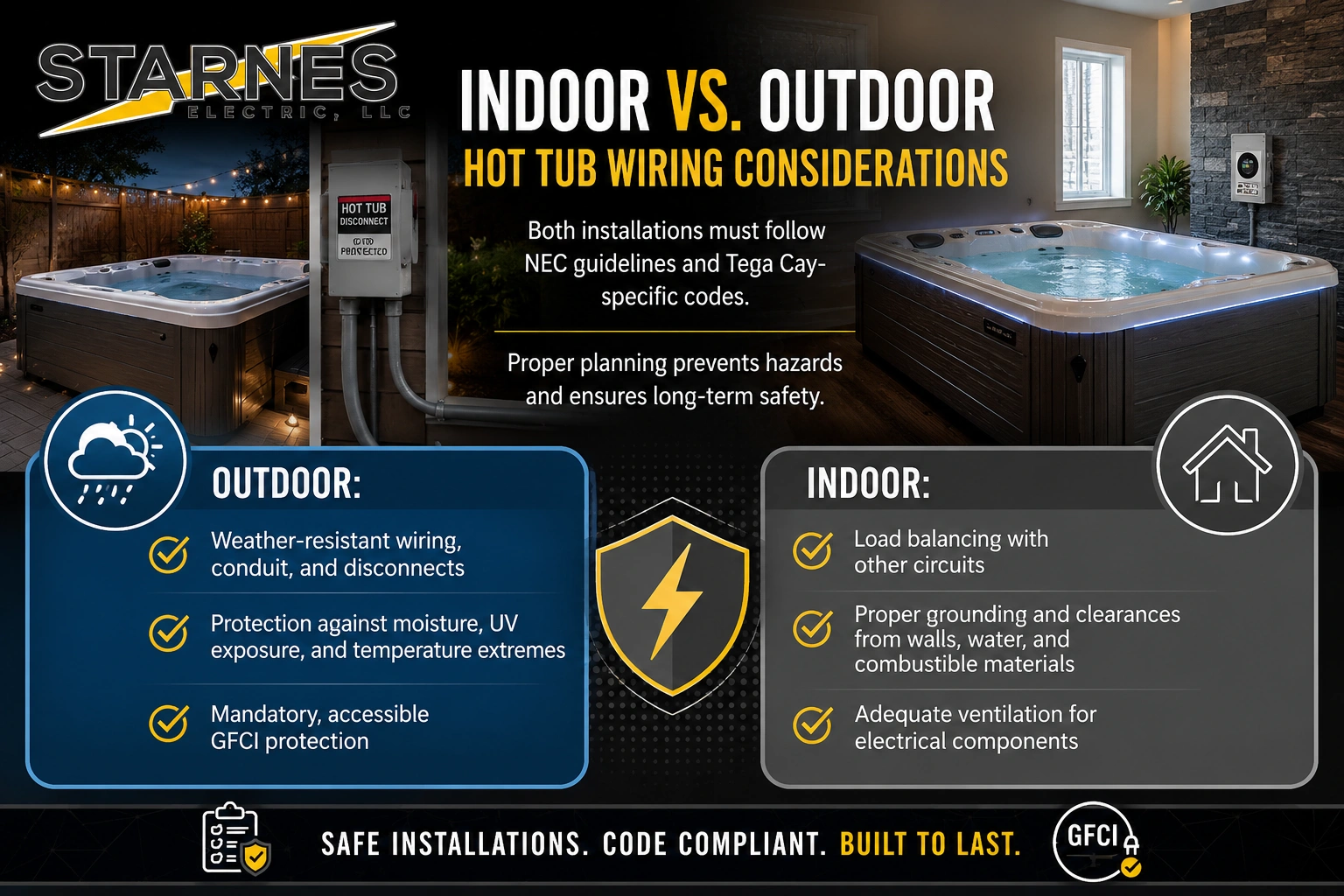
Indoor vs. Outdoor Hot Tub Wiring Considerations
Indoor and outdoor hot tubs have distinct needs:
Outdoor:
- Weather-resistant wiring, conduit, and disconnects
- Protection against moisture, UV exposure, and temperature extremes
- Mandatory, accessible GFCI protection
Indoor:
- Load balancing with other circuits
- Proper grounding and clearances from walls, water, and combustible materials
- Adequate ventilation for electrical components
Both installations must follow NEC guidelines and Tega Cay-specific codes. Proper planning prevents hazards and ensures long-term safety.
Why Hot Tub Wiring Is Not a DIY Project
Hot tub wiring is complex and high-risk. DIY mistakes can cause:
- Electrical shock
- Fire
- Damage to the hot tub or home
Key considerations include:
- High-amperage circuits with specialized breakers and wire sizes
- NEC and local code compliance
- Proper GFCI installation and testing
- Waterproofing and disconnect placement for outdoor units
Professional electricians ensure code-compliant, tested, and safe installations. DIY wiring can void warranties and increase liability, especially in Tega Cay, SC.
Common Hot Tub Electrical Problems to Watch For
Even properly installed hot tubs may experience issues:
- Tripped breakers: Caused by overloaded circuits or faulty equipment
- GFCI faults: Malfunctioning or outdated devices
- Loose or corroded connections: Moisture and temperature changes can deteriorate terminals
- Incorrect wire sizing: Using wires too small for amperage risks overheating and fire
- Faulty pumps or heaters: Components fail if voltage fluctuates or protection is inadequate
Routine inspections by a licensed electrician prevent these problems and extend hot tub lifespan.
Hot Tub Wiring Services in Tega Cay, SC
Professional hot tub wiring services include:
- Dedicated circuit installation with proper amperage and breaker sizing
- GFCI installation (breaker-integrated or separate)
- Indoor and outdoor wiring, including conduit, weatherproof boxes, and disconnects
- Maintenance and troubleshooting to prevent hazards
- Upgrades and NEC code compliance for older installations
Working with licensed electricians ensures safety, code adherence, and reliable year-round operation.
FAQs About Hot Tub Wiring
What type of wiring do I need for a hot tub?
Most hot tubs require either a 120V or 240V electrical connection. Smaller plug-and-play models typically use 120V, while larger models with more features often need a 240V dedicated circuit. Always follow the manufacturer’s specifications.
Can I install hot tub wiring myself?
DIY installation is only recommended if you have experience with electrical work. Hot tubs require a dedicated circuit, proper grounding, and a GFCI (Ground Fault Circuit Interrupter) breaker. Hiring a licensed electrician is safest and ensures code compliance.
What size circuit breaker do I need?
Circuit size depends on the hot tub’s amperage. Small 120V models often use a 15–20 amp breaker. Larger 240V models can require 50 amps or more. Always check the manufacturer’s requirements before installation.
Why does my hot tub need a GFCI breaker?
A GFCI breaker protects you from electrical shocks by shutting off the power if it detects a ground fault. Hot tubs are used in wet environments, so this safety measure is critical.
How far can I run wiring to my hot tub?
Electrical code usually allows up to 50 feet from the breaker panel without a voltage drop issue. Longer distances may require larger wire to maintain voltage. Consult an electrician for exact recommendations.
Do I need a conduit for hot tub wiring?
Yes. Electrical wires for a hot tub should run through a conduit to protect them from damage and moisture. The conduit type and size depend on local electrical codes and the wire gauge used.
Can I use aluminum wire for my hot tub?
Copper wire is strongly recommended for hot tub wiring due to better conductivity and longevity. Aluminum can be used in some cases but must be sized correctly and terminated properly to avoid overheating.
What should I do if my hot tub trips the breaker?
Frequent tripping usually indicates an electrical issue, such as a ground fault, faulty wiring, or a defective component. Turn off the breaker and contact a licensed electrician to inspect the system.
Is bonding necessary for a hot tub?
Yes. Bonding connects all metallic components to the same electrical potential, reducing the risk of electric shock. Your electrician will ensure proper bonding during installation.
Do local codes affect hot tub wiring?
Absolutely. Local building codes and the National Electrical Code (NEC) govern hot tub wiring. Always comply with local requirements to ensure safety and insurance coverage.
Get Professional Hot Tub Wiring Help in Tega Cay, SC
Planning a hot tub installation in Tega Cay, SC? Starnes Electric can help with professional hot tub wiring, dedicated circuits, GFCI protection, disconnect installation, and electrical troubleshooting.
We make sure your hot tub wiring is properly sized, safely installed, and tested for reliable operation.
Call Starnes Electric at (803) 280-3510 or schedule service through our booking page to request hot tub wiring help in Tega Cay, SC.
About the Author: Starnes Electric