
What is a Dedicated Circuit and When Does Your Home Need One?
Table of Contents
Learn what a dedicated circuit is, which appliances need one, and when Rock Hill and Fort Mill homeowners should call an electrician for safer, more reliable power.
Your home may need a dedicated circuit when an appliance keeps tripping a breaker, requires one from the manufacturer, uses a large amount of power, or supports equipment you do not want interrupted by other devices on the same circuit.
Common examples include:
- Kitchen appliances such as refrigerators, microwaves, dishwashers, garbage disposals, ranges, ovens, and freezers
- Laundry equipment such as washers and dryers
- Mechanical equipment such as HVAC systems, sump pumps, and water heaters
- Garage or outdoor equipment such as workshop tools, EV chargers, hot tubs, and pool equipment
- Important electronics such as home office equipment, servers, medical equipment, and security systems
Do not keep resetting a breaker and hoping the problem goes away. A breaker is warning you, not annoying you.
What a Dedicated Circuit Does
A dedicated circuit serves one specific appliance, outlet, or electrical load.
That means power runs from your electrical panel to that appliance or outlet without being shared by other outlets, lights, or devices.
Think of it like giving a large appliance its own lane on the road. A shared circuit is like neighborhood traffic. A dedicated circuit is a direct route built for one job.
A dedicated circuit can help:
- Reduce nuisance breaker trips
- Lower the risk of overloading a shared circuit
- Keep important appliances from losing power because of other devices
- Support larger electrical loads safely
- Meet manufacturer instructions or code-related requirements
- Make future troubleshooting easier
The right setup depends on the appliance, electrical load, circuit size, wiring, and condition of the electrical panel.
Dedicated Circuit vs. Shared Circuit
A shared circuit powers multiple devices, outlets, or lights. That is normal in many areas of a home.
For example, several bedroom outlets may be on one circuit. A living room may have lights and receptacles sharing power. That can be fine when the electrical demand is low.
A dedicated circuit is different. It is reserved for one appliance, outlet, or specific use.
A shared circuit may serve general outlets, small electronics, lights, and lower-demand household loads. A dedicated circuit is usually used for equipment that draws more power, cycles on and off, or needs a more reliable electrical supply.
A dedicated circuit is not only about convenience. In many cases, it is about safety, reliability, and making sure the wiring is properly matched to the equipment.
When Does a Home Need a Dedicated Circuit?
Homeowners in Rock Hill, Fort Mill, Lake Wylie, Tega Cay, York, Clover, Indian Land, Lancaster, Chester, and nearby areas often add dedicated circuits when their electrical needs change.
A home that worked fine years ago may not be set up for today’s appliances, home offices, garage freezers, EV charging, workshop tools, or renovation plans.
A Breaker Keeps Tripping
If a breaker trips once, it may be a one-time overload.
If it keeps tripping, trips immediately after being reset, feels hot, smells burnt, or affects an appliance every time it runs, stop using that circuit and call a licensed electrician.
Repeated tripping can point to:
- An overloaded circuit
- A short circuit
- A faulty appliance
- A loose connection
- Damaged wiring
- Incorrect circuit sizing
A dedicated circuit may solve the problem, but only after the real cause is diagnosed. The issue could be the appliance, wiring, breaker, outlet, or total electrical demand on the circuit.
A New Appliance Requires Its Own Circuit
Many appliances should not be placed on general-use circuits.
The manufacturer may call for a dedicated circuit because the appliance draws more power, cycles on and off, or needs a steady electrical supply.
That is common with kitchen appliances, laundry equipment, HVAC systems, and larger garage or workshop equipment.
Before adding a major appliance to an existing outlet, check the appliance requirements and have an electrician confirm whether the current circuit is suitable.
You Are Remodeling or Adding New Space
Kitchen remodels, garage conversions, additions, finished basements, and laundry room upgrades often require more electrical capacity than the old layout provided.
A remodel is one of the best times to check whether your current circuits still make sense.
You may need dedicated or upgraded circuits for:
- New kitchen appliances
- Added bathroom outlets
- Laundry equipment
- Office equipment
- Mini-split systems
- Outdoor equipment
- Garage tools
- Additional lighting and receptacles
It is easier to plan the right electrical layout during a remodel than to fix undersized or overloaded circuits after the walls are finished.
You Are Adding Equipment in the Garage or Workshop
Garages often become catch-all electrical spaces. Homeowners use them for freezers, refrigerators, battery chargers, power tools, air compressors, treadmills, holiday lights, and EV chargers.
That can be a lot for one older garage circuit.
If your tools dim the lights, trip the breaker, or make outlets feel warm, the safest next step is to have the circuit inspected.
In many York County and Lancaster County homes, garages are used for extra appliances, storage equipment, chargers, and tools. Those loads can add up quickly on a shared circuit that was not designed for that much demand.
You Want More Reliable Power for Important Equipment
Some circuits are not just about convenience.
A freezer full of food, sump pump, medical equipment, security system, or home office setup may need a more reliable electrical setup than a shared circuit can provide.
A licensed electrician can determine whether the existing circuit is overloaded, undersized, damaged, or simply not ideal for the equipment you are using.
Appliances and Rooms That Commonly Need Dedicated Circuits
Not every appliance needs a dedicated circuit. However, some rooms and appliances are more likely to need one because of how much power they use.
Kitchen Appliances
Kitchens are one of the most common places where dedicated circuits are needed.
Appliances that often need their own circuit include:
- Refrigerator
- Microwave
- Dishwasher
- Garbage disposal
- Electric range
- Wall oven
- Cooktop
- Wine cooler
- Freezer
- Large countertop appliances
If your microwave trips the breaker when the coffee maker is running, that is a sign the circuit may not be set up for how the kitchen is being used.
Laundry Room Equipment
Laundry equipment can draw significant power.
Dedicated circuits may be needed for:
- Washing machine
- Electric dryer
- Gas dryer outlet
- Utility sink or laundry-area GFCI receptacles
- Ironing or specialty laundry equipment
If your laundry room is older, the wiring may not match the appliances being used today.
Garage Equipment
Garages are often underpowered for how homeowners use them now.
A dedicated circuit may be useful for:
- Freezer
- Refrigerator
- Power tools
- Air compressor
- EV charger
- Workbench outlets
- Garage door opener
- Battery charging station
A freezer on a shared garage circuit may work for a while, but if the breaker trips while you are away, everything inside may be at risk.
Bathroom Electrical Needs
Bathrooms often need properly protected circuits because water and electricity are close together.
Dedicated or properly protected circuits may be needed for:
- Bathroom receptacles
- Whirlpool tubs
- Heated floors
- Exhaust fans with heaters
- Specialty lighting or mirrors
Do not guess with bathroom wiring. GFCI protection and proper circuit layout matter.
Home Office Equipment
A home office may not seem like a large electrical load, but several devices on one circuit can add up.
You may need a better circuit setup for:
- Desktop computers
- Multiple monitors
- Printers
- Networking equipment
- Battery backup systems
- Servers
- Audio and video equipment
If your office shares a circuit with another room and the breaker trips during the workday, a dedicated circuit may be worth considering.
Outdoor Electrical Equipment
Outdoor electrical equipment needs proper wiring, weather protection, and often GFCI protection.
Dedicated circuits may be needed for:
- Outdoor kitchens
- Pool equipment
- Hot tubs
- Landscape lighting transformers
- Sheds
- Detached garages
- Dock-adjacent equipment
- Security lighting
Lake Wylie and other lake-area homes may have more weather-exposed electrical needs. Outdoor power should be installed with the right protection for moisture, distance, and electrical load.
HVAC and Mechanical Equipment
Heating and cooling equipment usually has specific electrical requirements.
This may include:
- Central HVAC systems
- Heat pumps
- Mini-splits
- Air handlers
- Condensate pumps
- Dehumidifiers
- Water heaters
If HVAC equipment causes lights to flicker, breakers to trip, or the panel to buzz, treat that seriously.
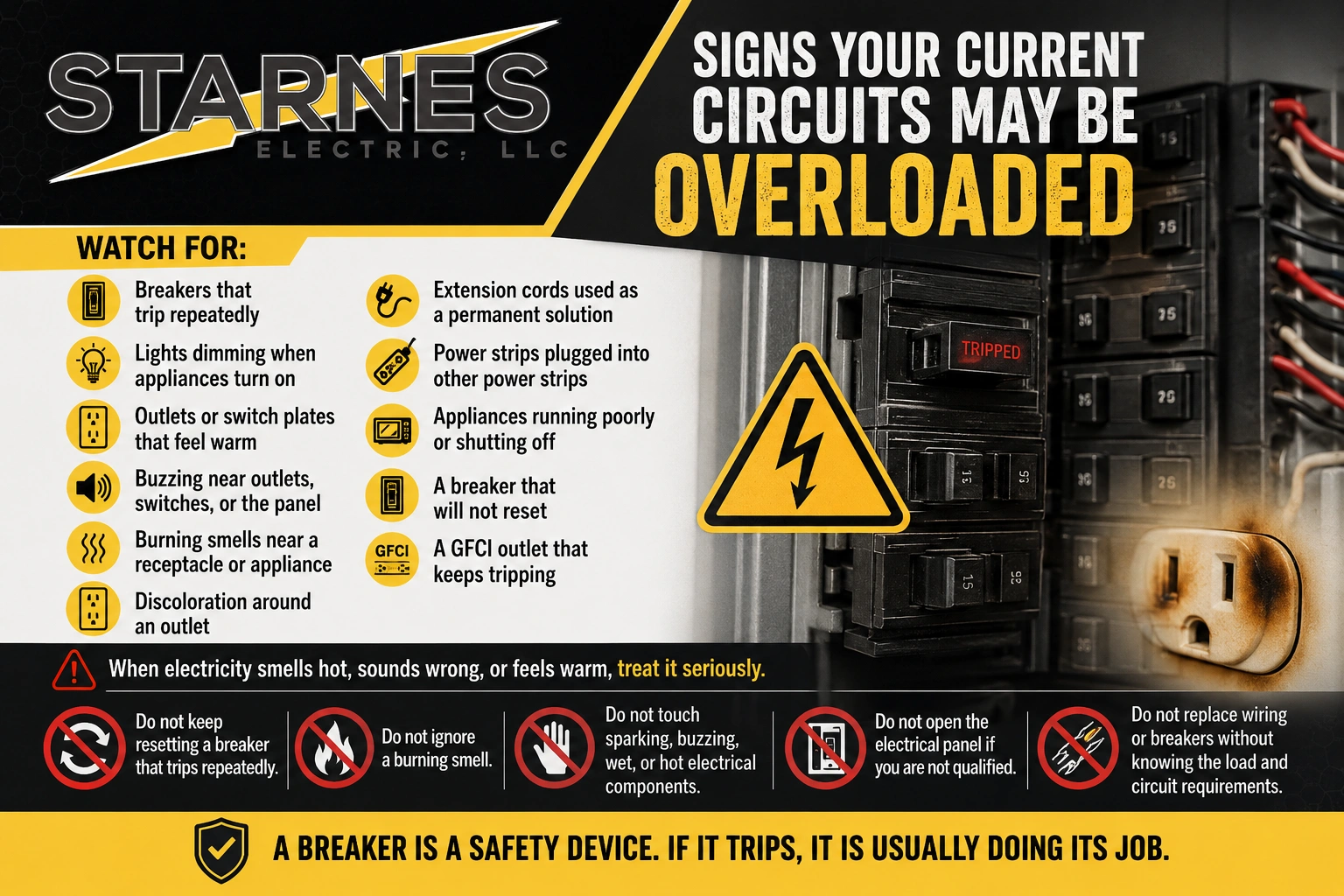
Signs Your Current Circuits May Be Overloaded
An overloaded circuit is not always dramatic at first. Sometimes it starts with small warnings.
Watch for:
- Breakers that trip repeatedly
- Lights dimming when appliances turn on
- Outlets or switch plates that feel warm
- Buzzing near outlets, switches, or the panel
- Burning smells near a receptacle or appliance
- Discoloration around an outlet
- Extension cords used as a permanent solution
- Power strips plugged into other power strips
- Appliances running poorly or shutting off
- A breaker that will not reset
- A GFCI outlet that keeps tripping
When electricity smells hot, sounds wrong, or feels warm, treat it seriously.
Do not keep resetting a breaker that trips repeatedly. Do not ignore a burning smell. Do not touch sparking, buzzing, wet, or hot electrical components. Do not open the electrical panel if you are not qualified. Do not replace wiring or breakers without knowing the load and circuit requirements.
A breaker is a safety device. If it trips, it is usually doing its job.
Can You Add a Dedicated Circuit to an Older Electrical Panel?
Sometimes, yes. But it depends on the panel.
An electrician needs to evaluate:
- Available breaker space
- Panel capacity
- Existing electrical load
- Condition of the panel
- Age and type of wiring
- Signs of overheating
- Permit requirements
- Whether the appliance needs 120-volt or 240-volt power
- Whether a panel upgrade is safer or necessary
You may not need a full panel replacement. In some homes, adding a dedicated circuit is straightforward if the panel has enough capacity and the wiring route is accessible.
In other homes, especially older homes around Rock Hill, York, Chester, Lancaster, and nearby communities, the panel may already be full or outdated. In that case, adding another circuit may require a larger conversation about panel capacity, safety, and future electrical needs.
A good electrician should not simply add a breaker and leave. They should check whether the panel can safely support the added load.
What Affects the Cost of Adding a Dedicated Circuit?
The cost of adding a dedicated circuit depends on the details of the job.
Important factors include:
- How far the new circuit must run
- Whether walls are finished
- Whether the panel has room
- What type of breaker is needed
- Whether the equipment requires 120-volt or 240-volt power
- Whether GFCI or AFCI protection is required
- Whether permits are needed
- Whether the panel needs upgrades first
A circuit added near the panel is usually simpler than one routed across the home, through finished walls, into an outdoor area, or to a detached structure.
The best way to understand the cost is to have an electrician inspect the panel, review the appliance requirements, and explain what the installation would involve.
How Starnes Electric Can Help With Dedicated Circuit Installation
If you are adding an appliance, remodeling a room, setting up a garage freezer, installing new equipment, or dealing with a breaker that keeps tripping, Starnes Electric can inspect the circuit and explain what is happening.
That may include:
- Checking the existing circuit load
- Inspecting the electrical panel
- Reviewing appliance requirements
- Testing outlets and wiring
- Looking for overheating or loose connections
- Determining whether a dedicated circuit is the right solution
The goal is not to add work you do not need. The goal is to make sure the circuit, wiring, breaker, and appliance are properly matched.
If your appliance needs its own circuit, Starnes Electric can help with dedicated circuit installation in Rock Hill, Fort Mill, York County, Lancaster County, Chester County, and nearby communities.
Not sure whether your appliance needs a dedicated circuit or whether your panel can support one? Starnes Electric can inspect the system, explain the findings, and help you choose the safest option for your home or business.
FAQs About Dedicated Circuits
What is a dedicated circuit?
A dedicated circuit is an electrical circuit used for one specific appliance, outlet, or piece of equipment. It is not shared with other outlets, lights, or devices.
Why would an appliance need a dedicated circuit?
Some appliances draw more power than a general-use circuit can safely handle. Others need steady power or may be required by the manufacturer to be on their own circuit.
Is a dedicated circuit the same as a new outlet?
Not exactly. A new outlet is only the device you plug into. A dedicated circuit usually includes wiring from the electrical panel to that outlet or appliance location, along with the correct breaker and protection.
Can I install a dedicated circuit myself?
Electrical panel work is not a good DIY project. Adding a circuit requires knowing the load, wire size, breaker size, panel capacity, grounding, protection requirements, and local permitting rules. Hire a licensed electrician.
How do I know if my panel has room for another circuit?
A licensed electrician can inspect the panel, check available breaker spaces, evaluate capacity, and determine whether adding a circuit is safe.
Does a garage freezer need its own circuit?
It often makes sense. A freezer on a shared garage circuit can lose power if tools, chargers, or other devices trip the breaker. A dedicated circuit can help protect the freezer from shared-circuit interruptions.
What does it cost to add a dedicated circuit?
The cost depends on circuit length, panel location, wall or crawlspace access, wire type, breaker requirements, permitting, and whether the panel has enough capacity. A simple nearby circuit usually costs less than a long run through finished walls or a panel that needs upgrades first.
Is a dedicated circuit safer?
When properly installed, a dedicated circuit can reduce overload risk and help the appliance operate on a circuit designed for its load. Safety still depends on correct installation, proper breaker sizing, good wiring, and the condition of the panel.
Who should I call for dedicated circuit installation in Rock Hill, SC?
Call a licensed electrician who can inspect the panel, verify appliance requirements, and install the circuit safely. Starnes Electric serves Rock Hill, Fort Mill, York County, Lancaster County, Chester County, and nearby South Carolina communities.
Trusted Circuit Installation Professionals in Rock Hill, SC
If you need a dedicated circuit for a new appliance, garage freezer, home office, remodel, EV charger, hot tub, or workshop equipment, Starnes Electric can help.
Our electricians inspect the existing circuit, check your panel capacity, review the equipment requirements, and install the right circuit for safe, reliable power.
Contact Starnes Electric today for dedicated circuit installation in Rock Hill, Fort Mill, York County, Lancaster County, Chester County, and nearby South Carolina communities.
About the Author: Starnes Electric