
Motion Sensor vs Dusk-to-Dawn Outdoor Security Lighting
Table of Contents
Quick Answer
Outdoor security lighting is not only about brightness. The control strategy matters too. Motion sensors provide light when activity is detected, while dusk-to-dawn controls keep selected fixtures on throughout the night. Each approach works well in different parts of a property, and many homes benefit from a combination.
Need Better Outdoor Security Lighting?
From motion sensors to dusk-to-dawn lights, get the right setup for your home. Call now to get started!
Key Takeaways
- Motion sensors are useful where you want light to respond to movement rather than stay on continuously. Common examples include side yards, secondary entrances, detached structures, and parts of a driveway.
- Dusk-to-dawn controls automatically turn lighting on when ambient light falls and off when daylight returns.
- A property does not need one control type everywhere. Continuous low-level lighting can provide orientation, while motion-activated fixtures add extra illumination when someone approaches.
- Very bright fixtures aimed outward can reduce comfort and create harsh contrast. Good security lighting should help occupants see people, steps, doors, and obstacles clearly.
At a Glance
| Question | Short answer | Why it matters |
| When Motion-Sensor Lighting Works Best | Motion sensors are useful where you want light to respond to movement rather than stay on continuously. Common examples include side yards, secondary entrances, detached structures, and parts of a driveway. | Sensor placement and aiming matter. A poorly positioned sensor can react to street traffic, pets, moving vegetation, or activity outside the area you actually want to cover. |
| When Dusk-to-Dawn Lighting Works Best | Dusk-to-dawn controls automatically turn lighting on when ambient light falls and off when daylight returns. | They work well for entry points, address visibility, walkways, and locations where consistent low-level illumination is more useful than a sudden burst of light. |
| Why Layering Controls Can Work Better | A property does not need one control type everywhere. Continuous low-level lighting can provide orientation, while motion-activated fixtures add extra illumination when someone approaches. | Layering can reduce dark transitions between bright and unlit areas. It also lets you keep important paths visible without operating every security fixture at full output all night. |
| Avoid Glare and Over-Lighting | Very bright fixtures aimed outward can reduce comfort and create harsh contrast. Good security lighting should help occupants see people, steps, doors, and obstacles clearly. | Use shielding and aiming to keep light on the intended area. |
For homeowners comparing options or preparing for professional work, see Starnes Electric’s Outdoor Lighting Rock Hill SC for the service scope and local next steps.
When Motion-Sensor Lighting Works Best?
Motion sensors are useful where you want light to respond to movement rather than stay on continuously. Common examples include side yards, secondary entrances, detached structures, and parts of a driveway.
Sensor placement and aiming matter. A poorly positioned sensor can react to street traffic, pets, moving vegetation, or activity outside the area you actually want to cover.
Choose fixture locations that illuminate the approach without shining directly into windows or neighboring properties.
When Dusk-to-Dawn Lighting Works Best?
Dusk-to-dawn controls automatically turn lighting on when ambient light falls and off when daylight returns.
They work well for entry points, address visibility, walkways, and locations where consistent low-level illumination is more useful than a sudden burst of light.
Because the fixtures operate for long periods, efficient lamp or LED choices and sensible brightness levels are important.
Related reading: Security Lighting Installation: Places to Add Outdoor Lights.
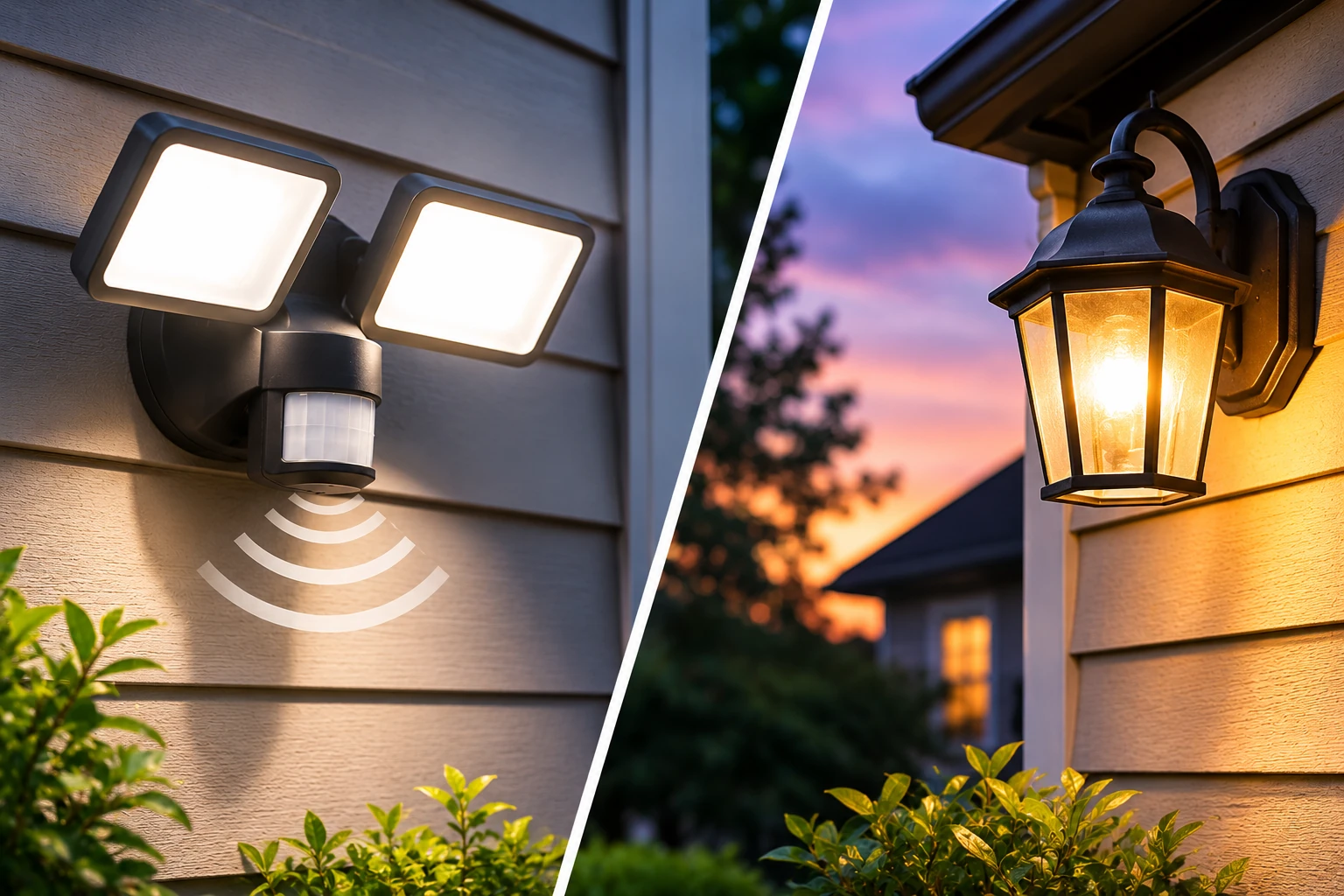
Why Layering Controls Can Work Better?
A property does not need one control type everywhere. Continuous low-level lighting can provide orientation, while motion-activated fixtures add extra illumination when someone approaches.
Layering can reduce dark transitions between bright and unlit areas. It also lets you keep important paths visible without operating every security fixture at full output all night.
An electrician can help separate zones so different areas use different controls.
Hiring Local: The Benefits of Choosing a Rock Hill-Based Commercial Electrician
When it comes to electrical work for your commercial business, [...]
Learn More
Avoid Glare and Over-Lighting?
Very bright fixtures aimed outward can reduce comfort and create harsh contrast. Good security lighting should help occupants see people, steps, doors, and obstacles clearly.
Use shielding and aiming to keep light on the intended area.
More fixtures are not always better. A smaller number of well-placed fixtures can be more effective than excessive light pointed in every direction.
Plan the Wiring and Controls Together?
Outdoor fixtures need appropriate wiring methods, weather-suitable equipment, and controls that match the installation.
If new circuits, switches, smart controls, or timers are being added, plan them before fixtures are installed.
For existing lighting, an electrician can determine whether the current wiring and boxes are suitable for the proposed upgrades.
When Should You Call an Electrician About Outdoor Security Lights?
Call an electrician if you’re adding a fixture where none exists, running a new circuit, or if an existing security light flickers, stays on all day, or won’t turn on. Outdoor wiring problems combined with moisture can create a shock hazard.
Questions to Ask Before Installing Security Lighting
- Is the fixture rated for a wet location where it will be mounted?
- Should this light use a motion sensor, a dusk-to-dawn photocell, or both?
- Can the existing switch and circuit support the new fixture?
- Where should the sensor point to avoid false triggers from the street or trees?
Frequently Asked Questions
Are motion lights better than lights that stay on all night?
Neither is universally better. Motion sensors are useful for responsive lighting, while dusk-to-dawn controls are useful for continuous nighttime visibility. The best choice depends on the area and goal.
Can one outdoor lighting system use both types?
Yes. Different fixtures or zones can use different control strategies.
Why do motion lights turn on when nobody is there?
Sensor range, aiming, moving vegetation, animals, street activity, and environmental conditions can cause unwanted triggering. Adjusting location and settings may help.
Next Step
If you want the electrical system evaluated on site, contact Starnes Electric and describe the symptoms, equipment, or project goals you want reviewed.
Ready to Upgrade Your Outdoor Lighting?
Improve visibility, convenience, and security with the right outdoor lighting system. Call now to schedule installation!
About the Author: Dalton Starnes