
Portable Generator vs. Standby Generac: Which Fits the “Rock Hill Storm” Profile?
Table of Contents
Rock Hill storm outages can happen fast, and the right generator depends on how much power, convenience, and protection your home needs. A portable generator may cover basic emergency needs, while a standby Generac generator is built for automatic whole-home or selected-circuit backup power.
For many Rock Hill homeowners, the decision comes down to outage frequency, budget, safety, and comfort. If you only need to keep a refrigerator, phone chargers, and a few lights running, a portable generator may be enough. If you want your HVAC system, kitchen, lighting, sump pump, security system, and key appliances supported without dragging equipment outside in bad weather, a standby generator is usually the stronger fit.
At Starnes Electric LLC, we look at generator planning through a practical lens. Rock Hill storms can bring wind, heavy rain, downed limbs, and power interruptions that last longer than expected. The best generator is not always the biggest one. It is the one that matches your home’s electrical load, your safety needs, and how your family lives during an outage.
Power Outages Don't Wait. Neither Should You.
Find the right backup power solution for your home. Call Starnes Electric LLC for expert generator guidance today.
What Is the Difference Between a Generac Generator and a Portable Generator?
A Generac generator is often used to describe a permanently installed standby generator, although Generac also makes portable models. In everyday homeowner language, a “Generac” usually means a whole-home or standby unit that sits outside the house, connects to a fuel source, and works with a transfer switch.
A portable generator is a movable unit that is usually powered by gasoline or propane. It must be set up manually, fueled manually, started manually, and connected safely to appliances or a properly installed transfer switch.
The biggest difference is automation.
A standby Generac system is designed to detect a power outage and start automatically. Its transfer switch disconnects the home from utility power and connects selected circuits or the home’s electrical system to generator power. Generac explains that the transfer switch prevents the home from being powered by utility and generator power at the same time, which is a critical safety function.
A portable generator does not do that by itself. Without a proper manual transfer switch or generator inlet installed by a qualified electrician, homeowners may rely on extension cords. That can work for limited loads, but it is not ideal for larger home systems.
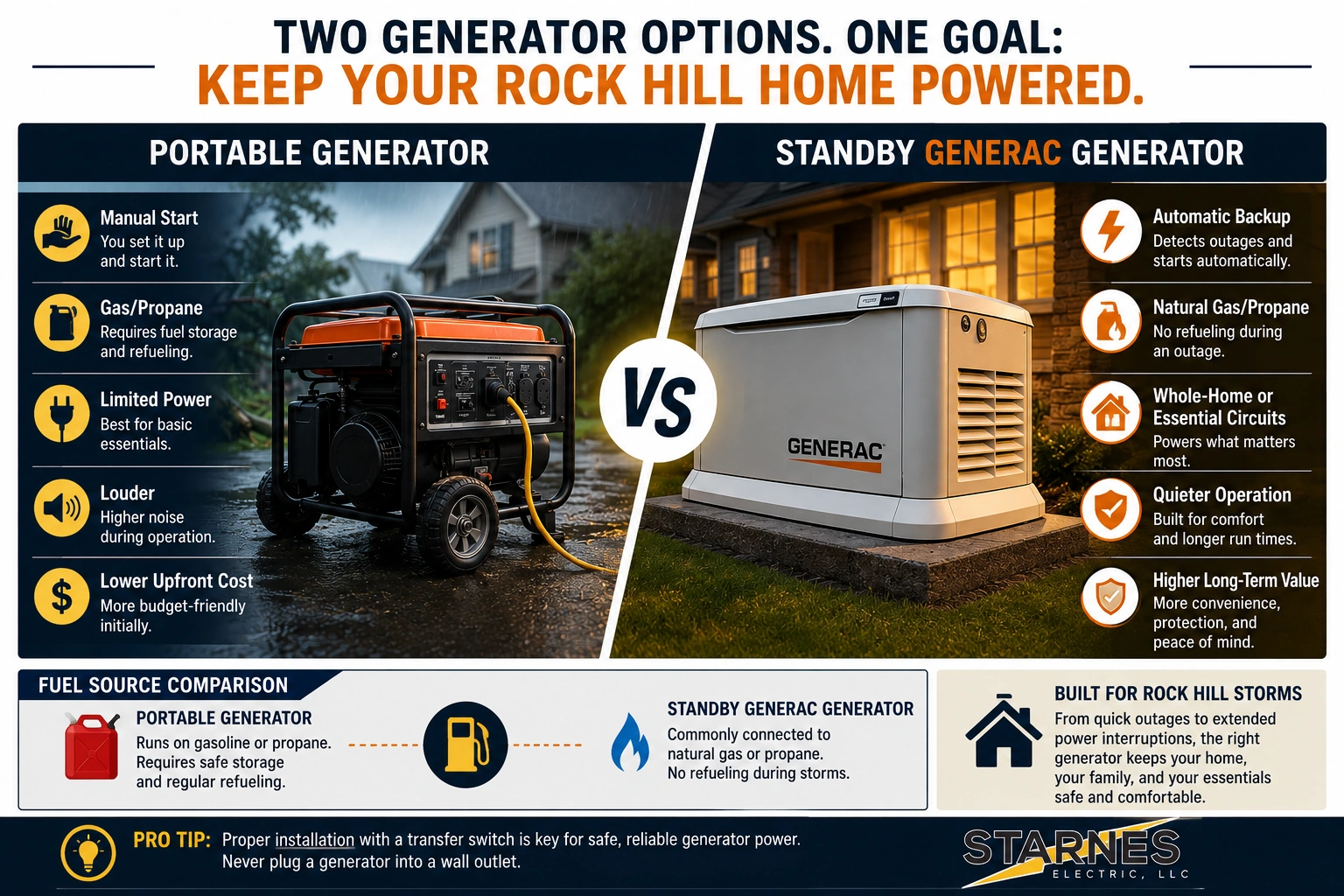
Fuel is another key difference. Standby Generac generators are commonly connected to natural gas or propane. That means you do not have to store gasoline or refuel the unit during a storm. Portable generators often require gasoline storage and refueling, which can become difficult or unsafe during long outages.
Noise, placement, maintenance, and capacity also differ. Portable generators are often louder and smaller. Standby units are more powerful, fixed in place, and designed for long-term backup power when installed correctly.
What Is the Difference Between a Standby Generator and a Portable Generator?
A standby generator is a permanent backup power system. It is installed outside the home on a stable pad and connected to the home’s electrical system through a transfer switch. It is not something you roll out of the garage during a storm.
A portable generator is temporary backup power. It can be useful, but it requires more involvement from the homeowner. You need fuel, safe outdoor placement, weather protection, extension cords or a transfer switch, and careful load management.
For Rock Hill homeowners, this matters because storms rarely happen when it is convenient. A power outage may occur at night, while you are away from home, or during heavy rain. A standby generator is designed to respond without you being outside setting up equipment.
A portable generator can still be valuable. It may support a refrigerator, freezer, small window AC unit, medical equipment, lights, and device charging. However, it usually cannot support the same amount of load as a properly sized standby system.
A standby generator can be sized for essential circuits or broader home coverage. Some homeowners only want to power refrigeration, internet, a few lights, a well pump, or HVAC basics. Others want whole-home backup. The final setup depends on electrical panel capacity, generator size, fuel availability, and the circuits that matter most.
The safety profile is also different. Portable generators carry a higher risk when used incorrectly because they produce carbon monoxide and must never be used indoors, in garages, in crawl spaces, or near windows and vents. FEMA warns that generators should stay outside living spaces and away from openings where carbon monoxide can enter the home.
Which Generator Is Better for Rock Hill Storm-Related Power Outages?
For occasional short outages, a portable generator may be enough. For frequent storm-related outages, a standby Generac generator is usually the better fit.
Rock Hill homes can face outages from thunderstorms, strong winds, tree damage, and regional grid interruptions. When the outage is brief, a portable unit can protect food, keep phones charged, and power a few essentials. But when an outage stretches for many hours or overnight, convenience and safety become much more important.
A standby generator is better for homeowners who want power restored automatically. This is especially helpful for families with young children, older adults, remote workers, refrigerated medication, security systems, sump pumps, or HVAC needs.
It is also better for homeowners who travel. If you are away and the power goes out, a standby unit can help protect food, climate control, and critical systems without someone being there to start a generator.
A portable generator may fit homeowners who have a smaller budget, only need limited backup power, and are comfortable managing fuel and setup. It can be a smart emergency tool, but it should be planned carefully.
The “Rock Hill storm profile” often favors standby power when the homeowner wants comfort and less stress. Storm outages do not just affect lights. They can affect cooling, heating, internet, food storage, garage doors, home offices, and medical devices.
From an electrical standpoint, the better option is the one that can be installed and operated safely. Starnes Electric LLC recommends thinking beyond wattage. Consider how the generator connects to the home, which circuits it powers, where it sits, how it handles load, and whether your family can safely operate it during bad weather.
Dimming or Flickering Lights: Wiring Concerns
Dimming or flickering lights are common in homes and buildings [...]
Learn More
Can You Run a Generator During a Storm?
Yes, a generator can be used during a storm-related outage, but it must be operated safely. This is where many homeowners get into trouble.
A portable generator should never run inside a house, garage, basement, crawl space, shed, or enclosed porch. It should be placed outdoors with proper ventilation and away from doors, windows, and vents. The U.S. Consumer Product Safety Commission has repeatedly warned that portable generators can create deadly carbon monoxide hazards, and one portable generator can produce as much carbon monoxide as hundreds of cars.
Portable generators also need protection from rain while maintaining ventilation. You cannot simply place one in a garage with the door open. That is still dangerous. You also should not operate one in standing water, near flooding, or where cords can become wet or damaged.
A standby generator is designed for outdoor installation and storm-related backup use. It has an enclosure and is permanently placed according to manufacturer requirements, electrical codes, and clearance rules. That makes it much better suited for poor weather than a portable unit sitting in a driveway.
Still, standby generators are not maintenance-free. They need proper installation, routine service, periodic testing, and safe clearances. Homeowners should keep the area around the unit clear of leaves, debris, and vegetation.
Backfeeding is another major safety concern. A generator should never be connected to a home by plugging it into a wall outlet. That can energize utility lines and create serious danger for utility workers, neighbors, and the home’s electrical system. A transfer switch or approved interlock setup is the safe path.
Can a Portable Generator Be Used as a Standby Generator?
A portable generator can support selected home circuits if it is connected through the proper equipment, but it does not become a true standby generator.
With a professionally installed manual transfer switch or generator inlet, a portable generator can power certain circuits in your home. This may include a refrigerator, lights, microwave, internet equipment, or other selected loads. That setup is safer and more organized than running extension cords through doors or windows.
However, the homeowner still has to move the generator outside, check fuel, start it, connect it, switch loads manually, and monitor operation. During heavy rain, high wind, or nighttime outages, that can be inconvenient and risky.
A portable generator also has fuel limits. If it runs on gasoline, you need safe fuel storage and refueling. Refueling during a long outage can become a problem, especially if gas stations are closed or affected by the same storm.
A standby Generac generator is different because it is permanently installed, connected to a reliable fuel source, and paired with an automatic transfer switch. It is designed to start when utility power fails and shut down when utility power returns.
So, while a portable generator can be integrated into a home backup plan, it should not be treated as a direct replacement for a standby system. It is better viewed as a temporary backup tool.
For some homes, that is enough. For others, especially homes with frequent outages or higher electrical needs, it is not.
Is a Standby Generac Generator Worth It for Frequent Storm Outages?
A standby Generac generator can be worth it if your Rock Hill home deals with repeated outages, longer interruptions, or power-sensitive needs.
The value is not only about comfort. It is about continuity. A standby generator can help keep refrigeration, lighting, HVAC, medical equipment, internet, security systems, and other important circuits running. For families working from home, caring for older relatives, or managing refrigerated medication, that reliability can matter a lot.
It also reduces storm stress. You do not have to haul equipment out, hunt for fuel, run cords, or decide which appliance gets power next. The system is already in place.
That said, a standby generator is a bigger investment than a portable generator. It requires equipment, installation, permitting where applicable, electrical work, fuel connection, and ongoing maintenance. It also needs proper sizing. A generator that is too small may not support the loads you expect. A generator that is larger than necessary may cost more than you need to spend.
This is why a professional electrical assessment matters. Starnes Electric LLC can review your panel, discuss the circuits that matter most, and help determine whether a portable generator setup, standby generator, or selected-circuit backup plan makes the most sense.
A portable generator may be the right choice if your main goal is basic emergency coverage. It is less expensive upfront and flexible for limited use. But for frequent Rock Hill storm outages, a standby Generac generator offers stronger convenience, safer integration, and better long-term protection.
The best answer depends on your home. If you want minimum backup, portable may fit. If you want automatic backup, better storm readiness, and less disruption, standby is the better match.
Generator Help From Starnes Electric LLC
Storm preparation starts before the lights go out. Starnes Electric LLC helps homeowners think through generator options safely and realistically, from portable generator connections to standby Generac planning.
If you are unsure which generator fits your Rock Hill home, our team can help you compare load needs, panel setup, transfer switch options, and long-term backup goals. The right generator setup should protect your home without creating new electrical risks.
For homeowners who want dependable power during storm season, Starnes Electric LLC is ready to help you plan a safer, more practical backup power solution.
Stay Powered Through Every Storm.
Whether you need a portable generator or a standby Generac system, our licensed electricians are ready to help.
About the Author: Starnes Electric