
Flickering Lights? Why It May Be More Than a Bad Bulb
Table of Contents
Quick Answer: Why Are My Lights Flickering?
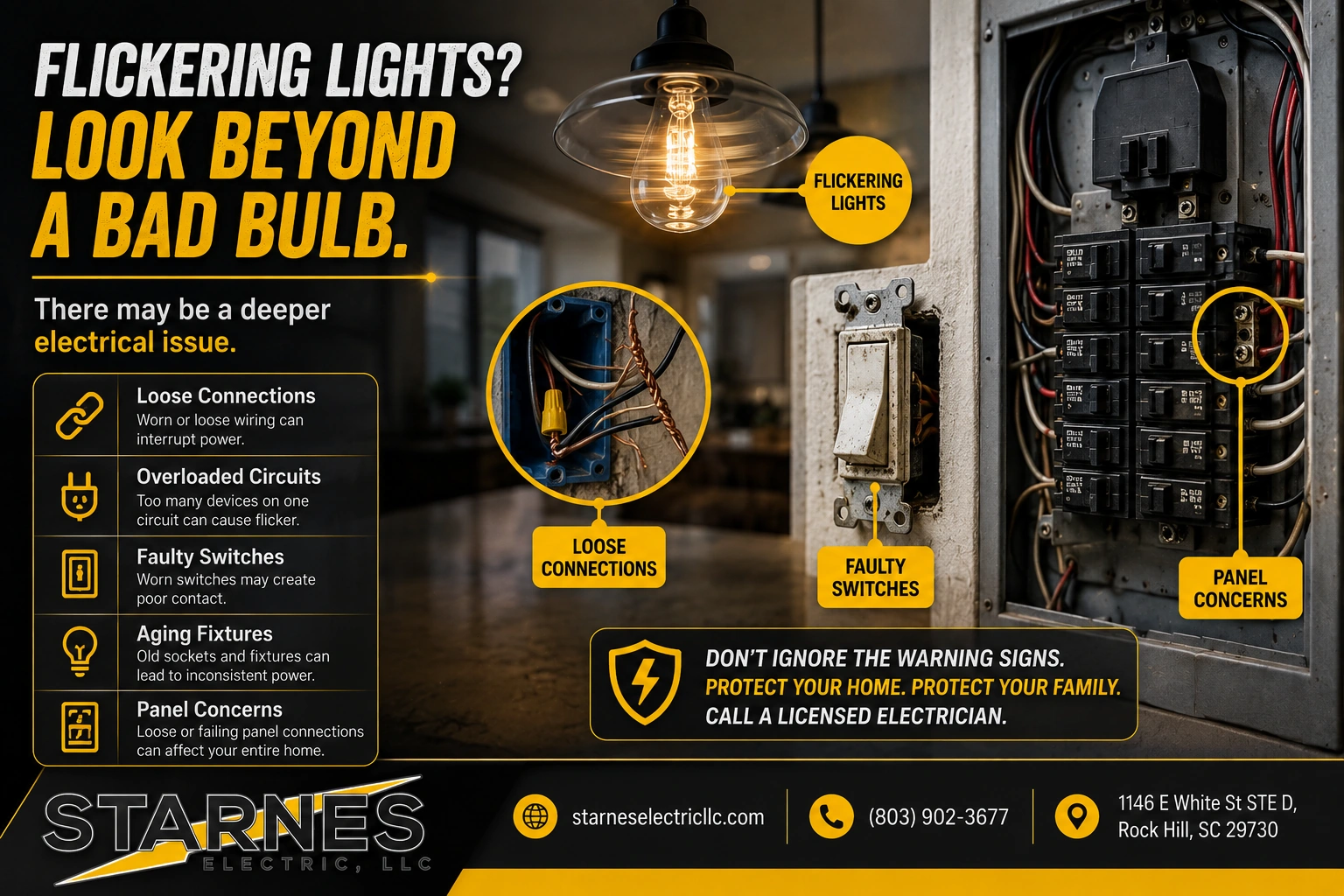
Flickering lights can be caused by something simple, like a loose bulb or incompatible dimmer, but repeated flickering often points to a deeper electrical issue. Common causes include loose connections, overloaded circuits, aging wiring, faulty switches, damaged fixtures, appliance startup demand, or electrical panel concerns.
If one light flickers and stops after tightening or replacing the bulb, the issue may be minor. If flickering keeps happening, spreads to multiple rooms, gets worse over time, or happens when large appliances turn on, it is time to call a licensed electrician.
At Starnes Electric LLC, we know how tempting it is to twist the bulb tighter, replace it, and move on. Sometimes that works. But when flickering lights keep happening, it may point to an electrical problem that needs professional attention.
A flickering light can be harmless in some cases. It can also be an early warning sign of loose wiring, poor contact, overheating, or electrical panel concerns. The key is knowing when it is a simple bulb issue and when it is time to call a licensed electrician.
Flickering Lights Aren't Normal
Don't ignore lights that blink or dim. Call Starnes Electric LLC for fast troubleshooting and safe electrical repairs.
Can a Loose Bulb Cause Flickering?
Yes, a loose bulb can cause flickering. This is one of the simplest and least serious reasons a light may blink or flash. If the bulb is not seated properly in the socket, it may not make steady contact with the electrical connection inside the fixture. As the bulb heats up, vibrates, or shifts slightly, the connection may come and go.
This can happen with lamps, ceiling fixtures, recessed lights, outdoor fixtures, and older sockets. It is also common when a bulb was not screwed in fully or when the socket has worn contacts.
Before assuming there is a larger electrical problem, turn the light off and let the bulb cool. Then gently check whether the bulb is secure. Do not overtighten it. A bulb only needs to be snug. Overtightening can damage the socket or make the bulb harder to remove later.
If tightening the bulb stops the flicker and the issue does not return, the cause may have been simple. If the flicker continues after replacing or tightening the bulb, the problem may be deeper.
It is also worth checking whether the bulb is compatible with the fixture or dimmer. Some LED bulbs flicker when used with older dimmer switches that were designed for incandescent bulbs. In that case, the issue may not be the bulb being loose, but the bulb and switch not working well together.
A loose bulb is possible, but it should not be the default explanation if flickering continues.
What Is the Most Common Cause of Flickering Lights?
The most common cause of flickering lights depends on how and where the flickering happens. A single flickering lamp may have a loose bulb, worn socket, or bad cord. One flickering ceiling fixture may have a loose wire, bad switch, or fixture issue. Several flickering lights may point to a circuit, electrical panel, or electrical service problem.
For homeowners, loose electrical connections are one of the biggest concerns. A loose connection can happen at a switch, outlet, fixture, junction box, breaker, neutral wire, or panel connection. When a connection is not secure, electricity may not flow steadily. That can cause flickering, buzzing, heat, arcing, or intermittent power loss.
This is why repeated flickering should not be ignored. Loose connections can create heat. Heat can damage insulation, melt components, and increase fire risk if left unresolved.
Another common cause is circuit overload. If too many lights, devices, or appliances are running on the same circuit, lights may dim or flicker when demand changes. Older homes are especially vulnerable because many were not wired for today’s electrical load.
Flickering can also be caused by faulty switches, aging fixtures, poor splices, damaged wiring, loose neutral connections, or problems at the electrical panel.
At Starnes Electric LLC, we look at the pattern of flickering first. Does it happen in one fixture or throughout the house? Does it happen when an appliance turns on? Does it happen during storms? Does it happen only with dimmable LEDs? These clues help us narrow down the cause safely.
Why Is My Light Bulb Flickering So Often?
If your light bulb flickers often, the problem may be more than the bulb. Frequent flickering usually means something is interrupting the steady flow of electricity.
Start with the basics. The bulb may be loose, worn out, damaged, or incompatible with the fixture. LED bulbs can also flicker when paired with old dimmers, low-quality dimmers, smart switches that are not compatible, or fixtures that were not designed for that bulb type.
But if you have already replaced the bulb and the flickering continues, the issue may be in the socket, fixture, switch, wiring, or circuit.
A worn socket can cause poor contact even when the bulb is tight. Over time, heat and age can weaken the metal contact inside the socket. This can make the light flicker, especially when the fixture vibrates, warms up, or is switched on and off regularly.
A faulty switch can also cause flickering. If the internal contacts are worn, loose, or failing, the light may blink or cut in and out. You may notice crackling, buzzing, a warm switch plate, or a switch that feels loose.
Loose wiring is another possible cause. This is especially serious because loose wires may arc or overheat. If flickering is paired with burning smells, buzzing sounds, discoloration, heat, or sparking, turn off the affected circuit if safe to do so and call an electrician.
Frequent flickering is a sign that something in the fixture, circuit, or electrical system may be inconsistent. It may be minor, but it should be checked before it becomes a bigger problem.
Is Flickering Usually a Bad Bulb or a Loose Connection?
Flickering lights are sometimes caused by a bad bulb, but repeated or widespread flickering is often caused by a loose connection or another electrical issue.
A bad bulb is more likely when only one light flickers and the problem stops after the bulb is replaced. This is common with old incandescent bulbs, defective LED bulbs, or bulbs that are not made well. If the replacement bulb works normally, the issue was likely simple.
A loose connection is more likely when the flickering continues with a new bulb, affects multiple lights, happens when a switch is touched, occurs randomly, or gets worse over time. Loose connections can happen in places homeowners cannot safely inspect, such as behind switches, inside fixtures, in junction boxes, or at the electrical panel.
This is why it is important not to keep replacing bulbs without asking why they are flickering. If the socket or wiring is the real issue, new bulbs will not solve the problem.
A loose neutral connection is one of the more serious possibilities. A neutral problem can cause lights to brighten and dim unpredictably. It may affect multiple rooms or the entire home. In some cases, lights may get brighter when other appliances turn on. This is not something to troubleshoot yourself. A licensed electrician should inspect it quickly.
At Starnes Electric LLC, we do not assume flickering is “just a bulb.” We inspect the fixture, switch, wiring, circuit, and electrical panel when needed. The goal is to find the source, not guess.
Why Do Lights Flicker When an Appliance Turns On?
Lights may flicker when an appliance turns on because large appliances need a surge of electricity when they start. This is common with air conditioners, refrigerators, freezers, washing machines, dryers, microwaves, pumps, and other high-demand equipment.
A brief, minor dimming when a large appliance starts can happen in some homes. The appliance draws power, the circuit experiences a quick load change, and the lights react for a moment. If it only happens briefly and does not worsen, it may not always mean there is a dangerous problem.
However, strong flickering, frequent dimming, or lights that stay dim while an appliance runs may point to a problem.
The appliance may be on an overloaded circuit. The home may need a dedicated circuit. The electrical panel may be undersized for the electrical demand. A breaker may be loose or failing. Wiring may be old or inadequate. There may also be a loose neutral or service connection.
This is especially important with HVAC equipment. Air conditioners and heat pumps can draw significant startup current. If your lights flicker every time the system turns on, the electrical system may need to be evaluated. The issue may involve the HVAC circuit, electrical panel, breaker, connections, or overall service capacity.
You should also pay attention to where the flickering happens. If only one light flickers, the issue may be local to that fixture or circuit. If lights throughout the house flicker when an appliance starts, the issue may involve the electrical panel, electrical service, or utility connection.
Do not ignore flickering tied to large appliances if it becomes stronger or more frequent. Electrical demand problems may worsen over time if the underlying issue is not corrected.
Why Are My Flickering Lights Getting Worse?
Flickering lights that get worse over time should be taken seriously. Electrical problems rarely fix themselves. If flickering is becoming more frequent, affecting more rooms, or lasting longer, something in the system may be deteriorating.
A loose connection can loosen further with heat, vibration, and normal use. As the connection weakens, resistance can increase. More resistance can create more heat. That heat can damage wires, outlets, switches, breakers, or fixtures.
An overloaded circuit can also get worse as homeowners add more devices. What worked years ago may no longer be enough for modern appliances, computers, chargers, entertainment systems, lighting, and HVAC equipment.
A failing breaker may begin to trip more often or make poor contact in the panel. A worn switch may flicker more each time it is used. An old fixture may develop socket problems. Aging wiring may become brittle or damaged.
Flickering that gets worse may also suggest a larger electrical service issue. If lights throughout the home flicker, brighten, dim, or behave unpredictably, there may be a problem with the main electrical panel, service conductors, meter connection, or utility side of the electrical service. This requires prompt attention.
Warning signs include:
- Buzzing sounds
- Burning smells
- Warm outlets
- Warm switch plates
- Sparks
- Discoloration
- Repeated breaker trips
- Lights that brighten suddenly
- Flickering across multiple rooms
If your flickering lights are getting worse, do not wait for a complete failure. Call a licensed electrician to inspect the system and identify the cause.
The Role of a Commercial Electrician: What You Need to Know for Your Business
When running a business, the role of a commercial electrician [...]
Learn More
When Flickering Lights Are an Emergency
Not every flickering light is an emergency, but some situations require quick action.
Call an electrician right away if flickering is combined with burning smells, smoke, sparks, buzzing, popping sounds, hot outlets, hot switches, scorch marks, or repeated breaker trips. These signs may point to overheating, arcing, or unsafe wiring.
You should also act quickly if lights throughout the home flicker at the same time, especially if they brighten and dim instead of simply blinking. This may indicate a neutral connection or electrical service issue.
If a fixture flickers and the switch feels warm, stop using it until it is inspected. If a light flickers after water damage, storm damage, roof leaks, or flooding, turn off the affected circuit if safe and call a professional.
Electrical issues can hide behind walls and ceilings. A small symptom may be the only visible warning before a larger problem develops.
Why DIY Electrical Troubleshooting Can Be Risky
Changing a bulb is fine. Checking whether a lamp is plugged in is fine. Replacing batteries in a remote or checking a dimmer setting is fine. But once the problem may involve wiring, switches, breakers, or electrical panels, DIY electrical troubleshooting can become risky.
Electrical components can remain dangerous even when a switch is off. Loose wires, overloaded circuits, and failing breakers require proper testing equipment and training. Guessing can lead to electric shock, fire, damaged equipment, or code violations.
Homeowners sometimes replace a switch or fixture only to find the flickering continues. That is because the visible part was not the true source. The issue may be upstream in the circuit or panel.
A licensed electrician can test voltage, inspect connections, check circuit load, evaluate breakers, identify loose neutral connections, and determine whether the issue is isolated or part of a larger electrical concern.
At Starnes Electric LLC, we focus on finding the real cause so homeowners do not waste time and money on repeated temporary fixes.
How Starnes Electric LLC Can Help
Starnes Electric LLC helps homeowners diagnose and repair flickering light problems safely. Whether the issue is a loose bulb, bad switch, damaged fixture, overloaded circuit, loose connection, electrical panel concern, or appliance-related voltage drop, our team can inspect the system and explain what needs to happen next.
We do not treat flickering lights as a one-size-fits-all problem. We look at the full picture: where the flickering happens, when it happens, how often it happens, and what else is running at the same time.
If repairs are needed, we can replace damaged switches, repair wiring, update fixtures, install dedicated circuits, correct unsafe connections, upgrade electrical panels, and improve the reliability of your home’s electrical system.
Our goal is simple: safer power, clearer answers, and electrical work homeowners can trust.
Stop Guessing About Flickering Lights
Flickering lights may start with something simple, but they should not be ignored when they keep happening. A loose bulb can cause flickering, but recurring flickers may be tied to loose connections, overloaded circuits, worn fixtures, dimmer compatibility, appliance demand, or electrical panel issues.
If your lights flicker often, get worse, or happen when major appliances turn on, Starnes Electric LLC can help. A professional inspection can identify the cause, reduce safety risks, and give you a clear plan for repair.
Do not keep replacing bulbs and hoping the problem goes away. Let Starnes Electric LLC check the issue properly and help keep your home’s electrical system safe and reliable.
FAQs About Flickering Lights
Is a flickering light always dangerous?
Not always. A single flickering light may be caused by a loose bulb, bad bulb, or dimmer compatibility issue. Repeated flickering, widespread flickering, buzzing, burning smells, or lights that brighten and dim should be checked by a licensed electrician.
Why do my lights flicker when the AC turns on?
Large appliances and HVAC systems can draw extra power when they start. A brief dimming may happen in some homes, but strong or repeated flickering may point to an overloaded circuit, loose connection, electrical panel issue, or service capacity concern.
Can a loose wire cause lights to flicker?
Yes. Loose wiring or poor connections can interrupt the steady flow of electricity and may create heat or arcing. This should be inspected by a licensed electrician.
Should I replace the bulb first if a light flickers?
For one flickering light, it is reasonable to turn the fixture off, let the bulb cool, and check whether the bulb is loose or failing. If the flickering continues after replacing or tightening the bulb, the issue may be in the socket, switch, wiring, fixture, or circuit.
When should I call an electrician for flickering lights?
Call an electrician if flickering happens often, affects multiple rooms, gets worse, happens with appliance use, or comes with buzzing, burning smells, sparks, warm outlets, or repeated breaker trips.
Stop Flickering Lights Before They Get Worse
Get expert electrical service from Starnes Electric LLC and restore safe, dependable power to your home.
About the Author: Starnes Electric