
Why Do My Outdoor Outlets Stop Working After Rain?
Table of Contents
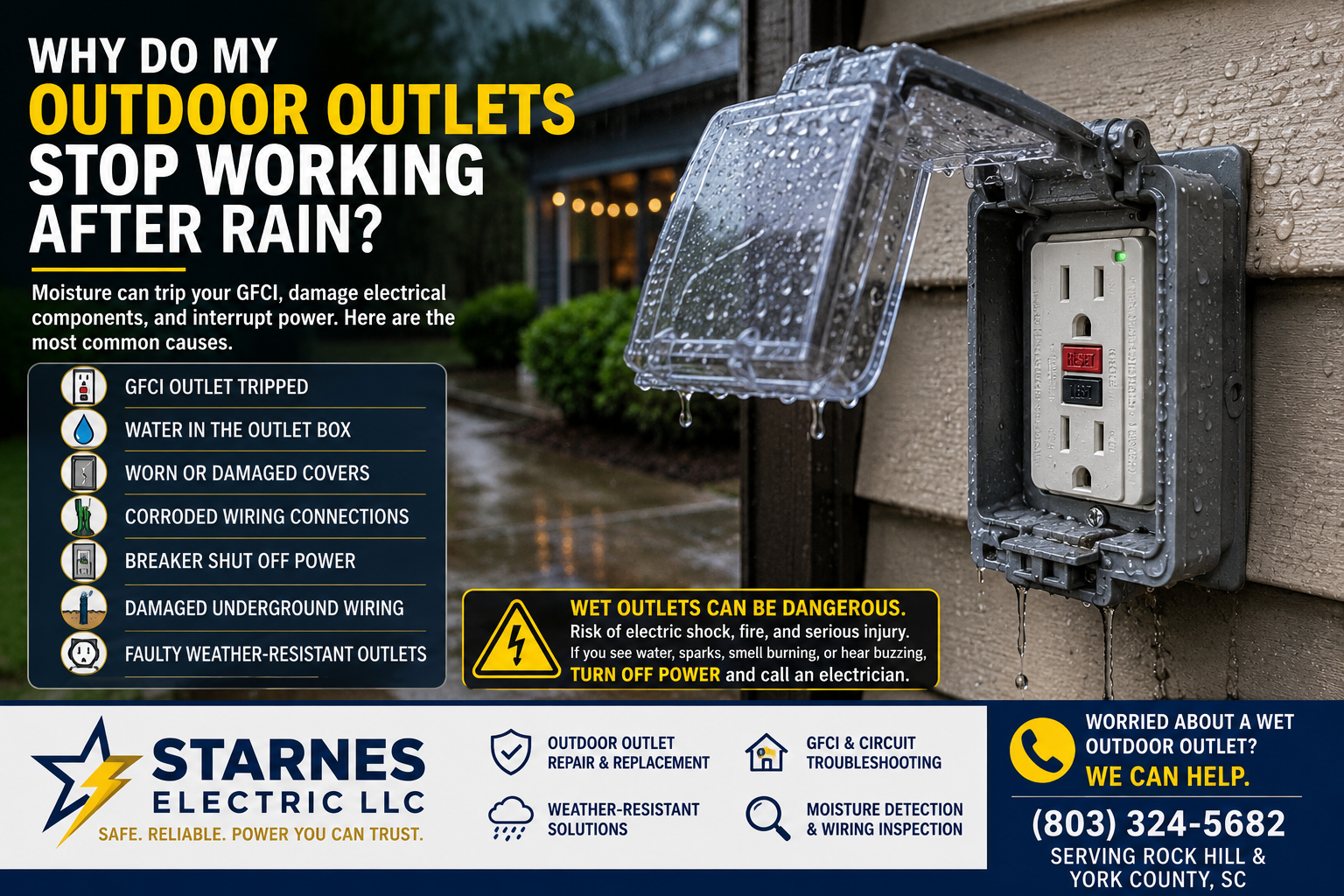
If your outdoor outlets stop working whenever it rains, moisture may be triggering a safety shutoff. Find out why GFCI outlets trip, what you can check safely, and when an electrician should inspect the problem.
Outdoor outlets often stop working after rain because moisture enters the receptacle, trips the GFCI protection, or damages electrical components. Water exposure can interrupt power even when the outlet appears dry on the surface.
Rain-related outlet problems should never be ignored. A failing outdoor outlet may point to hidden wiring damage, worn seals, unsafe electrical connections, or water intrusion inside the electrical box.
If an outdoor outlet is wet, sparking, hot, buzzing, or smells like burning plastic, do not touch it. Turn off the circuit if it is safe to do so and call a licensed electrician.
Common Reasons Outdoor Outlets Fail After Wet Weather
1. The GFCI Outlet Tripped
Most outdoor outlets are connected to a Ground Fault Circuit Interrupter, commonly called a GFCI. These outlets shut off power when moisture creates an electrical imbalance.
Even a small amount of rainwater can trigger the safety mechanism. Sometimes the outdoor outlet itself is not the problem because another GFCI outlet inside the garage, bathroom, or kitchen may have tripped first.
Resetting the GFCI may restore power immediately if no damage exists.
2. Water Entered the Outlet Box
Outdoor outlets rely on weather-resistant covers to keep moisture out. If the cover is cracked, loose, or improperly installed, rainwater can enter the electrical box.
Moisture inside the box may:
- Trip the breaker
- Corrode terminals
- Damage wiring
- Create short circuits
Water intrusion is one of the most common causes of repeated outdoor outlet failures.
3. Worn or Damaged Outlet Covers
Outdoor electrical outlets cover experience constant exposure to heat, sunlight, humidity, and storms. Over time, plastic covers become brittle and lose their protective seal.
Once gaps form around the outlet, rain can easily reach electrical parts. Older flat covers are especially vulnerable because they may not fully protect plugged-in cords during storms.
4. Corroded Wiring Connections
Moisture and metal do not mix well. Repeated exposure to humidity or rain can corrode electrical terminals and wiring connections.
Corrosion increases electrical resistance, which may cause:
- Flickering power
- Intermittent outlet operation
- Burn marks
- Overheating
- Outlet failure
Green or white buildup inside the receptacle usually indicates corrosion.
5. A Breaker Shut Off Power
Heavy rain can sometimes cause a breaker to trip, especially if outdoor wiring has a ground fault or water exposure.
Electrical panels shut circuits down to prevent shocks and electrical fires. If the breaker immediately trips again after resetting, there may be a serious wiring issue somewhere on the circuit.
Repeated breaker trips should never be ignored.
6. Damaged Underground Wiring
Some outdoor outlets connect through underground electrical lines. Excess moisture in the soil can expose existing wire damage or deteriorated insulation.
Underground wiring problems may happen because of:
- Aging cables
- Landscaping damage
- Rodent activity
- Soil movement
- Improper burial depth
These issues often require professional electrical testing.
7. Faulty Weather-Resistant Outlets
Outdoor outlets are designed differently from standard indoor receptacles. If a regular outlet was mistakenly installed outside, moisture exposure may quickly damage it.
Even weather-resistant outlets eventually wear out. Older units may fail internally after years of exposure to rain and temperature changes.
Replacing outdated outdoor receptacles improves both safety and reliability.
How GFCI Protection Affects Outdoor Outlets
GFCI protection is required for most outdoor outlets because it reduces the risk of electrical shock in wet conditions.
A GFCI constantly monitors electrical current flowing through the circuit. When moisture creates an imbalance, the device cuts power within milliseconds.
Outdoor outlets may stop working after rain because:
- Water entered the outlet
- Humidity affected the connection
- The outlet sensed a fault
- Another downstream outlet tripped
Sometimes homeowners think the outlet failed when the GFCI only needs resetting.
Many homes have multiple outdoor outlets connected to a single GFCI device. One tripped outlet may shut down several receptacles at once.
If the GFCI repeatedly trips after rain, moisture intrusion or damaged wiring likely exists somewhere on the circuit.
Is a Wet Outdoor Outlet Dangerous?
Yes. A wet outdoor outlet can become dangerous if moisture reaches energized electrical components.
Water increases the risk of:
- Electrical shock
- Electrocution
- Short circuits
- Electrical fires
- Equipment damage
The danger becomes more serious when:
- Extension cords remain plugged in during storms
- Outlet covers are missing
- Wiring is exposed
- Burn marks appear
- Sparks occur
Never touch an outdoor outlet if:
- Water is actively entering it
- You see smoke
- The cover feels hot
- You hear buzzing sounds
Even if the outlet still works, hidden moisture may continue damaging internal electrical parts.
Children and pets are especially vulnerable around damaged outdoor outlets. Any suspected electrical hazard outdoors should be treated seriously until inspected properly.
Worried about a wet outdoor outlet?
If your outlet keeps tripping after rain or will not reset, Starnes Electric LLC can inspect the circuit, identify the source of moisture, and make the repair safely.
What Homeowners Can Safely Check First
Check for a Tripped GFCI
Press the reset button on nearby GFCI outlets. Check:
- Garage outlets
- Bathroom outlets
- Kitchen outlets
- Basement outlets
One tripped GFCI may control multiple outdoor receptacles.
Inspect the Circuit Breaker
Open the electrical panel and look for a breaker in the middle position or fully off.
Reset the breaker once only. If it trips again immediately, stop electrical troubleshooting.
Look for Visible Moisture
Check whether:
- Water entered the cover
- The outlet appears wet
- Condensation formed inside
- Dirt or debris collected inside the box
Allow the outlet to dry completely before attempting a reset.
Examine the Outlet Cover
Look for:
- Cracks
- Loose hinges
- Missing seals
- Broken latches
- Improper closure
Damaged covers allow rainwater inside.
Unplug Outdoor Devices
Disconnect:
- String lights
- Extension cords
- Landscape lighting
- Holiday decorations
- Power tools
Sometimes the connected device causes the GFCI trip rather than the outlet itself.
Check for Burn Marks
Dark discoloration around the outlet may indicate overheating or electrical arcing.
If burn marks exist, do not use the outlet.
Smell for Burning Odors
A burnt plastic smell may signal internal wiring damage.
This requires immediate professional whole-home electrical inspection.
Dry the Area Carefully
If light moisture is present, allow airflow around the outlet. Never use direct heat or metal objects to dry electrical components.
Test Other Outdoor Outlets
Determine whether:
- One outlet failed
- Multiple outlets lost power
- An entire outdoor circuit shut down
This helps narrow down the possible issue.
Check for Loose Plug Connections
If plugs feel loose or unstable, the receptacle may be worn out internally.
Loose connections can create overheating risks.

When You Should Stop Troubleshooting and Call an Electrician
The Breaker Keeps Tripping
Repeated breaker trips usually indicate a deeper electrical fault.
The GFCI Will Not Reset
A GFCI that refuses to reset often signals:
- Moisture intrusion
- Ground faults
- Wiring damage
- Internal outlet failure
You Notice Sparks
Sparking outlets should never be ignored.
Smoke or Burning Smells Appear
These symptoms may indicate overheating wires or damaged insulation.
Water Is Inside the Electrical Box
Standing water inside an outlet box creates serious shock hazards.
The Outlet Feels Hot
Warm or hot outlets require immediate inspection.
Outdoor Wiring Appears Damaged
Cracked conduit, exposed wiring, or damaged insulation must be professionally repaired.
Corrosion Is Visible
Heavy corrosion affects electrical conductivity and safety.
Power Problems Continue After Dry Weather
If outlets fail even after several dry days, internal damage may already exist.
The Outlet Is Older
Older outdoor outlets may not meet current electrical safety standards.
You Hear Buzzing Sounds
Buzzing often points to loose or arcing electrical connections.
Multiple Outdoor Outlets Fail Together
This may indicate circuit-wide wiring problems.
You Feel Uncertain About Electrical Safety
Electrical work outdoors carries shock risks. Professional diagnosis is always safer when uncertainty exists.
How an Electrician Repairs Outdoor Outlet Problems
Electricians begin by testing the outlet and circuit for proper voltage, grounding, and moisture intrusion.
The repair process may include:
- Replacing damaged GFCI outlets
- Installing weather-resistant receptacles
- Repairing corroded wiring
- Upgrading outdoor covers
- Replacing faulty breakers
- Drying and sealing electrical boxes
- Testing underground wiring
- Installing in-use covers
- Rewiring damaged circuits
Professionals also check whether the installation meets electrical code requirements.
In some cases, the problem extends beyond the outlet itself. Electricians may trace faults back to:
- Junction boxes
- Underground connections
- Exterior lighting systems
- Pool equipment
- Landscape wiring
After repairs, electricians verify the outlet safely handles moisture exposure and operates correctly during wet conditions.
Preventing Outdoor Outlet Issues During Storms
Outdoor electrical protection starts with proper equipment and regular maintenance.
Install weather-resistant outlets specifically designed for outdoor use. These outlets provide better durability against moisture and temperature changes.
Use in-use outlet covers that protect plugged-in cords during rainstorms. Standard flat covers often leave openings where water can enter.
Inspect outdoor outlets regularly for:
- Cracks
- Corrosion
- Loose covers
- Worn seals
- Water stains
Avoid overloading outdoor circuits with multiple extension cords or high-powered equipment.
Keep extension cord connections elevated off wet ground whenever possible.
Schedule electrical inspections if:
- Your home is older
- Outlets frequently trip
- Outdoor wiring has never been upgraded
- Storm damage recently occurred
Professional upgrades can greatly reduce future moisture-related electrical problems.
FAQs About Outdoor Outlets and Rain
Why does my outdoor outlet work again after it dries?
Moisture may temporarily interrupt the electrical connection or trip the GFCI. Once the outlet dries, power may return. However, repeated wet-weather failures usually indicate a larger problem.
Can rain permanently damage outdoor outlets?
Yes. Repeated moisture exposure can corrode wiring, damage internal components, and weaken electrical connections over time.
Should outdoor outlets have covers even when not in use?
Yes. Outdoor outlets should always have weatherproof covers installed to block rain, humidity, and debris.
Why does only one outdoor outlet stop working?
That outlet may have localized moisture intrusion, internal damage, or a loose wiring connection while the rest of the circuit remains functional.
Reliable Electrical Help for Outdoor Outlet Problems
In Rock Hill and surrounding York County communities, outdoor outlets often deal with heavy rain, humidity, and seasonal storms. These conditions can expose weak seals, worn covers, or aging outdoor wiring.
At Starnes Electric LLC, we help homeowners identify moisture-related electrical failures, damaged GFCI outlets, unsafe wiring, and weather exposure problems before they become serious hazards.
We inspect outdoor electrical systems carefully, repair faulty components safely, and install weather-resistant solutions designed for long-term protection. Whether your outlet keeps tripping after storms or completely stopped working, we provide reliable electrical repair, troubleshooting and professional repairs that prioritize safety and dependable power outdoors.
About the Author: Starnes Electric