
Why Is My Ceiling Fan Buzzing or Humming?
Table of Contents
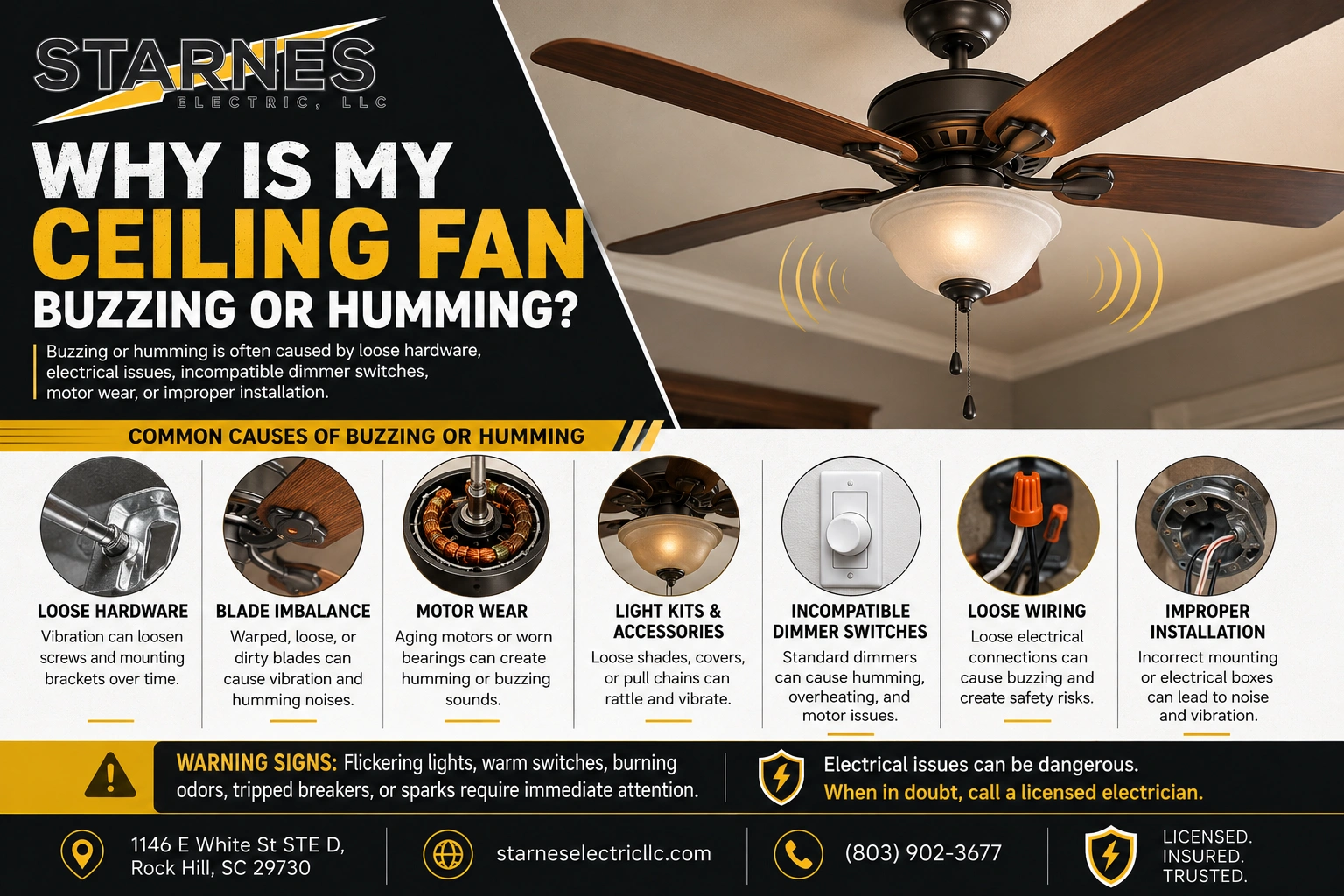
A buzzing or humming ceiling fan is usually caused by loose hardware, blade imbalance, an incompatible dimmer switch, motor wear, or an electrical issue. Some causes are minor and easy to fix, while others may indicate loose wiring or unsafe electrical connections.
If the noise is new, getting louder, or accompanied by flickering lights, warm switches, burning odors, or tripped breakers, the fan should be inspected by a licensed electrician.
At Starnes Electric LLC, we help Rock Hill homeowners determine whether a noisy ceiling fan is a simple maintenance issue or a sign of a larger electrical problem. Understanding the source of the sound can help you address the issue before it leads to more expensive repairs or potential safety concerns.
Tired of That Constant Humming Sound?
A buzzing ceiling fan may signal loose parts, wiring issues, or motor problems. Call today for a safe and reliable inspection.
Quick Answer: Why Is My Ceiling Fan Buzzing or Humming?
Most ceiling fan buzzing and humming noises are caused by loose components, electrical issues, incompatible controls, motor problems, or improper installation.
Common causes include:
- Loose screws or mounting hardware
- Faulty or incompatible dimmer switches
- Loose electrical connections
- Motor wear and tear
- Fan blade imbalance
- Improper electrical boxes
- Defective fan components
While some causes are harmless and easy to correct, others can indicate a potential electrical hazard that should be inspected by a licensed electrician.
The first step is determining whether the sound is mechanical, electrical, or a combination of both.
Common Mechanical Causes of Ceiling Fan Buzzing
Several factors can contribute to a noisy ceiling fan. Identifying the source often requires a systematic inspection.
Loose Mounting Hardware
Over time, the vibration created by a ceiling fan can loosen screws and mounting brackets.
Common areas to inspect include:
- Blade screws
- Motor housing screws
- Mounting bracket hardware
- Light kit attachments
- Decorative covers
Loose components can create rattling, buzzing, or humming sounds that become more noticeable at higher speeds.
Blade Imbalance
Even a small difference in blade alignment or weight can create vibration.
Potential causes include:
- Warped blades
- Loose blades
- Dust buildup
- Manufacturing defects
- Damage from accidental impact
An unbalanced fan often creates a combination of humming and wobbling that becomes more noticeable as speed increases.
Motor Noise
Ceiling fan motors naturally generate a small amount of operational sound. However, excessive humming may indicate:
- Aging motor components
- Worn bearings
- Internal electrical issues
- Manufacturing defects
Older fans are particularly prone to motor-related noise as components wear over time.
Light Kits and Accessories
Sometimes the fan itself is not the source of the noise.
Loose light fixtures, glass shades, decorative covers, or pull chains can vibrate during operation and create sounds that resemble electrical buzzing.
Can a Dimmer Switch Make a Ceiling Fan Hum?
Yes. An incompatible dimmer switch is one of the most common causes of ceiling fan humming.
Many homeowners are unaware that ceiling fans require specific speed controls. Standard light dimmers are designed for lighting circuits, not fan motors.
When a ceiling fan is connected to a traditional light dimmer, it may cause:
- Humming sounds
- Reduced motor efficiency
- Overheating
- Premature motor failure
- Inconsistent fan speeds
The electrical signals produced by a dimmer switch can interfere with normal motor operation, creating the humming sound many homeowners notice.
If your ceiling fan started humming after a switch replacement or remodeling project, an incompatible dimmer may be the cause.
A licensed electrician can determine whether the control device is appropriate for your fan and recommend a proper fan-rated speed control.
Can Loose Wiring Cause a Buzzing Ceiling Fan?
Absolutely.
Electrical buzzing is often associated with loose wiring connections somewhere within the fan system.
Potential problem areas include:
- Wire connections inside the ceiling box
- Connections within the fan housing
- Wall switch wiring
- Wire nuts that have loosened over time
- Improper installation connections
Loose electrical connections can create resistance, which may produce buzzing sounds and generate excess heat.
In some cases, homeowners may notice:
- Intermittent operation
- Flickering lights
- Fan speed fluctuations
- Warm switch plates
- Buzzing that changes with fan speed
Unlike mechanical noises, electrical buzzing should never be ignored.
Electrical issues require prompt attention because they can increase the risk of overheating and fire hazards.
Is a Buzzing Ceiling Fan Dangerous?
The answer depends on what is causing the noise.
Some buzzing sounds are relatively harmless, while others may indicate a more serious problem.
Usually Not Dangerous
Minor buzzing caused by:
- Slight blade imbalance
- Loose light shades
- Normal motor operation
- Minor hardware vibration
may simply be an annoyance rather than a safety concern.
Potentially Dangerous
Buzzing caused by:
- Loose wiring
- Overloaded circuits
- Failing electrical components
- Improper switch installations
- Damaged motors
can pose genuine safety risks.
Contact an electrician immediately if the buzzing is accompanied by:
- Burning odors
- Smoke
- Sparking
- Warm ceiling fixtures
- Tripped breakers
- Flickering lights
These symptoms often indicate electrical problems that should be addressed as soon as possible.
How a Commercial Generator Can Safeguard Data Centers During Power Disruptions
Power disruptions can strike unexpectedly, posing serious risks to data [...]
Learn More
Safe Checks Homeowners Can Do Before Calling an Electrician
Before scheduling service, there are a few simple checks homeowners can perform safely.
Check for Loose Screws
Turn off the fan and inspect:
- Blade screws
- Mounting hardware
- Light fixture screws
- Decorative covers
A loose screw is often one of the simplest causes of unwanted noise.
Clean the Fan
Dust accumulation can contribute to imbalance and vibration.
Clean:
- Fan blades
- Motor housing
- Light fixtures
- Decorative components
A clean fan often runs more smoothly and quietly.
Observe When the Noise Occurs
Pay attention to whether the humming occurs:
- At all speeds
- Only at high speeds
- Only when the lights are on
- Only when dimmer controls are used
These details can help identify the source of the problem.
Check for Wobbling
Excessive movement often points to blade imbalance or mounting issues.
However, homeowners should avoid:
- Opening electrical boxes
- Handling wiring
- Disassembling motor components
- Replacing electrical controls without proper knowledge
Electrical troubleshooting should be left to qualified professionals.
When to Call an Electrician for a Buzzing Ceiling Fan
Some ceiling fan problems require more than tightening a few screws.
Professional evaluation is recommended when:
The Buzzing Persists
If basic maintenance does not eliminate the noise, a deeper electrical or mechanical issue may exist.
The Fan Uses a Dimmer Switch
An electrician can verify whether the control device is compatible with the fan.
Lights Flicker During Operation
This may indicate loose wiring or circuit issues.
The Fan Wobbles Excessively
Structural mounting problems can create both noise and safety concerns.
The Fan Is Older
Older fans may have worn motors, deteriorated wiring, or outdated installation methods.
You Notice Electrical Warning Signs
Call an electrician immediately if you observe:
- Burning smells
- Hot switches
- Sparks
- Tripping breakers
- Intermittent operation
These symptoms should never be ignored.
A licensed electrician can safely diagnose the problem and determine whether repair or replacement is the best solution.
Why Ceiling Fan Problems Matter in Rock Hill Homes
Ceiling fans are common in Rock Hill homes because they help improve airflow during South Carolina’s long warm season. When a fan starts buzzing or humming, it can quickly become more than a minor annoyance, especially in bedrooms, living rooms, porches, and other frequently used spaces.
A local electrician can inspect the fan, wiring, switch, and ceiling box to determine whether the issue is mechanical, electrical, or installation-related.
Addressing the problem early can often prevent more extensive repairs and help maintain safe, reliable operation.
Ceiling Fan Repair and Wiring Help in Rock Hill, SC
At Starnes Electric LLC, we understand how frustrating a noisy ceiling fan can be. Whether the issue is caused by loose wiring, improper installation, an incompatible switch, aging electrical components, or a worn motor, our experienced electricians can identify the source and provide the appropriate solution.
We provide ceiling fan troubleshooting, repair, wiring upgrades, and new installations throughout Rock Hill and surrounding communities. Our team carefully inspects both the mechanical and electrical components of your fan system to ensure safe and reliable operation.
Rather than guessing at the cause of the buzzing, homeowners can rely on professional diagnostics that address the issue correctly the first time.
When electrical safety is involved, expert service provides valuable peace of mind.
FAQs About Ceiling Fan Buzzing
Why does my ceiling fan hum but still work?
A humming fan may have loose hardware, motor vibration, an incompatible switch, or minor electrical issues. While the fan may still operate, the source should be identified before the problem worsens.
Is it normal for a ceiling fan to make some noise?
A small amount of motor noise is normal. Loud humming, buzzing, rattling, or clicking sounds are not and should be investigated.
Can a bad capacitor cause ceiling fan buzzing?
Yes. A failing capacitor can affect motor performance and create humming or buzzing noises. Capacitor replacement is a common ceiling fan repair.
Why does my ceiling fan buzz when the light is on?
This may indicate an issue with the light kit, wiring connections, bulbs, or switch compatibility.
Should I replace a buzzing ceiling fan?
Not necessarily. Many buzzing issues can be repaired. However, older fans with failing motors or significant wear may be more cost-effective to replace.
Can loose wiring cause a fire?
Yes. Loose electrical connections can generate heat and increase the risk of electrical fires. Any suspected wiring issue should be inspected promptly.
How can I stop my ceiling fan from humming?
The solution depends on the cause. Tightening hardware, balancing blades, replacing incompatible switches, repairing wiring, or servicing the motor may eliminate the noise.
Contact Starnes Electric LLC Today
If your ceiling fan is buzzing, humming, wobbling, or showing signs of electrical trouble, Starnes Electric LLC can help. Our team provides ceiling fan troubleshooting, wiring inspections, repairs, and installation services throughout Rock Hill, SC.
Contact Starnes Electric LLC today to schedule an inspection and restore quiet, reliable performance to your ceiling fan.
Ceiling Fan Making a Buzzing Noise?
Get fast, professional troubleshooting from experienced electricians. Call now before a minor fan issue turns into a bigger electrical problem.
About the Author: Starnes Electric