
Hardwired Smoke Detectors vs Battery Smoke Alarms: What Homeowners Should Know
Table of Contents
Hardwired smoke detectors are the stronger choice for long-term home protection, while battery smoke alarms can still work well in the right locations. The better option depends on your home’s wiring, layout, code requirements, alarm age, and whether you need interconnected warning.
Homeowners often compare the two because both can detect smoke, but they do not provide the same level of reliability. Power source, backup protection, maintenance, placement, and installation quality all matter when choosing alarms that protect bedrooms, hallways, basements, and living spaces in daily use during real emergencies.
Hardwired smoke alarms not working properly?
Protect your home with safe, code-compliant smoke detector installation and repair from trusted local electricians. Call now for fast service.
Quick Answer: Which Smoke Alarm Type Is Better?
Hardwired smoke detectors are better for primary home protection because they connect to household power and often include battery backup. They can also be interconnected, which means one alarm can trigger every connected alarm in the home.
Battery smoke alarms are easier to install and may be useful in areas where wiring is not available. However, they depend completely on battery condition unless they use sealed long-life batteries.
For bedrooms, hallways, finished basements, additions, and larger homes, hardwired interconnected alarms usually provide stronger protection.
How Hardwired Smoke Detectors Work
Hardwired smoke detectors connect directly to the home’s electrical system. Most also include a backup battery so the alarm can keep working during a power outage.
These alarms are installed on an electrical box and tied into approved wiring. Many hardwired systems also include an interconnect wire or compatible wireless interconnection.
When one interconnected alarm detects smoke, the others sound too. This gives people in distant rooms more time to respond.
Hardwired alarms must be installed correctly. Loose wiring, incompatible devices, missing backup batteries, or poor placement can reduce protection.
How Battery Smoke Alarms Work
Battery smoke alarms operate independently. They are not connected to household wiring, so they can be installed quickly in locations.
Some use replaceable batteries. Others use sealed batteries designed to last for the life of the alarm. Sealed units reduce the chance of someone removing the battery and forgetting to replace it.
Battery alarms are useful when wiring is difficult or when temporary protection is needed. They can also supplement a hardwired system.
The main weakness is maintenance. If the battery dies, is removed, or is ignored after chirping, the alarm may not protect the room.
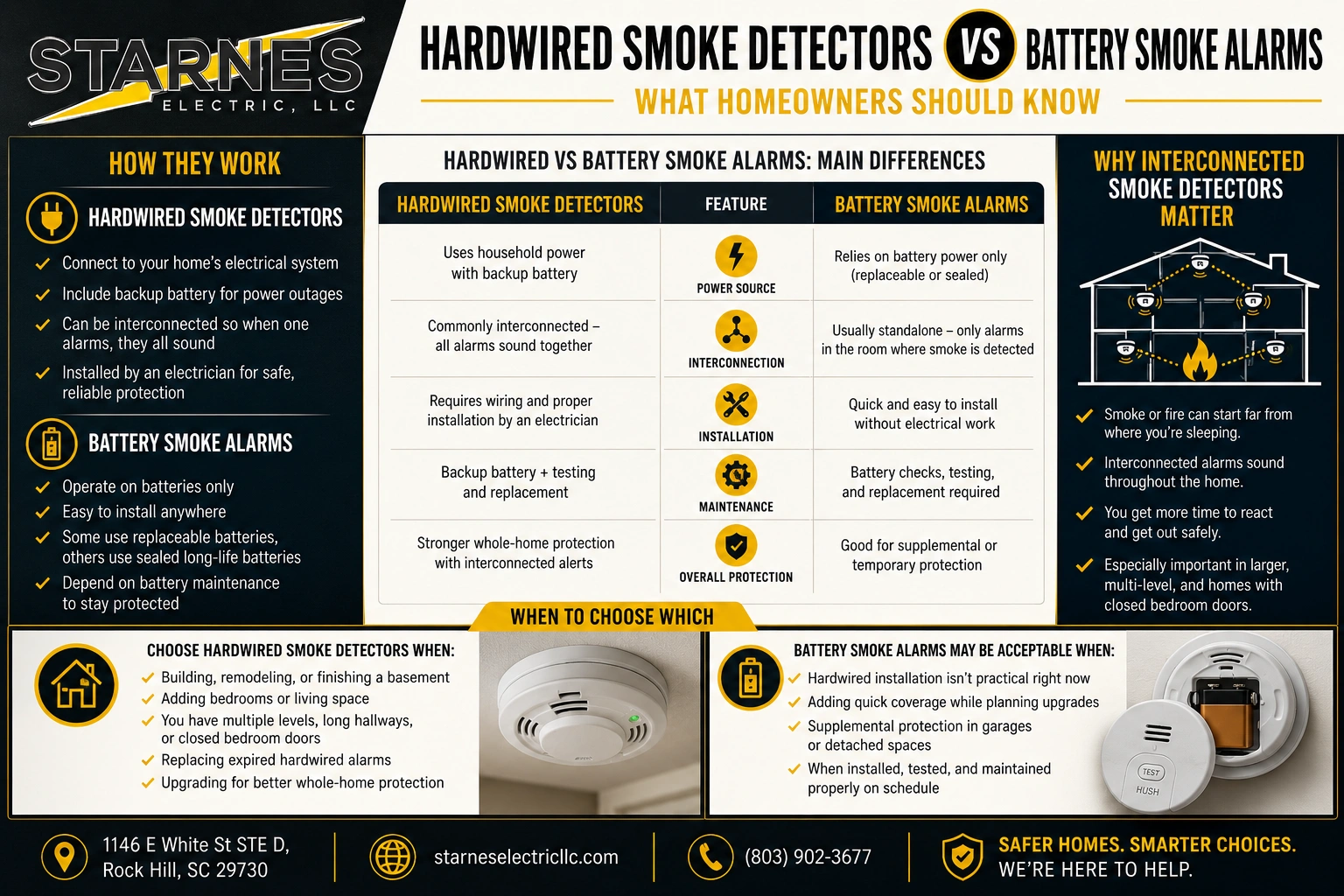
Hardwired vs Battery Smoke Alarms: Main Differences
The biggest difference is the power source. Hardwired alarms use household power with backup battery support. Battery alarms rely on battery power alone.
The second difference is interconnection. Hardwired alarms are commonly interconnected. Standalone battery alarms may only sound in the room where smoke is detected.
Installation is also different. Battery alarms can be mounted without electrical work. Hardwired alarms require proper wiring and should be installed by an electrician.
Maintenance differs too. Both need testing and replacement, but battery alarms require closer attention to battery condition.
The SC Storm Season Checklist: Protecting Your Home From Lightning Surges
South Carolina homeowners should prepare for storm season by checking [...]
Learn More
Why Interconnected Smoke Detectors Matter
Interconnected smoke detectors are important because smoke or fire may start far from where people are sleeping. A standalone alarm in a basement may not wake someone upstairs behind a closed bedroom door.
With interconnection, all connected alarms sound together. This creates a faster whole-home warning.
That extra time matters in nighttime emergencies.
Interconnected alarms are especially useful in larger homes, multi-story homes, homes with finished basements, and homes with separated bedroom areas.
An electrician can confirm whether existing alarms are interconnected and whether replacement units are compatible.
When Battery Smoke Alarms May Still Be Acceptable
Battery smoke alarms may be acceptable in homes where hardwired installation is not practical immediately. They can also work well as supplemental alarms in garages or detached spaces.
They are also useful when adding coverage quickly while planning a larger electrical upgrade.
However, battery alarms should not be treated as maintenance-free. Test them monthly, replace batteries when needed, and replace the entire alarm when it expires.
If a battery alarm keeps chirping, do not ignore it. The battery may be low, the unit may be dirty, or the alarm may be expired.
When Homeowners Should Choose Hardwired Smoke Detectors
Choose hardwired smoke detectors when building, remodeling, finishing a basement, adding bedrooms, or upgrading an older home. These situations often require better placement, interconnection, and electrical review.
Hardwired alarms are also smart when your home has multiple levels, long hallways, closed bedroom doors, or family members who may not hear a distant alarm.
They are a strong choice when replacing expired alarms already connected to wiring. Reusing existing wiring may be possible if the circuit and boxes are safe.
A licensed electrician can inspect the wiring, install compatible alarms, and confirm that all units communicate correctly.
Where Smoke Alarms Should Be Installed
Smoke alarms should be installed inside each bedroom, outside sleeping areas, and on every level of the home, including basements.
Placement should follow manufacturer instructions. Most smoke alarms are installed on ceilings or high on walls.
Avoid placing alarms too close to cooking appliances, bathrooms, HVAC vents, fans, or dusty spaces unless the specific alarm type allows it. Poor placement can cause nuisance alarms or delayed detection.
Bedrooms matter most because many fire deaths occur while people are asleep. Closed doors can reduce sound and slow smoke movement.
When to Replace or Upgrade Smoke Alarms
Most smoke alarms should be replaced after 10 years from the manufacture date. The date is usually printed on the back of the unit.
Replace alarms sooner if they fail testing, chirp after battery replacement, look damaged, were painted over, or no longer attach securely.
Upgrade alarms during remodeling, home purchases, or electrical service work. These are good times to correct missing alarms, poor placement, or outdated wiring.
If your home has older hardwired alarms, replacement may require compatible units. Mixing devices can affect interconnection.
Professional Smoke Alarm Installation for Safer Homes
At Starnes Electric LLC, we help homeowners choose and install smoke alarms that fit the home. We inspect existing alarm wiring, check placement, and explain whether hardwired, interconnected, or supplemental battery alarms make sense.
We also replace expired alarms, correct loose wiring, and help upgrade older homes during remodeling or electrical improvements.
Our goal is to make the system dependable, simple to maintain, and properly installed.
If you are unsure whether your home needs hardwired smoke detectors or battery smoke alarms, we can help review the current setup and recommend next steps.
FAQs About Hardwired and Battery Smoke Alarms
Do hardwired smoke detectors work without power?
Most hardwired smoke detectors have backup batteries, so they can continue working during a power outage. The backup battery must still be maintained or replaced when required.
Are battery smoke alarms safe?
Yes, battery smoke alarms can be safe when properly installed, tested, and replaced on schedule. The risk increases when batteries are dead, removed, or ignored.
Can I replace battery alarms with hardwired alarms?
Yes, but new wiring may be needed. An electrician can determine whether wiring can be added safely and where alarms should be placed.
Do all smoke alarms need to be interconnected?
Requirements vary by home and location, but interconnected alarms are strongly recommended. They provide a faster warning throughout the home.
Should smoke alarms include carbon monoxide detection?
Combination alarms may be appropriate in homes with gas appliances, fireplaces, attached garages, or fuel-burning equipment. Placement should follow product instructions.
Final Thoughts
Hardwired smoke detectors and battery smoke alarms both serve an important purpose, but they are not equal in every situation. Hardwired interconnected alarms usually provide stronger whole-home protection through household power and shared alerting. Battery alarms are useful for supplemental or temporary coverage, but require maintenance. The safest choice depends on layout, wiring, alarm age, and code needs. Homeowners should safely replace expired alarms, improve poor placement, and consider hardwired upgrades during remodeling, additions, or older-home electrical work before relying on outdated protection alone today in any occupied home now.
Still relying on battery smoke alarms alone?
Upgrade to hardwired smoke detectors for stronger whole-home protection and dependable safety alerts. Schedule service today.
About the Author: Starnes Electric